Tag Archives: Cosmetic Acupuncture

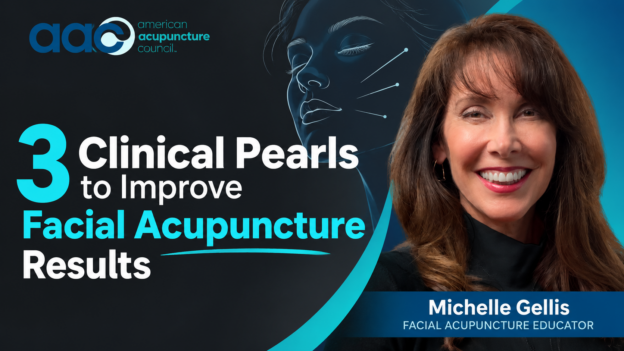
Michelle Gellis presenting three clinical pearls for facial acupuncture results for the American Acupuncture Council.

3 Clinical Pearls to Improve Facial Acupuncture Results

3 Clinical Pearls to Improve Facial Acupuncture Results

Facial acupuncture involves more than choosing points near a wrinkle or other visible concern. Practitioners must consider the patient’s overall presentation, understand the anatomy beneath the treatment area, and make deliberate decisions about the purpose of each needle. In this American Acupuncture Council presentation, Michelle Gellis shares three clinical principles: treating the whole person, prioritizing precision, and approaching each treatment with clear intention.

Presenter: Michelle Gellis, acupuncture physician, educator, and author.

Read along: Download or view the presentation transcript. The transcript is supplied by the American Acupuncture Council. As AAC notes, transcription errors may occur, so consult the video when interpreting specialized acupuncture terminology.

1. Treat the Whole Person, Not Just the Face

The first clinical pearl is to assess the patient as a whole rather than focusing exclusively on the facial feature they want to change. Gellis explains that visible concerns such as wrinkles, asymmetry, sagging, and skin dryness should be considered alongside the patient’s broader presentation and treatment goals.

Within traditional Chinese medicine (TCM), this approach may include pattern differentiation, constitutional assessment, and consideration of the relationships between symptoms and the body’s functional systems. Gellis uses examples such as spleen qi deficiency, blood stagnation, and yin or blood deficiency to illustrate how a TCM practitioner might interpret different facial presentations.

These concepts belong to the traditional diagnostic framework. They should not be presented as independently established biomedical causes of wrinkles, pigmentation, or facial aging. A responsible treatment plan distinguishes TCM pattern interpretation from biomedical assessment and refers patients for appropriate medical evaluation when a finding warrants it.

Practical application

  • Clarify the patient’s principal concern and desired outcome before selecting points.
  • Take an appropriate health history and consider relevant systemic symptoms, medications, skin conditions, and prior facial procedures.
  • Use TCM pattern differentiation when it is part of your training and scope of practice.
  • Explain the rationale for the proposed treatment and set realistic expectations.

A whole-person approach helps organize clinical reasoning. It does not guarantee a cosmetic outcome, and visible changes should not be used alone to diagnose an underlying disorder.

2. Make Precision Needling a Priority

The second pearl is precision. In the presentation, Gellis emphasizes that facial acupuncture is not simply a matter of knowing point locations or placing numerous needles into an area. The practitioner should understand the intended target, the anatomy beneath the skin, and the technique appropriate to that target.

Needle selection, gauge, length, depth, angle, and direction can affect the tissues reached and the nature of the intervention. The same facial region may be approached differently depending on whether the clinical objective involves a traditional acupuncture point, a particular muscle, or another anatomical structure. These approaches are not interchangeable, and a technique intended for one target should not automatically be applied to another.

Practical application

  • Identify the anatomical structures relevant to the intended intervention.
  • Choose a needle and technique appropriate to the target, patient, and clinical objective.
  • Avoid excessive needling or treating a large area without a defined rationale.
  • Seek focused, supervised training before using advanced facial or neuromuscular needling techniques.
  • Document the clinical rationale, relevant technique details, patient response, and any adverse events.

Precision is also a safety issue. The face contains important nerves, vessels, muscles, and other structures. Practitioners should not infer a safe depth or direction from a photograph or a general description alone. Technique must be based on appropriate anatomical knowledge, training, and applicable professional standards.

3. Treat With Clear Intention

The third pearl is intentional treatment. Gellis emphasizes that practitioners should know why they are placing each needle and what they intend the intervention to accomplish. A clearly defined objective makes it easier to select an appropriate technique and assess whether the treatment plan remains consistent with the patient’s goals.

For example, the rationale for stimulating a traditional acupuncture point may differ from the rationale for targeting a facial muscle. The practitioner should identify the intended target and explain the clinical reasoning rather than assuming that adding more needles will improve the outcome.

Intentional treatment also requires restraint. A larger number of needles or a more complex procedure does not automatically produce a better result. Technique selection should be proportionate to the treatment objective, the patient’s presentation, the practitioner’s competence, and the available evidence.

Practical application

  • Define the treatment objective before selecting the intervention.
  • Explain how the proposed technique relates to the patient’s goals.
  • Record relevant baseline findings so progress can be assessed consistently.
  • Review the patient’s response and adjust the plan when clinically appropriate.
  • Describe expected benefits and uncertainties without promising specific cosmetic results.

Clear intention does not establish that a technique works. It improves the transparency of clinical reasoning and supports more consistent treatment planning.

What Does the Research Say About Facial Acupuncture?

Clinical research on cosmetic acupuncture remains limited. Shin and Lim’s systematic review, published in the Journal of Cosmetic Medicine in 2018, included seven prospective studies with 216 participants. The studies reported positive findings in at least one measured outcome, but six of the seven had statistical shortcomings. The authors concluded that more rigorous research, including randomized and sham-controlled trials with standardized interventions, was needed.

A separate open-label pilot study by Yun and colleagues investigated facial cosmetic acupuncture and facial elasticity. The researchers reported promising findings but noted the need for larger controlled studies and objective measurements. Because an open-label, single-arm study lacks a suitable comparison group, its findings cannot establish that acupuncture alone caused the observed changes.

These findings support a measured interpretation: facial acupuncture has been studied for selected cosmetic outcomes, but the available evidence does not justify guaranteeing wrinkle reduction, lifting, collagen production, or lasting facial rejuvenation. Results from one protocol should not automatically be generalized to every facial acupuncture method.

Safety, Consent, and Documentation

Facial acupuncture should be performed only by appropriately trained practitioners working within their legal scope and professional competence. Potential adverse effects include pain, bleeding, bruising, and swelling. More serious complications are uncommon in acupuncture research overall, but the risks associated with a specific facial technique depend on the intervention, anatomical site, patient factors, and practitioner skill.

Before treatment, review relevant medical history, medications, skin integrity, previous procedures, and patient-specific risk factors. Explain the proposed procedure, reasonable alternatives, expected outcomes, uncertainties, and material risks. Obtain informed consent and follow applicable infection-prevention, clean-needle, and sharps-disposal requirements.

Document the patient’s goals, assessment, treatment rationale, relevant technique details, consent, response, and any complications. Use consistent photography only when appropriate, with informed permission, privacy safeguards, and consistent conditions. Photographs can help track appearance over time, but they do not by themselves prove that a treatment caused a change.

For additional practice guidance, explore the American Acupuncture Council’s resources on informed consent and documentation and charting practices.

Continue Learning

In this first part of her presentation, Michelle Gellis focuses on whole-person treatment, precision, and intentional technique. Part two is identified in the presentation as a discussion of functional anatomy. Practitioners who want to develop their skills should pursue appropriate continuing education and hands-on instruction that address facial anatomy, treatment selection, risk management, and the limits of current evidence.

To explore additional presentations, visit the American Acupuncture Council’s facial acupuncture resources. For information about Michelle Gellis’s educational offerings, visit Facial Acupuncture Classes.

Conclusion

Improving facial acupuncture practice begins with a thoughtful assessment of the whole person, precise technique grounded in anatomy, and a clear rationale for each intervention. These principles can strengthen clinical decision-making and patient communication, but they should be paired with appropriate training, informed consent, documentation, and realistic claims about outcomes. Current research is promising in some areas but remains insufficient to support broad guarantees of cosmetic effectiveness.

American Acupuncture Council: Acupuncture practice involves clinical judgment as well as professional risk management. Explore AAC’s practice resources and informed-consent guidance to support responsible patient care.

References

  1. Shin BC, Lim KT. Acupuncture for cosmetic use: a systematic review of prospective studies. Journal of Cosmetic Medicine. 2018;2(2):76–84. Read the review record.
  2. Yun Y, Kim S, Kim M, et al. Effect of Facial Cosmetic Acupuncture on Facial Elasticity: An Open-Label, Single-Arm Pilot Study. Read the study.
  3. Chan MWC, Wu XY, Wu JCY, Wong SYS, Chung VCH. Safety of acupuncture: overview of systematic reviews. Scientific Reports. 2017;7:3369. Read the article.
  4. Bäumler P, Zhang W, Stübinger T, Irnich D. Acupuncture-related adverse events: systematic review and meta-analyses of prospective clinical studies. BMJ Open. 2021;11:e045961. Read the review.

Educational disclaimer: This article is intended for professional education and general information. It does not replace individualized clinical judgment, appropriate training, applicable laws or professional standards, or medical evaluation when indicated. Practitioners are responsible for working within their scope of practice and verifying current evidence and requirements.
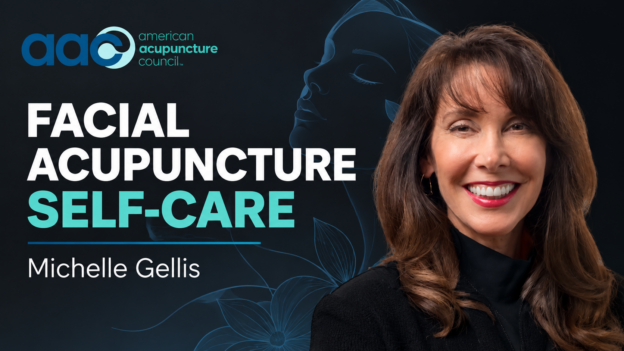
Michelle Gellis presenting facial acupuncture self-care tools and techniques for acupuncture professionals.

Facial Acupuncture Self-Care: Tools, Techniques and Safety

Facial Acupuncture Self-Care: What Practitioners Should Know

Facial acupuncture self-care interests acupuncturists who want to understand facial skin care, cosmetic techniques, and skin-stimulation tools. In this American Acupuncture Council presentation, Michelle Gellis shares her experience with facial self-care and discusses equipment used in personal routines and professional education.

However, learning about a technique does not establish that every device or method suits home use. Practitioners should therefore consider the available evidence, infection prevention, manufacturer instructions, and applicable professional requirements before using invasive skin-stimulation methods.

Watch the Facial Acupuncture Self-Care Presentation

Michelle Gellis — American Acupuncture Council

Presentation transcript: Download the original presentation transcript.

Editorial note: Retain the original AAC transcript disclaimer explaining that transcription may contain spelling, grammatical, or terminology errors.

What Does Facial Acupuncture Self-Care Involve?

During the presentation, Michelle Gellis describes her personal self-care practices and connects them to her teaching in cosmetic and facial acupuncture. Her educational materials cover several facial techniques, including cosmetic acupuncture, facial cupping, gua sha, microneedling, and approaches to neuromuscular facial conditions.

In particular, the presentation identifies several tools used in facial self-care:

  • Magnifying mirrors: These improve visibility when examining the face or performing detailed skin-care tasks.
  • Derma rollers: These handheld devices roll small needles or projections across the skin, depending on their design.
  • Microneedling pens: These devices use needle cartridges to create controlled punctures in the skin.
  • Serum-delivery devices: Gellis also demonstrates a device designed to stamp serum onto the skin.

Although these tools may appear similar in a cosmetic setting, their functions differ considerably. For example, a magnifying mirror does not penetrate the skin, whereas a microneedling device disrupts the skin barrier. Consequently, each product requires a separate assessment of its intended use, risks, and regulatory status.

Consider this presentation an educational introduction to facial self-care tools rather than a universal protocol for self-treatment.

Facial Acupuncture, Microneedling, and Skin Care Are Different

Facial acupuncture and microneedling may both involve fine needles. Nevertheless, they represent distinct procedures with different purposes and safety considerations.

Facial acupuncture involves inserting acupuncture needles at selected anatomical locations within an individualized treatment plan. Depending on the practitioner’s training and clinical context, practitioners may use facial acupuncture to address cosmetic goals or certain functional concerns.

By contrast, microneedling uses a device to create repeated punctures in the skin. Some devices penetrate deeper skin layers, and regulators authorize particular devices for specific indications. For example, the U.S. Food and Drug Administration (FDA) has authorized certain microneedling devices for uses that include improving the appearance of facial acne scars and wrinkles. However, that authorization does not automatically extend to every device, treatment area, technique, or claimed benefit.

Basic skin care follows a different approach. Cleansing, moisturizing, and sun protection, for instance, do not require intentional skin puncture.

For practitioners, the essential distinction concerns the procedure itself, not simply whether a company markets a tool as a cosmetic device. Therefore, evaluate every technique according to its intended use, limitations, and potential complications.

What Does the Evidence Say About Facial Self-Care?

A technique’s popularity does not establish its clinical effectiveness or guarantee a cosmetic outcome.

According to the FDA, microneedling may improve the appearance of certain scars and wrinkles when practitioners use appropriately authorized devices for their specified indications. However, results vary, treatment may require multiple sessions, and improvements may be temporary. These findings do not establish equivalent benefits for every consumer roller, serum-delivery tool, or facial acupuncture technique.

Similarly, evidence supporting acupuncture for particular health conditions does not automatically demonstrate that facial acupuncture improves skin appearance or reverses visible aging. To assess cosmetic claims responsibly, examine studies that directly evaluate the procedure, population, comparison group, and outcome in question.

Traditional Chinese medicine also offers diagnostic frameworks and explanations for treatment choices. Practitioners may draw on these frameworks in clinical practice. Nevertheless, they should distinguish traditional theory from modern clinical evidence when explaining treatment rationale and expected outcomes.

Ultimately, realistic expectations protect both patients and practitioners. No facial procedure should promise a particular aesthetic result without adequate supporting evidence.

Safety Considerations Before Using Facial Devices

Facial skin requires careful handling, especially when a procedure creates punctures. The FDA identifies several potential microneedling complications, including redness, bruising, bleeding, infection, pigment changes, and reactivation of cold sores.

1. Understand the device and its intended use

First, read the manufacturer’s instructions and identify the device’s intended purpose. Next, verify its regulatory status and authorized indications where applicable. A product’s availability online does not establish FDA authorization for a particular procedure.

2. Prevent infection and cross-contamination

Follow the manufacturer’s cleaning and disinfection instructions, and never share personal microneedling tools. For applicable medical microneedling devices, the FDA emphasizes using a new needle cartridge for each treatment session. Cleaning does not make a used cartridge suitable for reuse.

Likewise, acupuncture needles used in clinical practice must meet applicable sterile, single-use requirements. However, practitioners should not treat microneedling equipment and acupuncture needles as equivalent products.

3. Screen for potential contraindications

Microneedling may not suit everyone. For example, active skin infections, certain inflammatory skin conditions, impaired immune function, bleeding disorders, and relevant medication-related risks may affect a person’s suitability.

Therefore, a qualified healthcare professional should assess individual circumstances rather than relying solely on a general online demonstration.

4. Use appropriate products

Never assume that a serum, cosmetic, or topical medication is safe to introduce through punctured skin. The FDA has not authorized microneedling devices to deliver cosmetics or topical medications into the skin. Accordingly, practitioners should verify product compatibility, intended use, and applicable requirements before recommending a device-assisted application.

5. Recognize complications and arrange appropriate care

Monitor for persistent or worsening pain, spreading redness, swelling, discharge, significant skin changes, or other concerning symptoms. If these problems occur, stop the procedure and arrange prompt clinical assessment as appropriate.

Practical Implications for Acupuncture Practice Owners

Acupuncturists interested in facial services should distinguish personal self-care techniques from professional treatment offerings. Each setting raises different questions about training, patient safety, and professional responsibility.

For professional practice, training should address facial anatomy, infection prevention, device handling, patient selection, informed consent, realistic outcome discussions, and adverse-event recognition. In addition, practitioners must confirm that their training, professional scope, and applicable state requirements permit the proposed procedure.

Before adding microneedling or another device-based service, review the equipment documentation and manufacturer instructions. Also examine relevant insurance terms, regulatory requirements, and professional obligations. An acupuncture license alone does not necessarily authorize every cosmetic procedure.

Clear documentation supports responsible care. When applicable, record the treatment rationale, informed consent, relevant screening, equipment and products used, aftercare instructions, and any complications. For consequential scope-of-practice or coverage questions, consult the appropriate licensing authority, insurer, or qualified advisor.

Continue Learning About Facial Acupuncture

The American Acupuncture Council offers additional educational presentations on facial acupuncture and related clinical topics. Explore these resources to continue your professional learning:

These presentations provide additional educational perspectives. Even so, practitioners should evaluate each technique against current evidence, training requirements, individual patient needs, and applicable safety standards.

Conclusion

Michelle Gellis’s presentation introduces facial acupuncture self-care through practical examples of mirrors, rollers, microneedling pens, and serum-delivery devices. For acupuncturists, the central lesson is to distinguish personal routines from professional procedures and assess each technique independently.

Safe practice depends on appropriate training, equipment-specific precautions, realistic expectations, and an understanding of the available evidence. With these principles in mind, practitioners can explore facial self-care without assuming that every tool suits every user or that all techniques deliver established cosmetic benefits.

Continue your professional education with the American Acupuncture Council. Explore the related presentations above and consult authoritative safety guidance before incorporating new procedures into your practice.

References

  1. U.S. Food and Drug Administration. Microneedling Devices: Getting to the Point on Benefits, Risks and Safety.
  2. U.S. Food and Drug Administration. Microneedling Devices.
  3. National Center for Complementary and Integrative Health. Acupuncture: Effectiveness and Safety.
  4. American Acupuncture Council. Facial Acupuncture Self-Care – Michelle Gellis.

Educational disclaimer: This article provides professional education and general information, not medical advice, diagnosis, or an individualized treatment protocol. Acupuncturists should base clinical decisions on each patient’s circumstances, current evidence, appropriate training, professional scope, and applicable laws and regulations. Only appropriately qualified practitioners should perform skin-penetrating procedures, and they must comply with all applicable requirements.