


Facial Acupuncture Self-Care: What Practitioners Should Know
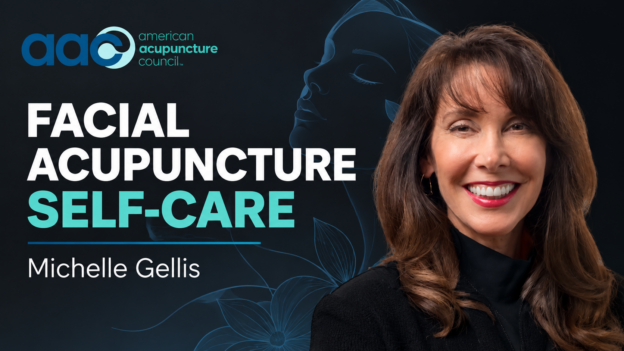
Facial acupuncture self-care interests acupuncturists who want to understand facial skin care, cosmetic techniques, and skin-stimulation tools. In this American Acupuncture Council presentation, Michelle Gellis shares her experience with facial self-care and discusses equipment used in personal routines and professional education.
However, learning about a technique does not establish that every device or method suits home use. Practitioners should therefore consider the available evidence, infection prevention, manufacturer instructions, and applicable professional requirements before using invasive skin-stimulation methods.
Watch the Facial Acupuncture Self-Care Presentation
Michelle Gellis — American Acupuncture Council
Presentation transcript: Download the original presentation transcript.
Editorial note: Retain the original AAC transcript disclaimer explaining that transcription may contain spelling, grammatical, or terminology errors.
What Does Facial Acupuncture Self-Care Involve?
During the presentation, Michelle Gellis describes her personal self-care practices and connects them to her teaching in cosmetic and facial acupuncture. Her educational materials cover several facial techniques, including cosmetic acupuncture, facial cupping, gua sha, microneedling, and approaches to neuromuscular facial conditions.
In particular, the presentation identifies several tools used in facial self-care:
- Magnifying mirrors: These improve visibility when examining the face or performing detailed skin-care tasks.
- Derma rollers: These handheld devices roll small needles or projections across the skin, depending on their design.
- Microneedling pens: These devices use needle cartridges to create controlled punctures in the skin.
- Serum-delivery devices: Gellis also demonstrates a device designed to stamp serum onto the skin.
Although these tools may appear similar in a cosmetic setting, their functions differ considerably. For example, a magnifying mirror does not penetrate the skin, whereas a microneedling device disrupts the skin barrier. Consequently, each product requires a separate assessment of its intended use, risks, and regulatory status.
Consider this presentation an educational introduction to facial self-care tools rather than a universal protocol for self-treatment.
Facial Acupuncture, Microneedling, and Skin Care Are Different
Facial acupuncture and microneedling may both involve fine needles. Nevertheless, they represent distinct procedures with different purposes and safety considerations.
Facial acupuncture involves inserting acupuncture needles at selected anatomical locations within an individualized treatment plan. Depending on the practitioner’s training and clinical context, practitioners may use facial acupuncture to address cosmetic goals or certain functional concerns.
By contrast, microneedling uses a device to create repeated punctures in the skin. Some devices penetrate deeper skin layers, and regulators authorize particular devices for specific indications. For example, the U.S. Food and Drug Administration (FDA) has authorized certain microneedling devices for uses that include improving the appearance of facial acne scars and wrinkles. However, that authorization does not automatically extend to every device, treatment area, technique, or claimed benefit.
Basic skin care follows a different approach. Cleansing, moisturizing, and sun protection, for instance, do not require intentional skin puncture.
For practitioners, the essential distinction concerns the procedure itself, not simply whether a company markets a tool as a cosmetic device. Therefore, evaluate every technique according to its intended use, limitations, and potential complications.
What Does the Evidence Say About Facial Self-Care?
A technique’s popularity does not establish its clinical effectiveness or guarantee a cosmetic outcome.
According to the FDA, microneedling may improve the appearance of certain scars and wrinkles when practitioners use appropriately authorized devices for their specified indications. However, results vary, treatment may require multiple sessions, and improvements may be temporary. These findings do not establish equivalent benefits for every consumer roller, serum-delivery tool, or facial acupuncture technique.
Similarly, evidence supporting acupuncture for particular health conditions does not automatically demonstrate that facial acupuncture improves skin appearance or reverses visible aging. To assess cosmetic claims responsibly, examine studies that directly evaluate the procedure, population, comparison group, and outcome in question.
Traditional Chinese medicine also offers diagnostic frameworks and explanations for treatment choices. Practitioners may draw on these frameworks in clinical practice. Nevertheless, they should distinguish traditional theory from modern clinical evidence when explaining treatment rationale and expected outcomes.
Ultimately, realistic expectations protect both patients and practitioners. No facial procedure should promise a particular aesthetic result without adequate supporting evidence.
Safety Considerations Before Using Facial Devices
Facial skin requires careful handling, especially when a procedure creates punctures. The FDA identifies several potential microneedling complications, including redness, bruising, bleeding, infection, pigment changes, and reactivation of cold sores.
1. Understand the device and its intended use
First, read the manufacturer’s instructions and identify the device’s intended purpose. Next, verify its regulatory status and authorized indications where applicable. A product’s availability online does not establish FDA authorization for a particular procedure.
2. Prevent infection and cross-contamination
Follow the manufacturer’s cleaning and disinfection instructions, and never share personal microneedling tools. For applicable medical microneedling devices, the FDA emphasizes using a new needle cartridge for each treatment session. Cleaning does not make a used cartridge suitable for reuse.
Likewise, acupuncture needles used in clinical practice must meet applicable sterile, single-use requirements. However, practitioners should not treat microneedling equipment and acupuncture needles as equivalent products.
3. Screen for potential contraindications
Microneedling may not suit everyone. For example, active skin infections, certain inflammatory skin conditions, impaired immune function, bleeding disorders, and relevant medication-related risks may affect a person’s suitability.
Therefore, a qualified healthcare professional should assess individual circumstances rather than relying solely on a general online demonstration.
4. Use appropriate products
Never assume that a serum, cosmetic, or topical medication is safe to introduce through punctured skin. The FDA has not authorized microneedling devices to deliver cosmetics or topical medications into the skin. Accordingly, practitioners should verify product compatibility, intended use, and applicable requirements before recommending a device-assisted application.
5. Recognize complications and arrange appropriate care
Monitor for persistent or worsening pain, spreading redness, swelling, discharge, significant skin changes, or other concerning symptoms. If these problems occur, stop the procedure and arrange prompt clinical assessment as appropriate.
Practical Implications for Acupuncture Practice Owners
Acupuncturists interested in facial services should distinguish personal self-care techniques from professional treatment offerings. Each setting raises different questions about training, patient safety, and professional responsibility.
For professional practice, training should address facial anatomy, infection prevention, device handling, patient selection, informed consent, realistic outcome discussions, and adverse-event recognition. In addition, practitioners must confirm that their training, professional scope, and applicable state requirements permit the proposed procedure.
Before adding microneedling or another device-based service, review the equipment documentation and manufacturer instructions. Also examine relevant insurance terms, regulatory requirements, and professional obligations. An acupuncture license alone does not necessarily authorize every cosmetic procedure.
Clear documentation supports responsible care. When applicable, record the treatment rationale, informed consent, relevant screening, equipment and products used, aftercare instructions, and any complications. For consequential scope-of-practice or coverage questions, consult the appropriate licensing authority, insurer, or qualified advisor.
Continue Learning About Facial Acupuncture
The American Acupuncture Council offers additional educational presentations on facial acupuncture and related clinical topics. Explore these resources to continue your professional learning:
- Easily Incorporating Facial Acupuncture into Your Practice
- Microneedling Your Own Face – Michelle Gellis
- Clearing Blocks Before Treating the Face – Michelle Gellis
These presentations provide additional educational perspectives. Even so, practitioners should evaluate each technique against current evidence, training requirements, individual patient needs, and applicable safety standards.
Conclusion
Michelle Gellis’s presentation introduces facial acupuncture self-care through practical examples of mirrors, rollers, microneedling pens, and serum-delivery devices. For acupuncturists, the central lesson is to distinguish personal routines from professional procedures and assess each technique independently.
Safe practice depends on appropriate training, equipment-specific precautions, realistic expectations, and an understanding of the available evidence. With these principles in mind, practitioners can explore facial self-care without assuming that every tool suits every user or that all techniques deliver established cosmetic benefits.
Continue your professional education with the American Acupuncture Council. Explore the related presentations above and consult authoritative safety guidance before incorporating new procedures into your practice.
References
- U.S. Food and Drug Administration. Microneedling Devices: Getting to the Point on Benefits, Risks and Safety.
- U.S. Food and Drug Administration. Microneedling Devices.
- National Center for Complementary and Integrative Health. Acupuncture: Effectiveness and Safety.
- American Acupuncture Council. Facial Acupuncture Self-Care – Michelle Gellis.
Educational disclaimer: This article provides professional education and general information, not medical advice, diagnosis, or an individualized treatment protocol. Acupuncturists should base clinical decisions on each patient’s circumstances, current evidence, appropriate training, professional scope, and applicable laws and regulations. Only appropriately qualified practitioners should perform skin-penetrating procedures, and they must comply with all applicable requirements.