Acupuncture, a traditional Chinese therapy, is increasingly being explored as a treatment for hair loss, especially conditions like alopecia areata.
Some studies suggest acupuncture might help by improving blood flow to the scalp, reducing inflammation, and balancing hormones, all factors linked to hair growth.
A 2022 review of clinical studies found that acupuncture, alone or combined with other therapies, showed positive effects across several types of hair loss, including alopecia areata and pattern hair loss.
Researchers propose it may work by reducing inflammation, regulating hormones, and improving blood flow to hair follicles.
And remember, the American Acupuncture Council (AAC) offers an unparalleled track record in acupuncture risk management.
There is a reason acupuncturists have trusted AAC with their business for 50 years.
Not an American Acupuncture Council member? Get a Quick Quote and find out how much you will save! Click here!
Disclaimer: The following is an actual transcript. We do our best to make sure the transcript is as accurate as possible, however, it may contain spelling or grammatical errors.Due to the unique language of acupuncture, there will be errors, so we suggest you watch the video while reading the transcript.
Hi, this is Michelle Gellis. I would like to thank the American Acupuncture Council for giving me this opportunity to speak to you today. This is part two of the top 10 questions that I get asked about cosmetic acupuncture. A lot of the answers to these questions came from my book, treating the Face. It is a comprehensive guide for acupuncturists and health professionals.
Click here for the best Acupuncture Malpractice Insurance
It is a hardcover book and it is about 500 pages, full color book, and I talk in the book extensively. About how to set realistic expectations with a patient and how to answer their questions, whether it’s a potential patient or whether it’s a current patient. And during my training that I offer to acupuncturists and people who are trained and licensed to perform acupuncture.
Is marketing information that they can hand out to their patients or put on their websites because a lot of these questions are questions that I get over and over again. And in my almost 25 years in practice and teaching I have found one of the top 10 questions that. People ask me. So last time in part one I talked about how does it work and how many treatments will I need before I get or before I see results?
How much does it cost last? How long do the treatments take? How long do they last? So if you miss part one, you can check that out as well. So for today, I would like to start out with contraindications. And this is a big subject because it takes into account. Two things. One is physical contraindications that patients might have that can be major red flags or maybe minor warnings before you treat them.
And then the other is things that your patients may have. Had done to themselves as far as any sort of treatments or procedures that can be either a minor or a major contraindication for your treating them. So let’s talk about physical. Contraindications to treatment with cosmetic acupuncture.
And the first one is I break it down into two parts. So it’s high blood pressure and you might be thinking a lot of my patients have high blood pressure. A lot of elderly patients have high blood pressure. How am I ever going to do this if high blood pressure is a contraindication? And what I say to you is this, if someone has treated, medicated or untreated high blood pressure, do not make this person or these people your first patient or patients.
You definitely want to treat a few. Healthy patients before you take on patients who have any sort of health conditions. And the reasons for this are you want to build up your confidence, your skills, your knowledge, and really get an idea of how powerful your treatments are before, you dive into someone who maybe has high blood pressure, it’s well controlled with medication, but you do a treatment on them and your treatment causes their blood pressure to shoot up and why would this happen?
The reason is. Cosmetic acupuncture by nature is designed to open the channels up to the face and head and really increase the blood flow, the flow of qi up to the face and head and left unchecked. If you don’t really have good skills or if you do too much, or if your patient’s blood pressure is a little high that day, you could give your patient a headache or worse.
So let’s assume you’ve been doing this for a while. You’ve done many treatments on many patients, and someone calls you and they say. They have high blood pressure. It wasn’t very high to begin with. It was maybe borderline. They’re on medication. It’s very well controlled In that situation, you could start out very slowly, very few points and check their blood pressure before and after.
Treatment and see how they do. They might be a better candidate for more intradermal needles or microneedling rather than treating a lot of chest, neck, face body points. That are designed to bring all this energy up to the head. In my protocol, I specifically have designed. The point structure so that it will bring that energy up.
But you could potentially leave some of those points out. And I talk about this in my classes. My classes are available, recorded and live throughout throughout the world. I, I taught classes all over the world, and you can check out my schedule on facial acupuncture classes.com and look into some of these concepts and some of the theories behind them.
So that, that is high blood pressure, a big conversation Also, pregnancy. You do not want to be bringing all this energy up to the face, head and neck when someone is pregnant. Also, there are points in my protocol that are designed like large intestine four to release things like impurities that would not be good for someone who’s pregnant.
So pregnancy is a contraindication. People who are just generally unwell you don’t want to be doing cosmetic acupuncture on them. People who are diabetic have seizure disorders. People who are very sensitive to needles. As far as contraindications. In my book, in my classes I have a release form and in it are all the different contraindications and all the reasons for them.
So there definitely are some physical contraindications and you would wanna check those out. Additionally, if someone has had Botox recently, you would not want to treat them for about three weeks after the Botox treatments ’cause they take about two weeks to settle in. I like to err on the side of caution and when I say Botox, any neurotoxin.
Dysport. Xeomin I don’t know the brand names of all of them. And then after that, they need to find out from whoever injected them exactly where the neurotoxin was injected. People sometimes forget, or they’re not quite sure, and you wanna avoid that area completely because. Doing cosmetic acupuncture in that area can cause the neurotoxin to wear off.
As far as other treatments such as fillers, peels, lasers any other surgeries on the face. I would direct my patient to the person who did the treatment, and have your patient ask that person. When is it safe for me to have cosmetic acupuncture? There are so many treatments out there now. It’s impossible for us as practitioners to know for each.
Level of chemical peel or laser specific laser treatment, and their practitioner should know the answer to that question. As far as a facelift, cosmetic acupuncture can make facelifts last longer, but because the face is going to continue to age after the facelift, but the cosmetic acupuncture can help.
So that it happens more slowly. And you definitely want to wait about a year after a full facelift before doing cosmetic acupuncture, mainly because of.
Issues that they might have with vascular issues, neuropathy swelling, those types of things. Okay. The next question that people ask me is do I need any specialized training before I do cosmetic acupuncture? I’m an acupuncturist. I know where the acupuncture points in the face are. And the answer is unequivocably.
Yes. In fact, the American Acupuncture Council does ask on whenever you go to renew your license, if you’re doing anything that is outside of the norm for acupuncture and you’re doing specialized treatments. And if the answer is yes, then they do require you to have specialized. Training.
And there are just a few of us in the US that are registered and certified to do cosmetic acupuncture training. I am one of them, and you can check out my classes@facialacupunctureclasses.com. But the reason for this is understanding safety. Around treating the face and neck and head, understanding all of the myriad of contraindications and precautions.
Also their underlying conditions, needle placement, these, and then having a protocol that you can follow that. Doesn’t require so many needles. I go on social media and people that have so many needles in their face, and it’s so not necessary. So specialized training is a must.
Bruising is another question that I get. If you are trained properly. If you are getting using high quality needles and precautionary techniques, such as using arnica gel and really understanding the anatomy of the face, my book has a whole anatomy chapter. The unique nature of treating the face, because the face is so heavily vascularized and the muscles are layered.
Some are thick, some are thin, some are tiny, some are large. Some are deep, some are superficial. Really understanding how to needle the face, understanding good. Precision needling techniques will really reduce the chance of bruising. I rarely bruise a patient, if ever anymore. And the last thing is, can cosmetic acupuncture help with other conditions?
And the answer is yes. When you know how to treat the face and in my classes I teach about facial motor points, submuscular needling, some scalp acupuncture. For treating the face, you can help with things like TMJ, Bell’s Palsy, trigeminal neuralgia. Stroke ms. Myasthenia gravis even facial herpes and a lot of different skin conditions that affect the face, like acne, rosacea, hyper and hypo pigmentation.
So this all, is included in a really good comprehensive facial and cosmetic acupuncture training. And you can be the facial acupuncture specialist in your area because it is a highly specialized training. I hope that answers some of your questions. Again, if you didn’t see part one, you can check it out.
This concludes part two and I want to again thank the American Acupuncture Council for giving me this opportunity to speak to you, and I hope to see you in class soon.
Click here for the best Acupuncture Malpractice Insurance
Disclaimer: The following is an actual transcript. We do our best to make sure the transcript is as accurate as possible, however, it may contain spelling or grammatical errors.Due to the unique language of acupuncture, there will be errors, so we suggest you watch the video while reading the transcript.
Hi, this is Michelle Gellis. I am an acupuncture physician, and today I am going to speak to you about the top 10 reasons. This is part one of the top. 10 questions that I get asked both from practitioners and patients about cosmetic acupuncture. A lot of the information that I’m going to speak about today can be found in my my book.
Click here for the best Acupuncture Malpractice Insurance
It’s called Treating the Face, and it is a comprehensive guide for acupuncturists and health professionals. It’s all about treating the face. It’s a 500 page hard cover, full color book. So you might wanna check that out. It’s available@facialacupunctureclasses.com. Okay. Before I get started, I wanna thank the American Acupuncture Council for giving me this opportunity to speak to you today.
The first question that I get asked about cosmetic acupuncture. And this is a big one because I get this asked almost all the time, is does it work? And the answer to that is Unequivocably. Yes. And there have been numerous studies research studies that have been done, and a lot of them are cited in my book or journal articles that, you can research both on my website or online, and what they have found is cosmetic acupuncture helps to improve the. Thickness of the skin, the depth of wrinkles on the skin, the color of the skin, and the overall vibrance of the skin, both on the face, the neck, the chest, around the eye area. So it absolutely does.
Work. The next question that I get asked very frequently is, how many treatments will it take in order for these treatments to work? How many times will I need to come in? And that is actually a really big question because the answer is, it depends. The way I like to think about cosmetic acupuncture is it’s like going to the gym.
So if someone were to come to you, if 10 people were to come to you and say. How many times will I need to go to the gym before my muscles look like they look when I was in my twenties or before I am fit or before I lose X amount of pounds? The answer would of course be, it depends because it’s going to be dependent on.
With your skin, it’s going to depend on several factors, so it will depend on your age. And the reason for this is as we get older, it takes longer for our bodies to produce collagen. So that’s one important factor. Another important factor is your lifestyle. So that takes into. Account a lot of things.
How much sleep do you get? How much water do you drink? How much alcohol do you consume? Do you smoke? Exercise is a big factor because the skin needs oxygen in order to look good. And so smoking plays into that as well because smoking takes oxygen. Out of your bloodstream. Exercise also increases the blood flow of the skin.
And having a healthy blood supply is very important to vibrant looking skin. Also sleep. If you’re not getting enough sleep, your skin is not going to be going through that. Turnover and repair process. Sun damage is a big factor, so if you have a lot of sun damage, it’s going to take longer for you to see results and you might need more treatments, more in depth.
Treatments, longer treatments than someone who has no sun damage on their skin. Genetics play a big part in determining. How you will age. So both the shape of your face and just your, the thickness of your skin. Is your skin lighter or darker? All of these different genetic factors will play into how many treatments you need.
People with darker skin don’t. Show signs of aging as far as sagging and fine lines and wrinkles as people with lighter skin and people with thinner skin. And our skin tends to thin as we age, but some people just have thinner skin. People with thinner skin are going to show more signs of aging than people with thicker skin.
So that will also play into it. The foods we eat will also determine how we age. People who are eating nutrient core diet are going to look older than people that are eating a nutrient rich diet. It takes vitamin C and protein in order to build collagen. And collagen is the building blocks of our skin.
It determines the thickness of our skin and the how our skin is held up is through the collagen and the elastin. And also another thing going back to age hyaluronic acid, as we get. Older, we have less hyaluronic acid in our skin, and that is what makes the skin kind of plump. So you want to make sure you’re drinking lots of water, eating healthy fats.
Especially the omegas, the Omega threes really play into. The cell functioning and the cell turnover rate. Another thing that determines how many treatments you’re going to need is what sort of products are you using on your skin if you are not. Using quality products that have peptides and vitamins and different minerals.
Things like copper, zinc vitamin A, vitamin E, vitamin C in some cases, things like hyaluronic acid, serums, retinol, serums. There are. Lots of different ingredients that can go into serums and also day and night creams that you might put on your skin. These will affect how your skin ages and how many treatments you’ll need.
So really to summarize, if you look at the starting point. And how much sun damage, how the person is taking care of their skin, whether or not they’re exercising, sleeping, what they’re eating. Stress. I left stress out. Stress can certainly affect the skin. The facial expressions that we make can get etched on our face.
And in my book I have a whole chapter called the Anatomy of Expression. So people who are very stressed can get those kind of lines between their eyebrows. People who are depressed can show certain signs of aging. So these are all very important factors. All of that said a general rule of thumb for cosmetic acupuncture is once a week for about three months, so about 12 treatments once a week.
And most people, depending on where we’re starting, most people will at least begin to see. The effects of cosmetic acupuncture, and for most people, a good percentage of the people after that time, they can begin going to get treatments less often. Another question is, how much does it cost? And this is another, it depends question.
Depending on what you are including in your treatments. Whenever I do a cosmetic acupuncture treatment, I do acupuncture and I also do cupping. And while SHA and for most of my. Time treating patients. The bulk of my practice was in Maryland. I was in a very rural area, but I was charging anywhere between 150 and $200 US for a treatment.
And again, if you are in a major city like New York. Or Los Angeles, you might be charging a little more. I strongly recommend that you base the cost of the treatment on what it would normally be for you to treat a patient, and then half of that, so one and a half times the cost of a treatment because your patient will be in your treatment space for about an hour.
To end 15 minutes to an hour and a half depending on how quickly you work. On top of that, some people add in derma rolling, they add in red light therapy. So these things might be charged as an add-on to a standard cosmetic acupuncture treatment.
The next question that I get frequently is how long do the treatments take? And this kind of piggybacks on the last question, which is how much does it cost? And so you’re going to be. I tie the cost into how long the treatment is actually going to take, and usually once you’ve been in practice for a while, you can get your patient in and out of the treatment room in about an hour and 15 minutes.
Sometimes an hour and 30 minutes. It depends on whether or not you’re just treating the face, whether or not you’re going to be working on their neck how how many wrinkles they have, how much signs of aging are there, because you might wanna add in more needles and spend a little more time. But the good news is once the needles are in, they can rest on the table and you can go and treat another.
Patient. And another question I get a lot is how long do the treatments last? How long do they last? And this is also a, it depends question. So I’m gonna go back to what I was speaking about earlier, and that is normally people will come in once a week for several weeks, let’s say 12 weeks.
And then after that they don’t just stop going again. Think about the going to the gym analogy. So if you were going to the gym, you wouldn’t just. Stop going, but if you did stop going there would be a certain amount of time where you would still be noticing the effects until eventually they were off.
So for cosmetic acupuncture, I tell people once you’ve achieved the desired effects, at that point you can start coming less often. Every other week or once a month, once most of my patients have dis have achieved the desired effect. They start spreading their treatments out. They come once a month, just like if they were getting their nails done or getting their hair colored or getting a facial.
So that kind of answers the. How long do the treatments last? For some people treatments can last a very long time. I know. When I. Stop seeing patients during the pandemic. A lot of people were buying facial cupping and guha kits from me. They were doing a little self-care at home in addition to using their serums and their lotions.
Some of them were derma rolling at home. So these types of things can help to augment the treatments for at-home care. So this concludes part one of the top 10 questions that I get asked about facial acupuncture. I’d like to again, thank the American Acupuncture Council for this opportunity and we will see you next time for part two.
Click here for the best Acupuncture Malpractice Insurance
Could acupuncture actually help protect stroke survivors from heart attacks?
After a stroke, the risk of a heart attack is dangerously high, especially in the first year.
A large study from Taiwan looked at over 70,000 stroke patients and found that those who received acupuncture had a lower risk of heart attacks compared to those who did not.
This was especially true for people aged 50 to 69.
This was an observational study, meaning it shows a connection, but not direct cause and effect.
However, the findings open the door to something promising.
Acupuncture may help reduce heart attack risk after stroke, but more research is needed to be sure.
And remember, the American Acupuncture Council (AAC) offers an unparalleled track record in acupuncture risk management.
There is a reason acupuncturists have trusted AAC with their business for 50 years.
Not an American Acupuncture Council member? Get a Quick Quote and find out how much you will save! Click here!
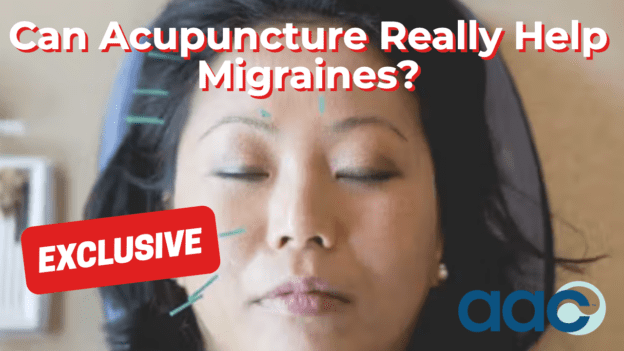
What if tiny needles could reduce your migraine pain, without medication?
Migraines are not just headaches; they are a neurological condition that can seriously disrupt daily life.
But research shows acupuncture might help!
Studies have found that acupuncture can reduce how often migraines happen and make them less painful.
Some patients even experience 50% fewer attacks after consistent treatment.
It may also work as well as some preventive medications, but with fewer side effects, like fatigue or nausea.
Acupuncture is thought to stimulate the nervous system, releasing natural pain-relieving chemicals like endorphins and helping regulate brain activity linked to migraines.
Beyond pain relief, patients often report a better quality of life overall.
And remember, the American Acupuncture Council (AAC) offers an unparalleled track record in acupuncture risk management.
There is a reason acupuncturists have trusted AAC with their business for 50 years.
Not an American Acupuncture Council member? Get a Quick Quote and find out how much you will save! Click here!
Disclaimer: The following is an actual transcript. We do our best to make sure the transcript is as accurate as possible, however, it may contain spelling or grammatical errors. Due to the unique language of acupuncture, there will be errors, so we suggest you watch the video while reading the transcript.
Click here for the best Acupuncture Malpractice Insurance
This website uses cookies to improve your experience. We'll assume you're ok with this, but you can opt-out if you wish. Cookie settingsI ACCEPT
Privacy & Cookies Policy
Privacy Overview
This website uses cookies to improve your experience while you navigate through the website. Out of these cookies, the cookies that are categorized as necessary are stored on your browser as they are essential for the working of basic functionalities of the website. We also use third-party cookies that help us analyze and understand how you use this website. These cookies will be stored in your browser only with your consent. You also have the option to opt-out of these cookies. But opting out of some of these cookies may have an effect on your browsing experience.
Necessary cookies are absolutely essential for the website to function properly. This category only includes cookies that ensures basic functionalities and security features of the website. These cookies do not store any personal information.
Any cookies that may not be particularly necessary for the website to function and is used specifically to collect user personal data via analytics, ads, other embedded contents are termed as non-necessary cookies. It is mandatory to procure user consent prior to running these cookies on your website.