Disclaimer: The following is an actual transcript. We do our best to make sure the transcript is as accurate as possible, however, it may contain spelling or grammatical errors. Due to the unique language of acupuncture, there will be errors, so we suggest you watch the video while reading the transcript.
Hey there. Greetings, friends and colleagues. This is Sam Collins, the coding and billing expert for chiropractic and acupuncture. We’re combining today a little bit because we’re gonna work talking about chiropractic and acupuncture combined on what’s going on or what you’re gonna be looking forward to, if you will, with what’s happening with what’s called the One Big Beautiful Bill So let’s go to the slides.
Click here for the best Acupuncture Malpractice Insurance
Let’s talk about that to make sure everyone has a good understanding. The reason why I want to bring this up now is I’ve recently gotten a lot of questions from my network members and others asking, “Hey, Sam, how is this going to affect me?” And I wanna be- make sure that we’re being proactive and not reactive to what’s going on.
So what is this One Big Beautiful Bill Act? How’s it going to affect us? What makes a difference to us? Really what the One Big Beautiful Bill Act is, as related to healthcare providers, are the changes affecting healthcare insurance, if you will, whether it’s gonna be through Medicaid or through the exchange.
So it’s more so gonna be an effect on the workflow that you have to do in tightening up are they insured or are they not. So the impact for providers is gonna be about insurance verification. This is really going to be mostly about people with marketplace plans. That’s the one they get through the marketplace.
Many people have them. And of course, anyone through Medicaid. Now, remember for California providers, we call that Medi-Cal, but it’s one in the same. It’s gonna really make a difference because, as you’ve probably noticed in the news, it’s gonna change eligibility. So it’s gonna require much more frequent verifications, and there’s gonna be some retroactive issues with it as well that someone may appear to be active, and then it’s taken away.
So here’s really what I wanna make sure. What if you say, “Hey, Sam, I don’t do a lot of Medicaid or none at all. I do mostly cash.” Then this doesn’t affect you at all. But if you’re dealing with people in the marketplace or Medicaid, it does. So most healthcare offices will have minimal effect unless you’re treating those types of patients.
So keep in mind, a lot of times when you’re hearing a lot of this hyperbole in messages, it often gets you panicked, thinking, “What do I need to do right now?” That’s why I say slow down and let’s look at it. Here it’s gonna be the Medicaid one. So it’s primarily on coverage, and let’s make sure too that I’ve seen some things about this that people say it’s gonna change how you bill.
It is not gonna change how you send a claim. It only impacts the coverage itself. So it’s not gonna impact coding or how claims are submitted, but primary coverage eligibility. So we’re gonna have to put a lot more pressure on us and the patient to what is or is not gonna be covered. This is really gonna begin next January, but I think it’s best to start getting used to now following through to make sure, does my system work through it?
Whether you’re using a Vality or something through your clearing house, you wanna have somewhere that can easily verify what’s going on with a patient because you’re gonna have to make sure that these people are still eligible. Why? There’s gonna be changes to eligibility. As you’ve probably heard in the news again, there’s gonna be eligibility changes based upon is the person able-bodied and working?
Are they doing volunteer service? So there’s gonna be a lot more verification. I think a lot of people will lose their plan, gain it back, and you’ll go back and forth, and it’s gonna make it very frustrating. So the bottom line is more patients may lose Medicaid eligibility during the course of care. I’m not even talking at the beginning, but during the course, you’re thinking, “Oh my God, what a hassle.”
This is why many of you say doggone it, that’s why I don’t take insurance.” In fact, I’ll let you in on a secret. In my dad’s practice when him and I were together, we took very little. In fact, my dad saw it as a charity. In fact, sometimes my dad would say, “It would be better to treat these pa- patients for free than all the administrative work,” which I’m not so sure he was wrong.
Bear in mind, though, some Medicaid plans for chiropractic and acupuncture can pay quite well, and in fact are the lifeblood of many practices. So we wanna make sure that you’re ready for that. More patients may lose their eligibility, so therefore eligibility verification has become important, done regularly.
I’ve had some people argue it should be done every visit, but I would say probably at least monthly or sooner because there may be changes that all of a sudden they’re saying it’s eligible now.” Two weeks later it no longer is. The risk of claim denials due to coverage termination is gonna be my big issue.
We wanna make sure that when someone comes in, as you’re well aware with the No Surprise Act and giving a good faith estimate, patients should be aware of what their charges are. So I think it’s gonna change how we as offices begin to make sure these patients understand if their insurance is not in effect, that’s not our fault We’ve done the best job we can to make sure that their coverage is there.
However, we’re warning them, “Your coverage may not be intact,” and as such, they would be personally liable. Therefore, they’re signing some type of financial agreement or otherwise to make sure that we’re not left holding the bag, because the truth is, I would rather not treat you and not get paid than treat you and not get paid.
So we’re gonna do a little bit more verifications, making sure it’s in line and patients understand their responsibility. So you’ve really got to conduct eligibility reviews more frequently. Now, they’re saying here generally every six months rather than annually. I would say maybe even quarterly for some, and some people may lose it retroactively.
So what may have been good through, say, March, all of a sudden for the next quarter is not. So retroactive Medicaid coverage will be reduced to one month, meaning that sometimes it could be as quick as one month it’ll be a turnaround. They used to have it where there’d be a three-month grace period. Now it’s only gonna be one month.
As a result, implement routine eligibility verifications. I’m gonna suggest if you’ve not already taken advantage of the electronic way through Availity or other systems, you really should. They’re minimal to no cost. In fact, Availity for the most part is free. But through other plans, there’s ways of getting that information.
Getting on the phone and calling, ineffective. You’ve really got to do it as an online part. If you’re a network member with me, reach out. We can go through what things you need to do. Bottom line is this: it’s not just Medicaid, though. It’s gonna be the marketplace or the exchange plans, and they impose stricter benefits on that.
I’ve just recently saw a lot of people have lost their benefits, so make sure, is it active? All we need to know when someone comes in, our job is to give you really good care. Insurance is their contract, and while we’re gonna do our best to make sure it’s covered, I want every patient understanding Our office has done the best job to verify your insurance.
However, we cannot guarantee coverage. You ever notice that when you contact an insurance, they always say this, “This is not a guarantee of coverage”? We’re gonna have to start doing the same thing. We’re not beholden to your insurance. If your insurance doesn’t cover, you have to understand your personal liability, and if they’re not ready to take personal liability, that’s fine, then we won’t accept them as patients.
Again, I go back to I’d rather not treat you and not get paid. So I wanna make sure there’s a good way of looking at this, saying, “Okay when is this policy effective? When’s the change date?” Because we have to make sure we’re gonna have potential issues where patients may experience more frequent coverage lapses.
They may lose coverage in the transition and have to be self-pay. Insurance card changes, plan changes. Here’s what the bottom line is. We’re gonna have to be more adept at verifications. It’s not as hard as you think. They’ve put so much stuff online to verify whether the person is eligible. Just plug in their ID number and you’ll see when is the effective date.
If we are proactive with that, I think we’ll run into far less problems. So really, what do you wanna start to do now? Now, just be aware. If you’re not doing much of this, I’m not really that concerned. You may say I may have a few people.” But bottom line is verify their eligibility regularly. Now, some will say before every visit.
I’m not sure I’m ready to go that far, but being if you’ve got an efficient system, that may work. Update financial policies. Make sure your patients understand their financial requirements in your office. Make sure you have a good, clear financial agreement. There’s nothing worse than someone coming saying, “Oh, everything is covered,” and when it’s not covered, they don’t wanna pay.
Remember, you’re not an attorney office. This is not one of these contingency things. If your insurance doesn’t pay, there’s no charge. Oh, no, that’s not how this works. Patients have to be understanding of their responsibility. Also, make sure you’re insu- obtaining their current insurance cards more frequently.
I would check quarterly, not just waiting for first of the year. Have you had any updates? Now, if someone’s coming in regularly, if there’s any updates, they probably make you aware. But if someone’s not been in a while, always say, “Hey, can we see your latest card?” Because a lot of times people get a new card, and they forget to tell you like, “Oh, I thought it was all the same.”
And strengthen your good faith estimate It’s very important patients understand their costs, just like we do. Don’t be afraid to be the office that we’re here to give you good care, but there’s an expectation of payment. And of course, if it’s not covered, could we put them into a self-pay plan, a prepaid plan, or even deal with a hardship?
Absolutely. But just be aware that this may change some coverages. Again, if you’re doing very little of it, may not affect you much. But realize we’re always here to help because you need to establish payment plans and coverage loss situations. What are we gonna do? If you don’t already work with me, as some of you are network members, work with me.
We’ll help you set that up. We already have some in- set up for you. Train your staff also, recognizing if they’re Medicaid eligible or they have marketplace, that has there been any recent changes? Has something changed with their job or whatever the case may be. Also, monitor your state Medicaid fees, because Medicaid fees in some states, really poor, but in other states, pretty good.
So this is something you’re gonna balance the type of practice you have, thinking of volume. It becomes more difficult if you are a type of practice that you spend a lot of time with patients, particularly in an acupuncture setting, there may not be as much value for you. So it’s something to consider whether or not is this a value to your practice or is it not.
The overall impact, it projects that it’s gonna indicate significant numbers of individuals that are currently covered under Medicaid or marketplace may lose coverage, so we wanna make them aware. But here’s the thing. As a chiropractic practice or an acupuncture practice, we are the most nimble at keeping things affordable.
Do you think most people can pay cash going into a medical practice? Absolutely not. What about coming to you? I think we do a good job as professionals at making things affordable, so don’t be afraid to put them into self-pay, prepaid, things where you can discount. My goodness, if you’re in California, you can offer a very large cash discount.
Know what your state allows. In Florida, you can do a prepaid monthly plan. So understand what your different states allow. Again, I would say reach out to me so we can make sure to set yourself up to make this be a benefit to your office, not something that’s a downer. Providers, the primary concern is not changes to coding and billing, but rather insurance patient coverage.
And if it’s not covered, put them into cash. Not a big deal. Eligibility verifications, financial responsibilities, make sure patients are clear. Just like when you go to purchase something, it’s the same thing. That part is the professional part. Make sure patients understand what they need. As always, we’re here to help.
If any of you have any concerns, reach out to me through H.J. Ross or American Acupuncture Council. If you’re a network member, we’re there to really help. We can do a one-on-one Zoom. Realize there’s some changes happening for documentation, very specifically for acupuncture. We’re having seminars this month, July 16th and the 23rd.
I hope to see you. But if not, keep a look for me online. We’re always here to help everyone. Best wishes.
Click here for the best Acupuncture Malpractice Insurance
Could a patient arbitration agreement help protect your acupuncture practice and reduce legal stress?
A patient arbitration agreement can be an important risk-management tool for healthcare providers.
When patients sign an arbitration agreement, they agree that any future legal disputes will be resolved through arbitration rather than in court.
One of the biggest advantages of arbitration is privacy.
Instead of a public courtroom, cases are typically heard in a private conference room at a dispute resolution center.
Arbitration is also much faster than traditional litigation.
Cases can often be scheduled sooner, helping providers avoid the stress and uncertainty of a lawsuit that may linger for years.
Another benefit is that disputes are decided by an experienced arbitrator who understands malpractice and healthcare-related issues, rather than a jury with limited knowledge of the profession.
And remember, the American Acupuncture Council (AAC) offers an unparalleled track record in acupuncture risk management.
There is a reason acupuncturists have trusted AAC with their business for 50 years.
Not an American Acupuncture Council member? Get a Quick Quote and find out how much you will save! Click here!
Research on the ADHD gut microbiome is expanding, but the clinical meaning remains unsettled. Studies suggest that some people with attention-deficit/hyperactivity disorder have differences in gut microbial composition, immune signaling, or gastrointestinal symptoms. These findings do not prove that dysbiosis causes ADHD or that changing the microbiome will reliably improve core symptoms.
In this presentation, pediatric Chinese medicine practitioner Moshe Heller discusses the gut-brain connection through the lens of Chinese medicine. He relates digestive function, the Earth element, phlegm, dampness, and Shen disturbance to patterns that may appear in children with attention, activity, sleep, emotional, and digestive concerns. For acupuncturists, the practical value is not a new stand-alone treatment for ADHD, but a framework for evaluating the whole patient while staying within an evidence-informed, collaborative plan of care.
What the ADHD gut microbiome research shows
The gut-brain axis describes bidirectional communication among the gastrointestinal tract, nervous system, immune system, endocrine signaling, and microbial metabolites. This is a biologically plausible area of ADHD research because neurodevelopment, inflammation, diet, medication exposure, sleep, stress, and gastrointestinal function can interact.
Recent reviews report differences in particular bacterial groups or microbial metabolites between some ADHD and control populations. However, results are inconsistent. Studies use different ages, diagnostic criteria, diets, medications, sequencing methods, and outcome measures. Some find microbial differences; others do not find significant associations with ADHD presentation or symptom severity.
The most responsible interpretation is that the microbiome may be one factor within a complex biopsychosocial condition. It is not an established diagnostic biomarker, and no specific microbiome profile currently confirms or excludes ADHD.
Research on probiotics and other microbiome-directed interventions is also preliminary. Small trials have reported possible changes in gastrointestinal symptoms, emotional regulation, or selected behavioral outcomes, but reviews continue to describe the evidence as limited and heterogeneous. Clinicians should not imply that probiotics, elimination diets, fecal microbiota transplantation, or herbal products are proven treatments for ADHD.
How Chinese medicine frames digestion, attention, and behavior
Heller’s presentation uses the Earth element as a clinical metaphor for transformation, nourishment, and stability. Within traditional Chinese medicine, Spleen and Stomach function may be considered when a child presents with poor appetite, loose stools, fatigue, fogginess, worry, sleep disturbance, phlegm, or difficulty sustaining attention.
He discusses three broad pattern concepts:
Spleen qi deficiency with dampness: fatigue, poor concentration, digestive weakness, loose stools, heaviness, or a “foggy” presentation.
Heart-Spleen deficiency: fatigue with poor sleep, anxiety, reduced appetite, pallor, dream-disturbed sleep, or difficulty settling.
Phlegm-heat disturbing the Shen: agitation, impulsivity, excessive speech or movement, irritability, poor concentration, and possible signs of heat or phlegm.
These are traditional pattern descriptions, not biomedical subtypes of ADHD. They should not be presented as equivalent to a psychiatric diagnosis, microbiome test result, or proven disease mechanism. Their value lies in organizing an individualized Chinese medicine assessment that also considers sleep, digestion, emotional regulation, medication effects, diet, family stressors, and other comorbid concerns.
What current evidence says about acupuncture for ADHD
Systematic reviews have reported potentially favorable findings for acupuncture, including acupuncture used alongside medication or compared with conventional treatment. Yet confidence in those results is limited by small samples, inconsistent controls, inadequate blinding, variable outcome measures, and risk of bias.
The National Center for Complementary and Integrative Health states that there is insufficient evidence to draw firm conclusions about the efficacy or safety of acupuncture for ADHD in children and adolescents. That position should guide patient communication. Acupuncture may be considered as an adjunctive, individualized supportive therapy, but it should not be marketed as a replacement for evidence-based diagnosis, behavioral treatment, school support, psychotherapy, or medication when indicated.
Practical guidance for acupuncturists
A useful integrative approach begins with scope, screening, and coordination rather than a promise to “treat ADHD through the gut.”
Confirm appropriate evaluation. ADHD diagnosis requires a qualified medical or mental health assessment. Symptoms can overlap with anxiety, trauma, sleep disorders, learning disorders, autism, mood disorders, hearing or vision problems, and medication effects.
Track functional outcomes. Use concrete goals such as sleep onset, stool regularity, appetite, classroom participation, emotional recovery, family stress, or treatment tolerance. Do not rely only on a parent’s global impression.
Coordinate care. With consent, communicate with the child’s pediatrician, psychiatrist, therapist, school team, or other treating professionals. Standard ADHD care commonly includes behavioral interventions, parent training, school-based support, and medication based on age and clinical need.
Document claims carefully. Record the traditional pattern diagnosis separately from the biomedical diagnosis. Avoid charting or advertising that dysbiosis caused the patient’s ADHD unless a qualified clinician has established a separate gastrointestinal diagnosis.
Use pediatric consent and assent. Explain the procedure in developmentally appropriate language, obtain guardian consent, seek the child’s cooperation, and stop when the child withdraws assent or cannot tolerate treatment safely.
Herbal medicine and microbiome safety
The formulas discussed in the video—including Shen Ling Bai Zhu San, Gui Pi Tang, Wen Dan Tang variations, Ban Xia Hou Po Tang, and Xiao Jian Zhong Tang—belong to traditional prescribing systems. Their inclusion in a lecture is not a recommendation for unsupervised use or a standardized ADHD protocol.
Pediatric herbal prescribing requires an individualized assessment, age-appropriate dosing, product-quality review, medication and supplement reconciliation, allergy screening, and knowledge of state scope-of-practice rules. Practitioners should consider potential herb-drug interactions, contamination or adulteration, hepatic or renal vulnerability, and the possibility that gastrointestinal symptoms require medical evaluation.
Do not advise families to stop stimulant, nonstimulant, psychiatric, or sleep medication without the prescribing clinician. New severe abdominal pain, persistent diarrhea, weight loss, blood in stool, dehydration, marked behavioral deterioration, suicidal thinking, psychosis, or other urgent symptoms require prompt medical or emergency evaluation.
Clinical takeaway
The gut-brain axis offers a promising research framework, and Chinese medicine provides a longstanding method for integrating digestive, emotional, sleep, and behavioral findings. Neither framework currently establishes that microbiome treatment or acupuncture can correct the underlying cause of ADHD.
For acupuncturists, the strongest application is careful pattern differentiation, realistic goals, conservative claims, coordinated care, and attention to digestive or sleep complaints that may affect a child’s functioning. Used this way, Chinese medicine can contribute to a broader patient-centered plan without overstating the evidence.
Explore more AAC education: Visit the American Acupuncture Council blog for additional clinical education, practice support, and risk-management resources for acupuncture professionals.
Educational disclaimer: This article is intended for licensed healthcare professionals and students. It does not provide medical advice, establish a standard of care, or replace diagnosis and treatment by an appropriately qualified clinician. Acupuncture and herbal medicine laws, scopes of practice, and documentation requirements vary by jurisdiction. Practitioners should use independent clinical judgment, obtain appropriate consent, coordinate care, and follow applicable laws and professional standards.
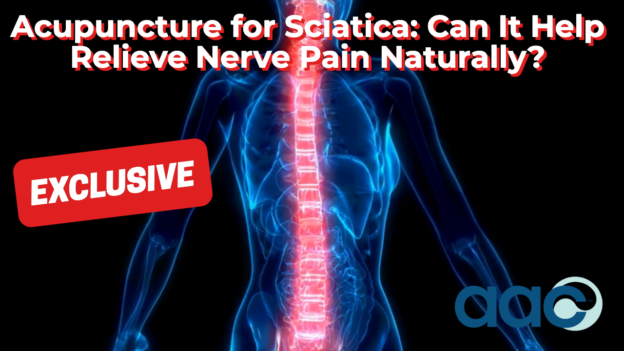
Looking for a drug-free way to manage sciatica pain?
Research published in the Spine Journal compared 20 different treatment options for sciatica to determine which provided the best results.
The study found that acupuncture ranked as the second most effective treatment, surpassed only by biological agents.
It outperformed several commonly used approaches, including spinal manipulation, epidural injections, disc surgery, opioids, exercise therapy, and radio-frequency denervation.
As healthcare continues to move toward natural, non-invasive solutions, acupuncture is gaining recognition as a safe and effective option for people seeking relief from sciatica pain without relying on drugs or surgery.
And remember, the American Acupuncture Council (AAC) offers an unparalleled track record in acupuncture risk management.
There is a reason acupuncturists have trusted AAC with their business for 50 years.
Disclaimer: The following is an actual transcript. We do our best to make sure the transcript is as accurate as possible, however, it may contain spelling or grammatical errors.Due to the unique language of acupuncture, there will be errors, so we suggest you watch the video while reading the transcript.
Hi, everyone. My name is Michelle Gellis, and I am an acupuncture physician. I would like to thank the American Acupuncture Council for this opportunity to talk to you today
I want to talk to you today about something I think about every single time I work on a patient’s face. We’ve all heard the expression, “The face is the mirror of the soul.” But what if the relationship goes much deeper than that? What if the face isn’t just reflecting our inner world, but actually shaping it?
Today, I want to explore what I call the emotional feedback loop of the face, the bidirectional conversation between our expressions, our nervous system, our organs, and our qi. I want to show you why this matters profoundly, both as acupuncturists and as people living in a world that is increasingly interfering with that loop.
Let’s start with the Western research, because it’s very fascinating, and it directly validates what Chinese medicine has understood for thousands of years. In psychology, there is something called the facial feedback hypothesis. The basic idea is this. Your facial expressions don’t just communicate your emotions to the world, they actually generate emotional states within you.
Click here for the best Acupuncture Malpractice Insurance
The face sends signals back to the brain. It is not a one-way street. This idea goes back to Charles Darwin. In my book, Treating the Face, I talk about research that was done And by Charles Darwin, and it really gained momentum in 1988 when researchers Strack, Martin, and Stepper conducted a now famous experiment.
They asked participants to hold a pen between their teeth, which forces a smile, or between their lips, which prevents smiling. Those holding the pen in their teeth rated cartoons as significantly funnier. They were smiling without knowing it, and their brains responded accordingly. A large international study published in Nature Human Behavior, nearly four thousand participants, nineteen countries, found that when people deliberately mimic a smile, it amplifies and even initiates feelings of happiness.
Think about what this means clinically. The muscles of the face are not just motors for expression. They are afferent transmitters sending information back to the brain, back to the nervous system, back to the organs. When we activate the corrugator muscles, the muscles that are between the eyebrows, we don’t just look concerned, we begin to feel concerned Now here’s where it gets really interesting for our purposes as practitioners.
Botulism toxin, known by the brand name Botox, Dysport, Xeomin, works by paralyzing the muscles of facial expression. Researchers have used this as a natural experiment to study what happens when you interrupt that feedback loop, and the results are striking. When people see a happy or angry face, they unconsciously mimic that expression.
But Botox prevents that muscle reaction, and it scrambles the brain’s ability to interpret other people’s emotions. In one study People who were using Restylane, which is a filler, not a muscle paralyzer, read emotions with seventy-seven percent accuracy. Botox users, only seven– seventy percent. We don’t just see someone else’s expressions, we mirror it micro-muscularly, and that mirroring is how we understand what they feel.
If you paralyze the muscle, you lose part of your emotional translation system. Research also found that Botox to the crow’s feet, those little laugh lines on the sides of your eyes, was associated with increased depression scores and reduced emotion recognition. Freeze the muscles of a real smile. So you only get those when you’re smiling really big, like a genuine smile, and when you freeze them, you reduce the feedback that tells your brain you are experiencing joy.
There is a paradox here, though. If you use Botox in the globu-ellar lines between the eyebrows, it can actually reduce depression because you can’t frown deeply, and they receive less negative feedback associated with worry and sadness. So in some cases, Botox reduces depression, but it also reduces the full range of emotional experience.
It creates what I like to call emotional flattening. If you lose the lows, you also are gonna lose some of the highs, and you lose your ability to fully read the people around you. As acupuncturists, we need to know that when we’re treating patients, if they’ve had these sorts of injections, it can affect them.
Their facial feedback system has been altered, and we can discuss that with them gently and professionally and from a deep place of knowledge. Now, I want to bring this to something even more fundamental. This isn’t just about adults choosing cosmetic procedures. This is about how we develop emotionally as human beings from the very beginning of life.
When children are very young, newborns, they are going to show a preference for their mother’s face within hours of being born. Newborns only hours old have been found to copy facial expressions, making an O with their lips or sticking out their tongues. This is remarkable because they’ve never seen their own face.
They are not learning through language. They are learning through instruction. They are learning through mirroring through the face. Research published in Scientific Reports found how much a mother’s– how much a mother mirrors her baby’s face in the first two months, and the mirroring that goes on between the mother and the child and how much mirroring occurs actually shapes the baby’s developing neural pathways and their ability to process expression for years to come Mirror neurons may be central to this process.
When we observe an emotional state in someone else, the mirror activity occurs in our own emotional center. We feel a version of what they feel through our face. So think about what happens in a family where expression is habitually suppressed. When parents chronically hold tension in their jaw, guard their brow, tighten around the eyes, children are literally learning to hold these same patterns in their own faces, and those muscular patterns are sending feedback to their developing nervous systems, shaping how they experience and regulate emotions for decades.
This is not abstract. This is psychology, and it is something Chinese medicine has always understood. In the Chinese medi– in Chinese medicine, the face is never separate from the whole person. Every zone of the face reflects organs. Every line, every color, every area of tension, it tells a story about the internal landscape.
The brow, the corrugator, the procerus belong to the liver. Chronic furrowing here reflects constraint of liver qi, the holding in of frustration and anger that has nowhere to go. And as Western research now confirms, that muscular tension is not just a symptom. It is perpetuating the emotional state.
It is feeding it back into the system. So this is not just carrying a meat suit around. The expressions that we hold back here are going to have an effect on the health of our organ systems. The area around the mouth, the obicularis oris, the depressor anguli oris, these all belong to our ability to feel joy and express joy.
And if these muscles have been paralyzed, then we cannot fully express joy. And if someone has experienced loss, chronic sadness, unexpressed grief, we can see this here also through the large intestine channel. The corners of the mouth will pull down, and that downward pull is sending information back to the nervous system.
Something’s wrong. Something’s been lost. What we are looking at when we look at the face is not just age. It is the history of a person’s emotional life written in their muscle, fascia, and qi. And what makes facial acupuncture so profound and so different from anything else we do is that we are intervening in that feedback loop.
We are releasing the muscular holding patterns that have been perpetuating emotional states, sometimes for decades. We are restoring the flow of qi through the channels that govern the emotional experience and helping the face and therefore the whole person In part two, we are going to go deeper into specific techniques on how to work with these patterns clinically I would like to thank the American Acupuncture Council again for this opportunity to speak to you today and make sure to check out part two
Click here for the best Acupuncture Malpractice Insurance
This website uses cookies to improve your experience. We'll assume you're ok with this, but you can opt-out if you wish. Cookie settingsI ACCEPT
Privacy & Cookies Policy
Privacy Overview
This website uses cookies to improve your experience while you navigate through the website. Out of these cookies, the cookies that are categorized as necessary are stored on your browser as they are essential for the working of basic functionalities of the website. We also use third-party cookies that help us analyze and understand how you use this website. These cookies will be stored in your browser only with your consent. You also have the option to opt-out of these cookies. But opting out of some of these cookies may have an effect on your browsing experience.
Necessary cookies are absolutely essential for the website to function properly. This category only includes cookies that ensures basic functionalities and security features of the website. These cookies do not store any personal information.
Any cookies that may not be particularly necessary for the website to function and is used specifically to collect user personal data via analytics, ads, other embedded contents are termed as non-necessary cookies. It is mandatory to procure user consent prior to running these cookies on your website.