
Tag Archives: American Acupuncture Council

Acupuncturist discussing malpractice insurance policy options with a patient during a career-stage consultation

Matching the Right Acupuncture Malpractice Policy to Your Career Stage

Matching the Right Acupuncture Malpractice Policy to Your Career Stage

Choosing an acupuncture malpractice insurance policy is not only a question of today’s premium. The policy structure can affect how claims from past care are handled when you change carriers, close a practice, retire, or otherwise end a claims-made policy. For that reason, the right policy type can look different at different stages of an acupuncture career.

Video: Matching the Right Policy Type to Your Current Career Stage

Transcript access: No transcript/download asset could be independently located in the currently indexed AAC materials for the supplied video. If the legacy WordPress post contains a transcript asset, preserve and relink that asset during publication.

First, understand the two policy structures

The National Association of Insurance Commissioners (NAIC) describes two basic forms of medical professional liability coverage. A claims-made policy generally responds when a claim is reported while the policy is in force, subject to the policy’s terms, including any retroactive date and applicable extended-reporting provisions. An occurrence policy generally responds based on when the covered event occurred, even if the claim is made later.

A simple example shows why the distinction matters. Suppose you treat a patient in 2026 and the patient makes a claim in 2028. With occurrence coverage, the policy that covered the 2026 event generally is the policy that responds, assuming the event is covered. With claims-made coverage, the policy in force when the claim is reported generally responds, subject to the applicable retroactive date and other policy terms.

When a claims-made policy ends, practitioners may need tail coverage, also called an extended reporting period, or another arrangement such as prior-acts coverage. The exact solution depends on the policy and the transition. Do not assume that every insurer uses the same terms or that a new policy automatically covers prior acts.

Early career: control startup costs without losing sight of the future

New graduates and early-career practitioners often have a legitimate reason to pay close attention to initial premiums. Practice startup costs can include licensing, rent, equipment, supplies, software, marketing, and other expenses. A claims-made option may offer a lower entry premium in some programs, making it attractive when cash flow is tight.

That lower initial cost should not be evaluated in isolation. Ask when the policy reaches its mature rate, what happens if you change carriers, and what your financial responsibility could be if you eventually need tail coverage. Also confirm the retroactive date and reporting requirements.

For a new practitioner, the useful question is not simply, “Which policy is cheapest this year?” It is, “What will this policy cost and require as my practice develops?” A policy that fits the first year may not be the best structure for the next decade.

Established practice: evaluate the long-term structure

Once your practice has stable revenue and you expect to remain in practice for many years, the long-term implications of the policy structure become more important. Occurrence coverage can provide a straightforward framework because the policy associated with the year of the covered event generally remains the relevant policy even if a claim is reported later.

Claims-made coverage can also be appropriate, but it requires more active planning around carrier changes, policy termination, retroactive dates, and extended reporting. If you own a clinic and employ associate acupuncturists, review these issues for the practice as well as for individual practitioners. Staff departures can create transition questions that should be addressed before a policy is canceled or replaced.

AAC currently states that its claims-made option converts to occurrence coverage without charge after ten years. AAC also states that practitioners moving from another claims-made policy may qualify for retroactive coverage, subject to underwriting. Because insurance programs and policy language can change, confirm current terms directly with AAC before relying on any program feature.

Approaching retirement or a major practice transition: plan before the renewal date

Career transitions are where policy structure deserves especially careful attention. If you are several years from retirement and have claims-made coverage, determine now what happens to claims arising from care you provided before the policy ends. Do not wait until the final renewal or the day you close the practice.

Depending on the policy and transition, the solution may involve tail coverage, prior-acts coverage, or a move to an occurrence structure. The cost and availability of these options vary. If you are selling a practice, changing employers, changing carriers, or winding down clinical work, ask the insurer to explain the transition in writing.

For some practitioners, moving to an occurrence policy while they are still actively practicing may make the eventual retirement transition simpler because there is no separate tail purchase for those occurrence-covered periods. That does not make occurrence universally better; it means the policy structure may align differently with a practitioner’s exit plan.

Do not choose a policy type by career stage alone

Career stage is useful context, not a substitute for reviewing the actual policy. Before buying or renewing coverage, check:

  • Which professional services and modalities are covered?
  • What exclusions and endorsements apply?
  • Is the policy claims-made or occurrence?
  • If it is claims-made, what is the retroactive date?
  • What happens when the policy ends, and is extended reporting available?
  • What reporting obligations apply to incidents or complaints?
  • Does the practice also need premises or general liability coverage?
  • Is business personal property coverage appropriate for equipment and furnishings?
  • Are the correct practitioner, practice entity, and additional insureds listed?
  • What limits, deductibles, program conditions, and current premiums apply?

AAC also advises practitioners to consider whether the policy reflects the services they actually provide, including modalities that may require specific confirmation. Scope-of-practice rules vary by state, so practitioners should verify both coverage and legal authority for the services they perform.

Practical takeaway for every career stage

New graduate: Compare the initial premium with the future obligations created by a claims-made structure.

Established practitioner: Reassess the policy when your practice, services, ownership, staffing, or carrier changes.

Clinic owner: Review how coverage follows individual practitioners and the practice entity when employees or associates leave.

Practitioner approaching retirement: Start transition planning well before the final policy period so you understand tail, prior-acts, or occurrence options.

The key question is timing: When does your professional liability policy respond to a covered claim? Once you understand that question, you can compare the policy structure with your current career stage, cash flow, practice model, and long-term plans.

Talk with the American Acupuncture Council

If you are reviewing your acupuncture malpractice insurance, the American Acupuncture Council provides acupuncture-focused professional liability information, coverage options, risk-management resources, and quote assistance. Review the actual policy, declarations, endorsements, exclusions, and applicable terms rather than relying on a premium quote alone.

Not an AAC member? Request an acupuncture malpractice quick quote or contact AAC to discuss your coverage options.

References

  1. National Association of Insurance Commissioners. Medical Malpractice Insurance. Updated April 1, 2026.
  2. American Acupuncture Council. Frequently Asked Questions.
  3. American Acupuncture Council. Occurrence vs. Claims-Made Insurance.
  4. American Acupuncture Council. AAC Policy.
  5. American Medical Association. Medical liability insurance: What final-year residents should know.

Educational disclaimer: This article is for educational purposes only. It does not provide legal, insurance, financial, or clinical advice. Insurance coverage depends on the actual policy, endorsements, exclusions, conditions, underwriting, and applicable law. State requirements and available coverage can vary. Confirm current terms with the insurer or a qualified insurance professional before making a coverage decision.


American Acupuncture Council presentation about healthcare credentialing and enrollment

What Credentialing and Enrollment Mean for Acupuncture Practices

Credentialing and insurance enrollment can affect whether an acupuncture practice is able to participate in a health plan, appear in a provider directory, and submit claims under the correct provider and practice information. Although the terms are often used together, they describe related but distinct administrative processes. Understanding the difference helps practitioners plan ahead, reduce avoidable paperwork problems, and set realistic expectations about insurance participation.

In this American Acupuncture Council (AAC) presentation, credentialing specialist Brandy Brimhall discusses credentialing and enrollment in healthcare and why these processes matter. The practical takeaway for acupuncture practice owners is to treat payer onboarding as an ongoing administrative responsibility—not a one-time form submission.

Watch the AAC presentation

Transcript: Preserve and relink the transcript download attached to the existing AAC post. Confirm that the link opens the intended transcript before publishing this revival.

What is provider credentialing?

Provider credentialing is the process through which a health plan or credentialing organization reviews a clinician’s qualifications and professional information. Depending on the payer and provider type, this can include education, licensure, training, work history, professional liability coverage, disciplinary or sanctions information, and other supporting documentation.

Credentialing helps a payer determine whether a provider meets its applicable participation standards. The exact requirements are not universal: they depend on the payer, plan, jurisdiction, and type of practitioner. Acupuncturists should confirm the criteria directly with each plan rather than assume that a requirement used by one insurer applies to all others.

What is payer enrollment?

Enrollment is the administrative process of registering a provider, group, or practice with a payer or program so the relevant records and billing arrangements can be established. Depending on the arrangement, enrollment may involve a National Provider Identifier (NPI), tax identification information, practice locations, ownership details, billing relationships, and other payer-specific forms.

Credentialing and enrollment may overlap or be handled in a coordinated workflow, but approval in one part of the process does not necessarily mean every other step is complete. A practitioner should obtain written confirmation of the status and effective date applicable to the specific plan, provider, location, and billing arrangement.

For Medicare, enrollment is a program-specific process. The Centers for Medicare & Medicaid Services (CMS) directs eligible providers and suppliers to obtain an NPI and submit the appropriate enrollment application, commonly through the Provider Enrollment, Chain, and Ownership System (PECOS). Medicare rules and provider eligibility are not interchangeable with commercial insurance network requirements. Acupuncturists should verify current Medicare coverage and enrollment rules for their provider type and services before relying on any assumption about payment.

Credentialing, enrollment, and network participation: the difference

These terms are related but should not be treated as synonyms:

  • Credentialing: Review of professional qualifications and other required information.
  • Enrollment: Creation or maintenance of payer/program records and billing arrangements.
  • Network participation or contracting: The plan-specific agreement and status that determine whether a provider participates in a particular network, subject to the contract and plan rules.

A plan may use different terminology or combine steps. Ask the payer what has been approved, what remains outstanding, and when the approval becomes effective. Do not infer that a submitted application—or even a credentialing approval—automatically authorizes in-network billing.

Why these processes matter to acupuncture practices

1. They can affect claims and payment

Incorrect or incomplete provider records can create claim rejections, delays, or requests for additional information. Even when a practitioner has an active license and an NPI, payer records may still need to reflect the correct legal name, tax details, practice address, billing provider, rendering provider, and effective date.

Credentialing or enrollment does not guarantee that a particular service is covered or that a claim will be paid. Coverage, medical-necessity rules, patient eligibility, authorization requirements, coding, documentation, benefit limits, and contract terms can all affect payment.

2. They help keep provider information consistent

Inconsistent information across applications, payer portals, professional records, and claims can slow administrative processing. Establish a single source of truth for each clinician’s legal name, credentials, NPI, license information, tax details, practice locations, contact information, and liability coverage. Limit access to sensitive records and submit information through authorized channels.

3. They support practice planning

Payer onboarding can take time, and processing timelines vary. Before advertising participation or scheduling services on the assumption that a plan will pay, confirm the plan’s requirements and effective date. Explain any uncertainty to patients accurately and avoid promising coverage or reimbursement before it is verified.

A practical credentialing and enrollment checklist

Acupuncture practice owners can use this workflow as a starting point, adapting it to each payer:

  1. Identify the payer and product. Confirm the exact insurance company, plan/network, and provider type; different products from the same insurer may have different participation rules.
  2. Verify eligibility. Ask whether the plan accepts acupuncturists in your jurisdiction and what services or credentials are required.
  3. Prepare documentation. Gather current licenses, NPI details, professional liability information, practice and billing addresses, tax information, ownership details where requested, and other payer-specific records.
  4. Complete required profiles and applications. Some plans use third-party data platforms, such as the CAQH Provider Data Portal, to collect and share provider information. Confirm which profile fields, attestations, authorizations, and supporting documents each payer requires.
  5. Track every submission. Record submission dates, confirmation numbers, outstanding requests, contact names, and follow-up dates. Respond promptly to requests for corrections or additional documents.
  6. Obtain written confirmation. Confirm approval, effective date, network/product, provider identity, practice location, and billing arrangement. Clarify whether separate group, location, or individual steps remain.
  7. Validate before billing. Confirm patient benefits and service coverage, authorization or referral rules, claim-submission instructions, and applicable contract terms.
  8. Maintain records. Update payer records when relevant information changes and complete recredentialing, reattestation, revalidation, or renewal tasks by the applicable deadlines.

Common mistakes to avoid

  • Assuming a license or NPI alone establishes payer participation.
  • Treating credentialing approval as proof that enrollment and contracting are complete.
  • Using inconsistent legal names, tax details, NPIs, or addresses across records.
  • Failing to track payer requests, deadlines, effective dates, and confirmation notices.
  • Assuming one payer’s process or coverage policy applies to another.
  • Telling patients that a service is covered before verifying the specific plan and benefit.

When an application is delayed or a claim is denied, identify the precise issue before resubmitting documents. Ask whether the problem concerns credentials, enrollment status, network participation, effective dates, member benefits, authorization, coding, or claim data. The right correction depends on the actual cause.

Use authoritative sources and verify payer-specific rules

CMS provides current guidance for Medicare provider enrollment, including NPI and PECOS steps: https://www.cms.gov/medicare/enrollment-renewal/providers-suppliers

Raped Credentialing explains how it supports providers and practice managers in maintaining and sharing information for credentialing, directory updates, and enrollment: https://rapidcredentialing.com/

For commercial plans, consult the payer’s provider manual, credentialing department, contract documents, and written application instructions. These resources are more authoritative for a specific network than general descriptions of credentialing.

Conclusion

Credentialing, enrollment, and network participation are connected but distinct parts of payer administration. Acupuncture practitioners can reduce avoidable disruption by understanding each stage, maintaining consistent records, tracking applications, confirming effective dates in writing, and verifying benefits and billing requirements before providing services under an insurance arrangement. Processes differ across payers, so use the current rules for the specific plan and provider type.

Learn more from the American Acupuncture Council. Visit the [AAC website](https://acupuncturecouncil.com/) for resources relevant to acupuncture professionals and practice owners.

Educational disclaimer: This article is for general educational purposes and is not legal, billing, coding, reimbursement, or payer-specific advice. Requirements vary by payer, plan, provider type, and jurisdiction and may change. Confirm requirements directly with the relevant payer and consult qualified professional advisers when needed.

Acupuncturist reviewing professional liability, general liability, and property insurance options

Which Acupuncture Insurance Policy Type Is Right for Your Practice?

Which Acupuncture Insurance Policy Type Is Right for Your Practice?

Choosing an acupuncture insurance policy type takes more than comparing premiums. Your policy should match how you practice, where you practice, the services you provide, the property you own, and what happens if someone reports a claim after a policy period ends.

For acupuncture professionals, two questions matter most: What coverage does your practice need, and does your professional liability policy use a claims-made or occurrence form? AAC also offers Preferred and Elite program options, plus endorsements for additional insureds, premises and general liability, and business personal property.

Transcript access: We could not independently locate a transcript or download link for the supplied video in the current indexed AAC materials. If the legacy page contains a transcript asset, preserve that existing asset and link during the WordPress migration.

Start with professional liability coverage

Professional liability, often called malpractice insurance, addresses allegations that arise from professional services. The National Association of Insurance Commissioners describes medical professional liability insurance as protection for licensed health professionals against liability associated with wrongful practices, including bodily injury, medical expenses, property damage, and defense costs.

For an acupuncturist, start by checking whether the policy covers the services you actually provide. AAC says its acupuncture policy generally covers services within the practitioner’s state-defined scope of practice, subject to policy exclusions. The actual policy and endorsements therefore matter more than a marketing summary.

If your practice includes herbal medicine, cosmetic or facial acupuncture, or other modalities, confirm how the policy treats each service. Also confirm that the service falls within your state’s scope of practice.

Claims-made vs. occurrence: the timing matters

The policy form determines when coverage can respond.

An occurrence policy generally responds when the covered incident occurs during the policy period, even if someone makes the claim later. A claims-made policy generally responds when someone makes the claim while the policy remains active, subject to the policy terms, including any retroactive date and reporting or extended-reporting provisions.

Consider a simple example. You provide care in 2026, but a patient makes a claim in 2028.

With occurrence coverage, the policy in force when the 2026 event occurred generally responds, assuming the policy covers the event. With claims-made coverage, the policy in force when the patient makes the claim generally responds, and the underlying event must fall within the policy’s applicable retroactive coverage.

This distinction matters when you change carriers, stop practicing, retire, or allow a claims-made policy to lapse. The National Association of Insurance Commissioners and the American Medical Association explain that extended reporting, often called “tail” coverage, can help address claims that arrive after a claims-made policy ends.

AAC’s current FAQ states that its claims-made option converts to occurrence coverage without charge after ten years. AAC also states that practitioners moving from another claims-made policy may qualify for retroactive coverage, subject to underwriting. Because policy terms can change, verify the current policy wording and transition provisions before you rely on those features.

What other coverage might your practice need?

Professional liability does not address every business risk.

Premises and general liability

Premises liability can address certain non-malpractice injuries or property-damage allegations that occur in the treatment area. For example, a patient could slip on a wet floor or trip over a hazard.

AAC explains that its general liability coverage can extend beyond the immediate treatment area. Depending on the policy terms, it can address risks such as injuries to invited guests, certain personal-injury claims, medical expenses, products liability, and fire or water legal liability.

If you lease space, share a clinic, or regularly welcome patients and other visitors, ask whether your premises or general liability coverage matches your contractual and operational responsibilities.

Business personal property

Business personal property coverage can address certain losses involving business equipment and furnishings that do not form permanent parts of the building. AAC currently describes coverage for items such as treatment tables and furniture, with a $10,000 limit and $500 deductible. Practitioners can request higher limits.

Ask one practical question: If a covered event damages or destroys the equipment you need to operate, what coverage responds?

Additional insureds and practice entities

Landlords, hospitals, clinics, or other organizations may ask you to add them as additional insureds. AAC explains that practitioners can request additional-insured coverage by endorsement and that the policy can treat limits differently depending on the circumstances.

Your professional corporation or other business entity presents a separate issue. Review the policy structure with AAC or your insurance professional so the named insureds and entities match your actual practice structure.

Preferred, Elite, and risk-management options

AAC currently describes Preferred as its standard program. Under the current program description, Elite provides a 30% discount when practitioners agree to use an arbitration form and informed-consent form with patients. The council also says its policy does not universally require arbitration and informed consent, although state requirements and clinical circumstances can vary.

Do not use a discount as a substitute for understanding the forms. Review each document, make sure it fits your practice, and confirm applicable state requirements.

A practical policy-review checklist

Before you buy or renew acupuncture professional liability insurance, ask:

  1. What professional services and modalities does the policy cover?
  2. What exclusions or endorsements apply to my practice?
  3. Does the professional liability policy use a claims-made or occurrence form?
  4. If it uses claims-made coverage, what is the retroactive date and what happens when the policy ends?
  5. What reporting obligations apply if I learn about an incident or complaint?
  6. Do I need premises or general liability in addition to professional liability?
  7. Do I need business personal property coverage?
  8. Does my landlord, clinic, employer, or another organization require additional-insured status?
  9. Does the policy correctly reflect my practice entity and ownership structure?
  10. What liability limits, deductibles, program conditions, and current premiums apply?

Your answer will depend on the actual policy, your practice structure, the services you provide, and applicable state requirements—not simply on the name of the coverage.

The bottom line

Choosing an acupuncture insurance policy type starts with understanding the risks you want to transfer. Professional liability addresses allegations involving professional services. Premises or general liability can address certain non-malpractice risks associated with the business and premises. Business personal property can address covered losses involving equipment and furnishings. Claims-made and occurrence answer a different question: When does the professional liability policy respond?

If you are reviewing your coverage, read the declarations, endorsements, exclusions, and applicable policy wording—not just the quote. Then ask the insurer to explain any provision that affects your services, practice entity, transition between carriers, or retirement plans.

Talk with AAC about your coverage options

The American Acupuncture Council provides acupuncture-focused professional liability information, coverage options, risk-management resources, and quote assistance. If you are comparing policies or reviewing an existing policy, AAC can help you identify available options and explain the program terms.

Educational disclaimer: This article provides educational information only. It does not provide legal, insurance, financial, or clinical advice. The actual policy, endorsements, exclusions, conditions, and applicable law govern insurance coverage. State requirements and available coverage can vary.

AAC resources

References

  1. National Association of Insurance Commissioners. Medical Malpractice Insurance. Updated April 1, 2026. NAIC
  2. American Acupuncture Council. Frequently Asked Questions. AAC FAQ
  3. American Acupuncture Council. Coverage Options. AAC Coverage Options
  4. American Acupuncture Council. AAC Policy. AAC Policy
  5. American Medical Association. Hospital & residency program closure implications FAQs. AMA
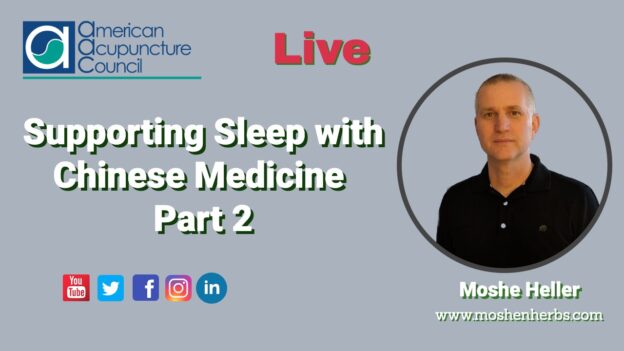
Treating Insomnia: Patterns & Formulas in Chinese Medicine Part 2

Chinese Medicine for Insomnia: TCM Patterns, Formulas, and Clinical Safety Part 2

Insomnia can involve difficulty falling asleep, repeated awakenings, waking too early, or sleep that feels unrefreshing. In this American Acupuncture Council presentation, Moshe Heller discusses how practitioners may use traditional Chinese medicine (TCM) pattern differentiation to organize treatment strategies for sleep disturbances. The framework is educational, not a substitute for an individual assessment or evidence-based insomnia care.

Transcript: Read or download the original presentation transcript. AAC notes that the transcript may contain spelling, grammatical, and terminology errors; consult the video when interpreting the presentation.

How TCM pattern differentiation frames insomnia

Heller emphasizes distinguishing the main sleep complaint—difficulty initiating sleep, difficulty maintaining sleep, early waking, or vivid and disturbing dreams—and then assessing the full presentation rather than selecting a formula based on insomnia alone. The patterns below summarize the presentation’s traditional framework. They are TCM diagnostic concepts, not biomedical diagnoses or proof that a specific mechanism causes insomnia.

Heart–kidney disharmony and yin deficiency

In the presentation, frequent awakenings after initially falling asleep are associated with a pattern described as heart–kidney disharmony or yin deficiency with yang rising. Other traditional signs discussed include night sweats, dry mouth, palpitations, anxiety, a red tongue with little coating, and a thin, relatively rapid pulse. Heller identifies Tian Wang Bu Xin Dan as a formula traditionally considered in this pattern and mentions combinations such as Kidney 3, Heart 7, Heart 6, Kidney 7, and Spleen 6.

Heart and liver blood deficiency

Difficulty falling asleep and dream-disturbed sleep are discussed in relation to a traditional blood-deficiency pattern, with possible pallor and a pale tongue. Heller names Suan Zao Ren Tang and discusses Spleen 6 and Heart 7, with Stomach 36 as a possible supporting point in the TCM framework. He also highlights suan zao ren (Ziziphus seed) as an herb traditionally used in sleep formulas.

Heart qi and blood deficiency with unsettled shen

For a presentation involving palpitations, being easily startled, and unsettled sleep, Heller describes Hu Po Yang Xing Dan (also referred to in the talk as amber-nourishing-heart pill). He discusses Heart 7, Pericardium 6, Bladder 15, and sometimes Bladder 20. The talk also mentions children with attention and sleep concerns; this should not be interpreted as evidence that this formula treats ADHD or that it is appropriate for children without a qualified, individualized assessment.

Liver qi constraint with heat or fire

Heller describes a more agitated presentation, with irritability, anger, anxious rumination, and difficulty falling asleep, through the TCM concept of liver qi stagnation that may transform into heat or fire. He identifies Chai Hu Long Gu Mu Li Tang and mentions Liver 3, Gallbladder 34, and Heart 7 as examples of a traditional treatment strategy.

Phlegm or phlegm-heat disturbing the shen

Restless sleep, vivid or repetitive dreams, chest oppression, a sensation of phlegm in the throat, nausea, bitter or sweet taste, a slippery pulse, and a greasy tongue coating are discussed as possible signs within this traditional pattern. Heller mentions Wen Dan Tang and, when heat is prominent, Huang Lian Wen Dan Tang. Point examples include Pericardium 5, Stomach 40, and Heart 8 or Heart 7.

What does current evidence say?

Research on acupuncture and Chinese herbal medicine for insomnia is promising in some analyses, but limitations matter. The U.S. National Center for Complementary and Integrative Health (NCCIH) summarizes a 2021 review of 11 acupuncture studies involving 775 participants that suggested possible improvement, while noting that the studies were small, varied in methods, and generally low quality. NCCIH also reports that evidence reviews of auricular acupuncture have important quality limitations. These findings do not establish acupuncture as a replacement for recommended insomnia treatment.

A 2015 systematic review and meta-analysis of Chinese herbal medicine included 79 trials and 7,886 participants. It reported possible improvements in subjective sleep measures, but substantial heterogeneity and methodological weaknesses limited confidence in the size and generalizability of effects. A later network meta-analysis of Chinese herbal medicines also reported potentially favorable findings, but rankings across trials cannot establish that a particular formula is appropriate for an individual patient or prove superiority in routine practice.

For chronic insomnia in adults, the American Academy of Sleep Medicine strongly recommends multicomponent cognitive behavioral therapy for insomnia (CBT-I). Sleep hygiene can support a broader plan, but guidelines advise against using sleep hygiene alone as treatment for chronic insomnia. Acupuncture or TCM care, when appropriate, should be discussed as complementary care and coordinated with the patient’s medical team.

Clinical application: assessment before formula selection

  • Characterize the sleep problem. Ask about onset, awakenings, early waking, duration, daytime impairment, schedule, and the patient’s goals. A sleep diary may help track patterns and response over time.
  • Screen for other causes and red flags. Consider sleep apnea, restless legs, pain, mood symptoms, medication or substance effects, shift work, and other medical contributors. Encourage medical evaluation for persistent symptoms, significant daytime impairment, breathing pauses, or other concerning features.
  • Use pattern differentiation as a clinical framework, not a shortcut. The patterns and formulas in the video are examples. They should not replace a comprehensive history, examination, individualized diagnosis, or follow-up.
  • Coordinate care. Do not advise patients to stop prescribed medication or delay evaluation. Consider referral to a clinician trained in CBT-I for chronic insomnia.

Herbal safety and scope of practice

Chinese herbal formulas can have adverse effects, interact with prescription and nonprescription medicines, and vary in quality and composition. NCCIH warns that some TCM products have been contaminated with toxic compounds, heavy metals, pesticides, or microorganisms, and that substitution or manufacturing errors have caused serious complications. Before recommending or dispensing herbs, review the patient’s medication list, allergies, pregnancy or breastfeeding status, relevant medical conditions, product quality, and applicable scope-of-practice requirements. Use reputable products and appropriate monitoring; consult a pharmacist or other qualified clinician when interaction risks are uncertain.

Acupuncture also requires appropriate training, clean-needle technique, and attention to anatomical safety. Patients should understand expected benefits, uncertainty, alternatives, and the need for medical evaluation when indicated.

Key takeaway

Heller’s presentation offers a traditional pattern-based way to think about sleep complaints and examples of associated formulas and acupuncture points. For contemporary practice, use that framework alongside careful assessment, transparent discussion of evidence limits, herbal safety screening, and coordination with evidence-based insomnia care. Chronic insomnia should not be managed with sleep-hygiene advice or a formula alone when further evaluation or CBT-I is indicated.

Continue learning with AAC

Explore more educational resources from the American Acupuncture Council blog, including Supporting Sleep with Chinese Medicine, Part 1 (confirm the target URL before publication). For information about professional liability coverage, visit the American Acupuncture Council website.

References

  1. National Center for Complementary and Integrative Health. Mind and Body Practices for Sleep Disorders: What the Science Says.
  2. National Center for Complementary and Integrative Health. Sleep Disorders and Complementary Health Approaches: Usefulness and Safety.
  3. Edinger JD, Arnedt JT, Bertisch SM, et al. Behavioral and psychological treatments for chronic insomnia disorder in adults: an American Academy of Sleep Medicine clinical practice guideline. J Clin Sleep Med. 2021;17(2):255–262. Full text.
  4. Ni X, Shergis JL, Guo X, et al. Updated clinical evidence of Chinese herbal medicine for insomnia: a systematic review and meta-analysis of randomized controlled trials. Sleep Med Rev. 2015. PubMed.
  5. Chinese herbal medicine for insomnia: a systematic review and network meta-analysis. 2025. PubMed. Interpret comparative rankings cautiously in light of study limitations and clinical context.

Educational disclaimer: This article is for professional education and general information only. It does not provide individual medical advice, establish a diagnosis, or replace appropriate medical assessment and treatment. Clinical decisions must be based on the individual patient, practitioner qualifications, applicable law, current evidence, and professional judgment.

Acupuncturist discussing patient care and malpractice risk management with documentation, consent, and coverage

Preventing Acupuncture Malpractice Claims: Documentation, Consent, and Coverage

Preventing Acupuncture Malpractice Claims: Documentation, Consent, and Coverage

American Acupuncture Council | Revived publication

Introduction

Acupuncture is generally regarded as a relatively safe clinical intervention when performed by appropriately trained practitioners, but no invasive procedure is risk-free. For acupuncture practices, malpractice risk management is therefore broader than buying insurance. It starts with sound clinical screening and technique, continues with informed consent and accurate records, and includes knowing how professional liability coverage responds if a complaint or claim develops.

This article updates the American Acupuncture Council’s original presentation around three practical areas: documentation, informed consent, and insurance coverage.

Video: Preventing Acupuncture Malpractice Claims

Watch the AAC presentation on documentation, consent, and coverage.

Transcript Access

A transcript download was not located on the current AAC page during this revival review. If a transcript exists in the AAC media library, preserve or restore that asset near the video before publication.

1. Make the Patient Record Tell the Clinical Story

AAC’s patient-record guidance emphasizes documenting the reason for the visit, medications and allergies, examination findings, diagnosis, treatment plan, treatment provided, patient education, referrals, and follow-up. The broader principle is simple: the record should accurately reflect what you assessed, what you did, why you did it, and how the patient responded.

CMS likewise describes complete, accurate, timely documentation as important to patient care and compliance. Although CMS requirements do not automatically govern every acupuncturist, the documentation principle is useful: avoid vague, incomplete, or copy-forward notes that do not reflect the encounter.

For acupuncture, a practical treatment note may include:

  • Relevant interval history and changes in medications, allergies, or risk factors.
  • Clinically relevant examination findings.
  • Assessment or diagnosis within your scope and applicable rules.
  • Treatment performed, including the points or regions treated and relevant technique details.
  • Patient response during and after treatment.
  • Clinically significant adverse events or unexpected reactions.
  • Instructions, precautions, referrals, and recommended follow-up.

Electronic records deserve particular attention. AAC specifically cautions against “cookie cutter” notes that look identical from visit to visit. Templates can improve consistency, but they should not replace encounter-specific documentation.

2. Treat Informed Consent as a Process, Not Just a Signature

A signed consent form can be useful documentation, but informed consent is fundamentally a communication process. General medical-ethics guidance emphasizes discussing the nature and purpose of an intervention, material risks and expected benefits, alternatives when appropriate, and the patient’s opportunity to ask questions. The exact legal requirements for informed consent vary by jurisdiction and profession.

For acupuncturists, the conversation should be appropriate to the actual treatment and patient. The 2009 prospective safety study of 229,230 patients found that bleeding or hematoma, pain, and autonomic or “vegetative” symptoms were among the more common reported adverse effects; two patients experienced pneumothorax. The study also developed a consent form with modules addressing acupuncture, risks, conditions that increase risk, and consent.

More recent evidence reinforces the importance of recognizing that serious adverse events are uncommon, but not impossible. A 2021 systematic review and meta-analysis of prospective studies estimated serious adverse events at about 7.98 per million treatments, while noting substantial heterogeneity among studies.

That means consent should be clinically meaningful rather than generic. When a patient’s circumstances or the planned intervention changes the risk profile, document the relevant discussion. Depending on the case, that may include issues such as anticoagulant use, bleeding risk, pregnancy-related considerations, infection risk, needling near the thorax, or other factors relevant to the treatment plan and the practitioner’s scope.

Consent does not eliminate risk or guarantee a defense to a claim. It is one part of a broader process of safe care, communication, and documentation.

3. Build Safety Procedures into Routine Practice

Risk management should begin before the needle is inserted. The World Health Organization’s benchmarks for the practice of acupuncture address procedures, facilities, and safety, providing a framework that can be used to evaluate practice systems.

For a practice, that translates into routine attention to:

  • Patient screening and relevant contraindications or precautions.
  • Anatomy and needling technique appropriate to training and scope.
  • Infection-prevention and sharps-safety procedures.
  • Recognition of adverse reactions and red-flag symptoms.
  • Appropriate emergency response and referral pathways.
  • Clear aftercare instructions.
  • Documentation of unexpected events and the response taken.

The evidence base also supports a balanced message. A 2013 systematic review of case reports identified serious complications including infections, tissue or organ injury, and pneumothorax, while case reports cannot establish the incidence of complications in routine practice. A 2021 prospective-study meta-analysis found that most reported adverse events were minor, while serious events were rare.

The practical lesson is not that every adverse event indicates malpractice. It is that practitioners should have systems for prevention, recognition, response, communication, and documentation.

4. Understand What Your Professional Liability Policy Actually Covers

Insurance is a backstop, not a substitute for clinical risk management. Practitioners should review the actual policy, including covered services, limits, exclusions, reporting obligations, and provisions that apply to claims-made or occurrence coverage.

The National Association of Insurance Commissioners explains the basic distinction: an occurrence policy generally responds based on when the covered event occurred, while a claims-made policy generally responds when the claim is reported during the applicable policy period, subject to policy terms, retroactive dates, and any extended reporting period.

That timing issue matters when changing carriers, retiring, closing a practice, or otherwise ending a claims-made policy. Do not assume that a new policy automatically covers prior acts or that every policy treats tail or extended reporting coverage the same way.

AAC provides current information on its policy and coverage options, including acupuncture-focused professional liability coverage, additional insured options, premises liability, and other endorsements. Because insurance terms can change and coverage depends on the actual policy, practitioners should verify current terms directly with the carrier or qualified insurance professional.

A Practical Malpractice-Risk Checklist

  1. If I have claims-made coverage, do I understand the retroactive date and extended-reporting implications?

Conclusion

Preventing acupuncture malpractice claims is not about assuming that every complication can be avoided. It is about building a practice in which clinical safety, patient communication, documentation, and insurance coverage reinforce one another.

Good records cannot guarantee that a complaint will never occur. A consent form cannot waive every legal or clinical obligation. Insurance cannot replace appropriate care. But together, these measures create a more disciplined risk-management system and a clearer record of how care was planned, delivered, and followed up.

Talk With AAC About Your Coverage

If you are reviewing your acupuncture professional liability coverage, AAC provides information about its policy, coverage options, claims service, and risk-management resources. Practitioners can also request a current Quick Quote.

Educational Disclaimer

This article provides general educational and risk-management information. It is not medical, legal, insurance, financial, or regulatory advice and does not establish a standard of care. Requirements vary by jurisdiction, profession, and insurance policy. Practitioners should follow applicable law and professional standards and obtain qualified legal, clinical, or insurance advice when appropriate.

References

  1. American Acupuncture Council — Proper Patient Records
  2. American Acupuncture Council — The Importance of Patient-Informed Consent
  3. American Acupuncture Council — Claims Service & Risk Management
  4. American Acupuncture Council — AAC Policy
  5. American Acupuncture Council — Coverage Options
  6. American Acupuncture Council — Occurrence vs. Claims-Made Insurance
  7. American Acupuncture Council — Acupuncture Malpractice Quick Quote
  8. World Health Organization — WHO benchmarks for the practice of acupuncture
  9. Witt CM, et al. Safety of acupuncture: results of a prospective observational study with 229,230 patients. Forsch Komplementmed. 2009.
  10. Bäumler P, et al. Acupuncture-related adverse events: systematic review and meta-analyses of prospective clinical studies. BMJ Open. 2021.
  11. Xu J, et al. Adverse Events of Acupuncture: A Systematic Review of Case Reports. Evid Based Complement Alternat Med. 2013.
  12. National Association of Insurance Commissioners — Medical Malpractice Insurance
  13. American Medical Association — Informed Consent
  14. CMS — Documentation Matters Toolkit
Michelle Gellis presenting facial acupuncture self-care tools and techniques for acupuncture professionals.

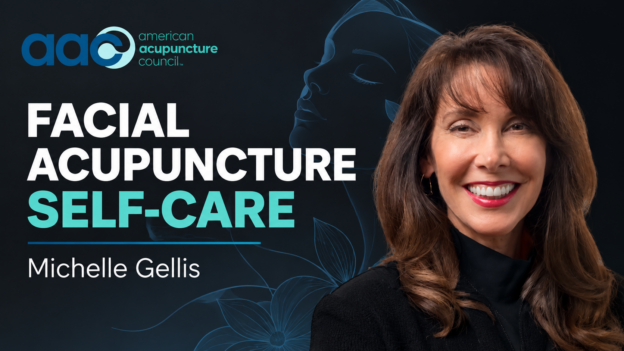
Facial Acupuncture Self-Care: Tools, Techniques and Safety

Facial Acupuncture Self-Care: What Practitioners Should Know

Facial acupuncture self-care interests acupuncturists who want to understand facial skin care, cosmetic techniques, and skin-stimulation tools. In this American Acupuncture Council presentation, Michelle Gellis shares her experience with facial self-care and discusses equipment used in personal routines and professional education.

However, learning about a technique does not establish that every device or method suits home use. Practitioners should therefore consider the available evidence, infection prevention, manufacturer instructions, and applicable professional requirements before using invasive skin-stimulation methods.

Watch the Facial Acupuncture Self-Care Presentation

Michelle Gellis — American Acupuncture Council

Presentation transcript: Download the original presentation transcript.

Editorial note: Retain the original AAC transcript disclaimer explaining that transcription may contain spelling, grammatical, or terminology errors.

What Does Facial Acupuncture Self-Care Involve?

During the presentation, Michelle Gellis describes her personal self-care practices and connects them to her teaching in cosmetic and facial acupuncture. Her educational materials cover several facial techniques, including cosmetic acupuncture, facial cupping, gua sha, microneedling, and approaches to neuromuscular facial conditions.

In particular, the presentation identifies several tools used in facial self-care:

  • Magnifying mirrors: These improve visibility when examining the face or performing detailed skin-care tasks.
  • Derma rollers: These handheld devices roll small needles or projections across the skin, depending on their design.
  • Microneedling pens: These devices use needle cartridges to create controlled punctures in the skin.
  • Serum-delivery devices: Gellis also demonstrates a device designed to stamp serum onto the skin.

Although these tools may appear similar in a cosmetic setting, their functions differ considerably. For example, a magnifying mirror does not penetrate the skin, whereas a microneedling device disrupts the skin barrier. Consequently, each product requires a separate assessment of its intended use, risks, and regulatory status.

Consider this presentation an educational introduction to facial self-care tools rather than a universal protocol for self-treatment.

Facial Acupuncture, Microneedling, and Skin Care Are Different

Facial acupuncture and microneedling may both involve fine needles. Nevertheless, they represent distinct procedures with different purposes and safety considerations.

Facial acupuncture involves inserting acupuncture needles at selected anatomical locations within an individualized treatment plan. Depending on the practitioner’s training and clinical context, practitioners may use facial acupuncture to address cosmetic goals or certain functional concerns.

By contrast, microneedling uses a device to create repeated punctures in the skin. Some devices penetrate deeper skin layers, and regulators authorize particular devices for specific indications. For example, the U.S. Food and Drug Administration (FDA) has authorized certain microneedling devices for uses that include improving the appearance of facial acne scars and wrinkles. However, that authorization does not automatically extend to every device, treatment area, technique, or claimed benefit.

Basic skin care follows a different approach. Cleansing, moisturizing, and sun protection, for instance, do not require intentional skin puncture.

For practitioners, the essential distinction concerns the procedure itself, not simply whether a company markets a tool as a cosmetic device. Therefore, evaluate every technique according to its intended use, limitations, and potential complications.

What Does the Evidence Say About Facial Self-Care?

A technique’s popularity does not establish its clinical effectiveness or guarantee a cosmetic outcome.

According to the FDA, microneedling may improve the appearance of certain scars and wrinkles when practitioners use appropriately authorized devices for their specified indications. However, results vary, treatment may require multiple sessions, and improvements may be temporary. These findings do not establish equivalent benefits for every consumer roller, serum-delivery tool, or facial acupuncture technique.

Similarly, evidence supporting acupuncture for particular health conditions does not automatically demonstrate that facial acupuncture improves skin appearance or reverses visible aging. To assess cosmetic claims responsibly, examine studies that directly evaluate the procedure, population, comparison group, and outcome in question.

Traditional Chinese medicine also offers diagnostic frameworks and explanations for treatment choices. Practitioners may draw on these frameworks in clinical practice. Nevertheless, they should distinguish traditional theory from modern clinical evidence when explaining treatment rationale and expected outcomes.

Ultimately, realistic expectations protect both patients and practitioners. No facial procedure should promise a particular aesthetic result without adequate supporting evidence.

Safety Considerations Before Using Facial Devices

Facial skin requires careful handling, especially when a procedure creates punctures. The FDA identifies several potential microneedling complications, including redness, bruising, bleeding, infection, pigment changes, and reactivation of cold sores.

1. Understand the device and its intended use

First, read the manufacturer’s instructions and identify the device’s intended purpose. Next, verify its regulatory status and authorized indications where applicable. A product’s availability online does not establish FDA authorization for a particular procedure.

2. Prevent infection and cross-contamination

Follow the manufacturer’s cleaning and disinfection instructions, and never share personal microneedling tools. For applicable medical microneedling devices, the FDA emphasizes using a new needle cartridge for each treatment session. Cleaning does not make a used cartridge suitable for reuse.

Likewise, acupuncture needles used in clinical practice must meet applicable sterile, single-use requirements. However, practitioners should not treat microneedling equipment and acupuncture needles as equivalent products.

3. Screen for potential contraindications

Microneedling may not suit everyone. For example, active skin infections, certain inflammatory skin conditions, impaired immune function, bleeding disorders, and relevant medication-related risks may affect a person’s suitability.

Therefore, a qualified healthcare professional should assess individual circumstances rather than relying solely on a general online demonstration.

4. Use appropriate products

Never assume that a serum, cosmetic, or topical medication is safe to introduce through punctured skin. The FDA has not authorized microneedling devices to deliver cosmetics or topical medications into the skin. Accordingly, practitioners should verify product compatibility, intended use, and applicable requirements before recommending a device-assisted application.

5. Recognize complications and arrange appropriate care

Monitor for persistent or worsening pain, spreading redness, swelling, discharge, significant skin changes, or other concerning symptoms. If these problems occur, stop the procedure and arrange prompt clinical assessment as appropriate.

Practical Implications for Acupuncture Practice Owners

Acupuncturists interested in facial services should distinguish personal self-care techniques from professional treatment offerings. Each setting raises different questions about training, patient safety, and professional responsibility.

For professional practice, training should address facial anatomy, infection prevention, device handling, patient selection, informed consent, realistic outcome discussions, and adverse-event recognition. In addition, practitioners must confirm that their training, professional scope, and applicable state requirements permit the proposed procedure.

Before adding microneedling or another device-based service, review the equipment documentation and manufacturer instructions. Also examine relevant insurance terms, regulatory requirements, and professional obligations. An acupuncture license alone does not necessarily authorize every cosmetic procedure.

Clear documentation supports responsible care. When applicable, record the treatment rationale, informed consent, relevant screening, equipment and products used, aftercare instructions, and any complications. For consequential scope-of-practice or coverage questions, consult the appropriate licensing authority, insurer, or qualified advisor.

Continue Learning About Facial Acupuncture

The American Acupuncture Council offers additional educational presentations on facial acupuncture and related clinical topics. Explore these resources to continue your professional learning:

These presentations provide additional educational perspectives. Even so, practitioners should evaluate each technique against current evidence, training requirements, individual patient needs, and applicable safety standards.

Conclusion

Michelle Gellis’s presentation introduces facial acupuncture self-care through practical examples of mirrors, rollers, microneedling pens, and serum-delivery devices. For acupuncturists, the central lesson is to distinguish personal routines from professional procedures and assess each technique independently.

Safe practice depends on appropriate training, equipment-specific precautions, realistic expectations, and an understanding of the available evidence. With these principles in mind, practitioners can explore facial self-care without assuming that every tool suits every user or that all techniques deliver established cosmetic benefits.

Continue your professional education with the American Acupuncture Council. Explore the related presentations above and consult authoritative safety guidance before incorporating new procedures into your practice.

References

  1. U.S. Food and Drug Administration. Microneedling Devices: Getting to the Point on Benefits, Risks and Safety.
  2. U.S. Food and Drug Administration. Microneedling Devices.
  3. National Center for Complementary and Integrative Health. Acupuncture: Effectiveness and Safety.
  4. American Acupuncture Council. Facial Acupuncture Self-Care – Michelle Gellis.

Educational disclaimer: This article provides professional education and general information, not medical advice, diagnosis, or an individualized treatment protocol. Acupuncturists should base clinical decisions on each patient’s circumstances, current evidence, appropriate training, professional scope, and applicable laws and regulations. Only appropriately qualified practitioners should perform skin-penetrating procedures, and they must comply with all applicable requirements.