Category Archives: Blog

AACTTPCollins03242021 Thumb

CIGNA ASH Update for Acupuncture Providers – Sam Collins


Well, as always, let’s kind of work with what’s going on and changing for us in the realm of coding and billing. And specifically this episode, we’re going to spend some time with American specialty health and Cigna.

Click here to download the transcript.

Disclaimer: The following is an actual transcript. We do our best to make sure the transcript is as accurate as possible, however, it may contain spelling or grammatical errors.  Due to the unique language of acupuncture, there will be errors, so we suggest you watch the video while reading the transcript.

And we’re Live. All right,

Greetings everyone. This is Samuel Collins, your coding and billing expert for acupuncture and the American Acupuncture Council. Welcome you to another episode of, to the point by the American acupuncture council. And thank you for spending some time with me. I will always want to give you some updates. What’s changing. What’s going on. What’s new. If you have not, please take a look at the American Acupuncture Council Network site to check our new section. Cause we do update information there. Along with these shows. We also have information on our Facebook page too. If you’ll take a look there. Well, as always, let’s kind of work with what’s going on and changing for us in the realm of coding and billing. And specifically this episode, we’re going to spend some time with American specialty health and Cigna. Cause I know a lot of you have gotten some letters, so let’s go to the slides, everyone.

All right. As always here’s our website, of course, we’ll take a look there. That’s where the new section is, but let’s kind of focus in on what’s been going on or what is going on with Cigna. So let’s take a look at this letter that I’m sure many of you received. Notice. This one is just dated February 26 and it says here Cigna is pleased to announce that they are expanding their acupuncture per provides our customers with access to services effective June 1st. Now let’s read this thoroughly because it says we encourage you to become a participating provider with Ash to support acupuncture services for Cigna customers, benefits plans nationwide beginning June 1st. So let’s start first with notice. It says encourage it. Doesn’t say we require. In addition, it says as a result of this program, this will contract directly with providers for acupuncture services for Cigna benefits.

Now, for those that are familiar with American specialty health or Ash, it is one of the largest plans out there that manages typically chiropractic acupuncture as well as physical therapy. And most people often will give a kind of negative outlook to this company. Now I want to be careful. I’m not saying they’re a bad company, but the one factor that many people focus on is that they simply have a very low reimbursement. They do have some other requirements, but as far as being negative towards it, I’ve heard people say it’s not so much the company. I think they’re fine. It’s just the reimbursement as well. So it says here, we’re going to use that company, which means reimbursements are going to decrease based on this. And it says, provide contract administration, medical necessity, review, and claims processing. Now I will say this. They have a very good plane claims processing portal that can make things easier.

And actually if you use their portal, they actually give you a bonus payment. So that’s pretty good. Don’t get too excited. That bonus payment is literally pennies to a dollar nonetheless. Um, this is what’s occurring now. What’s important. It says we encourage you and then notice here. It says what this means to you. You must be contracted with Ash in order to provide in-network acupuncture services. So what that is saying that if you wish to be in network with Cigna, you must Ash. Now. Sure. Some of you have been through the program with Accu care, maybe a couple others that were handling this. They’ve just simply moved the contract over to Ash. So does that mean they won’t have benefits? No. It just simply means that if you want to have in network benefits, now this is where we really have to decide how well this is going to work.

Now it says here about advantages, continuity of care, access to their Ashlyn, which is their, um, billing portion, no fees to join. That’s all good advantages of a hundred percent, a hundred percent. Peer-to-peer here’s the downside. The downside is they’re often very strict when it comes to medical necessity. Now I’m not saying they’re too strict, but you have to remember, they’re going to look for how well is the care working? What are the changes being made? So it’s something you really want to start to take a look at as to whether or not that’s something you can work with or how many visits you see. Because often after five visits, they’re going to request additional information, which I will say is terribly hard, but it doesn’t mean that’s going to be extra work. And we have to decide whether or not this is going to be a benefit we want.

Well, there’s a second part to the letter and something I want to emphasize here is this. It says for applicable areas, this is not going to include California, Washington, state, Oregon, or Tennessee. So those areas already have contracts with Ash. So you won’t necessarily have to join, but the benefits can be managed there. And it’s not including benefits for North Carolina and Virginia, which they say are upcoming. So what they’re saying is if you want to join, they’re looking for you to join sometime around April 1st. Now that’s when you can begin, do you have to join for you to have these benefits? Is what my concern is. The answer is simply no, the patients will still continue to have the benefits, but what will it pay and how do we decide? So here’s one of the things we do. I do seminars, of course, I’m sure many of you have attended.

And I also have a consulting service that our network that I work with you one-on-one. Well, one of the things you have to do is kind of do what I do with my members. And that is to figure out how worthwhile is it to be a member of this? Let’s start to talk about it this way. I’m going to keep this kind of simplistic for the timeframe we have. But think of it this way. When you join Cigna or Ash, you’re trading something now, what are you trading? You’re trading generally, you’re going to get less money per visit, but more patients. That’s kind of the advantage. If you’re in network, are you going to get considerably more people? So one of the things to consider is how does Cigna patients come to you in the first place? Were they coming to you because you were in network with something or were they simply coming? So in other words, if you are already getting the patients, how has joining going to bring more? In fact, my concern would be, if you join, you simply are going to get less. So the choices, if it can give you much

More volume and will it make up

For the decrease in reimbursement. So let’s talk about the in network and out of network in network means you’re controlled to those fees and you may not collect anything different other than what’s allowed. If you are out of network, they’re going to pay what they allow, but then you can balance bill the patient. Now that balance billing is fine, but how much will the patient take? How much can they afford? Would it be better for them to go to an in-network doctor where they have to pay maybe a $15 copay compared to coming to you where it could be $40? So that’s something to consider. Although I will say this, don’t be afraid to offer your patients good service. People don’t choose acupuncturist because you’re cheap. They choose it because you can help them and make them feel better. And there’s a value to that.

So before we begin in talking about what the fees are of this thing, let’s talk about joining. When you join, you have to wait out what what’s good. What’s bad. So I suggest take a piece of paper, draw a line down the center on one side, please. Yes. On the other side, put no and start looking at the potentials. One thing to start with is, is this plant exclusive? Well, I’ll start with, it’s not, so that’s going to be a no. Why would I join something? That’s non-exclusive unless somehow it could send me many more patients. So I’m going to check a no on that one because it’s not exclusive. The next thing says is the pay reasonable? Well, I’m going to show you in just a moment. Not very now. I’m not going to say it’s horrible, but it’s not very good. So that’s already two there.

The only thing I could think that this would do for you is bring you a lot of new patients. Because if I look under the note, it’s, non-exclusive, it doesn’t pay very much. If they’re already current patients, how does that help? And there’s other requests they have after you do a certain number of visits, probably after five years, I have to do what’s called a treatment authorization. So this is, there’s a lot of downside to this in the sense of the extra work. Not saying it’s too hard, but please go in with your eyes open. I want you to think of the value. Well, let’s talk about what does it cost to treat a patient in your office? By example, let’s say your overhead per month is $4,000 and you see about a hundred patient visits. It’s a month now, again, that’s 25 a week.

That means it costs you $40 just to keep your office open on those number of patients. So by example, under some of these Ash policies, they pay 1550 $5 max per visit. So therefore if you’re getting $50 or $55 max, that means you’re making only 10 or $15 per patient think of how much extra volume. So in other words, if you have only asked patients, you’re going to go broke this one, you have to be a value added patient. And maybe this is where this can make a difference. Can it bring you someone that you have not already seen that will be new to your office? My key factor is going to be, does it really bring that type of value is the trade-off worth it? Well, let’s take a look at what they’ve done in California. Over this past year, American specialty health has worked with blue shield of California.

And what it allows is a car, an acupuncturist to do ENM codes. So exams, acupuncture in some objective therapies. Well, that sounds pretty good. Realize too, this plan doesn’t cover massage or TuiNa. So those services can be built with a patient separately so long as you inform them beforehand. So that sounds good. Except when you see, well, what’s the allowance. Well, even though they say they cover all of these things, the max per day is $55 and it’s inclusive and all visits count towards. So if you have a patient come in and get one service, it’s going to count as a complete visit. There’s no like, Oh, I just did a therapy. It’s still going to count. So here’s their allowance. This is the California. One $30 for exams essentially. And then 20 to 30 for re-exams. Okay. Not bad, but remember that’s still within the max.

So you’ll notice here. The plan says it pays $55 max per visit. Well, isn’t it interesting that the first set is 45 and the second set is 10. So in other words, as soon as you do two sets, you’ve maxed out. Even if you did an exam, do you get paid separately for that? Nope. The max per day is still 55. So therefore there’s really no additional benefit of them to think it’s paying you 55 per visit. Even the therapies you’ll notice are $10. So therefore, even if you did these therapies plus the acupuncture, what are you getting? Pre-visit 55. Now I’m not attempting to sound overly negative. I’m just saying, be aware of what the plan pays. This particular plan with Ash in California pays $55. Now American specialty health does do a medical necessity. And I would say, this is something I believe they’re pretty good at.

They kind of look at the patient. Yeah. As an overall, what do they cover? Things like headaches, hip or knee pain with arthritis or not extremity pain, mechanical irritation, pain, syndromes, back and neck pain. And of course not vomiting. And of course, you know, that Cigna has one of the most prolific diagnosis, allowances of all plans. I don’t foresee that changing the concern is how much, well, how much also relates to, well, how many visits are you going to get out of this? What they do pay attention to is your diagnosis understand less severe diagnosis. Don’t get as many visits, back pain compared to, let’s say a disc injury are very different. They do pay attention to things like this. And when you do your authorization, keep in mind indications in their history, such as it acute or trauma or traumatic chronic. Those make a difference.

A patient with comorbid factors, things that inhibit their recovery should be brought up. But when you do an exam, anything, you do the range of motion, palpation, orthopedic testing. If you do it, neurologic testing, quantify it. Don’t just tell me it’s positive. But also they do pay attention to tongue and pulse. So I’ll give them credit. They do follow some traditional principles. However, at the end of the day, what they’re looking for is can you show that you’re making the patient better? So understand that for $55 after five visits, do you have to do more of this information to get additional visits potentially? And it depends again on severity of diagnosis, they also look at the goals, how are you going to get the patient better? Well, let’s look at what this Cigna proposal is. And I couldn’t put the fee schedule up because it says it’s proprietary, but this is one I received from the, uh, Idaho area.

And, and I should say Midwest. And so you can see here, it’s not much different than what I just showed you. The 33 to 44 exams. The acupuncture they’ll notice here are going to be far cheaper. They are doing $40 for acupuncture. And I want to point out, I put a mistake here. This should be 40, not 45. The additional sets are paid for nothing. They’re just certain inclusive. So if you do one set or 10 sets, you’re going to get the same money. So something to consider when joining these plans, if you are a four set type of provider three set, this is going to be hard to absorb because that means you’re spending 45 minutes with a patient and getting $40 of reimbursement. Now, what if you’re the type of provider that does one set can be efficient. You needle the patient, make sure they’re finding, maybe they rest for a while and you’ll come back kind of a battlefield acupuncture or modern acupuncture style.

Maybe it can work because you can do volume. The difficulty is how much volume can you do? You know, at some point there’s a finite amount of things that an acupuncturist can do. Well, here’s what their fee schedule. Again, same thing for acupuncture and for therapies. So notice $10. So again, what is the maximum per visit? Well, it’s going to be 50 assuming, uh, acupuncture and a therapy. What they haven’t made clear, will they always pay the therapy separately. Now here’s for the region for the East Eastern areas. This is when I got out of DC. You’ll notice about the same prices, prices a little higher than the Midwest, I guess, but then you’ll notice fees are all the same. So what I’m going to suggest when you get into this, notice every therapy. Now the thing that frustrates me with this is how do you justify charging $10 for a hot pack and then $10 for exercise.

When exercise requires one-on-one care, that’s detailed undocumented compared to just lay in a hot pack on someone. How does that seem reasonable? So my bone to pick here is they should be paying providers more. And so I’ve had a lot of providers asking me, Sam, what I joined this? Now, all I can say is I’m going to give my opinion. Each of you have to make a decision on your own, how well this works. If you can do a high volume practice and there are a number of patients that are going to come in, only because they’re in this space, it could be worth it. However, if you are a two or three set provider, right, and you’re getting only $40, that’s going to be hard to swallow, but here’s the point. If you’re out of network, is it going to be the same thing?

Anyway, the difference is you can charge the patient. And what I’d explained to the patient is your plan pays $50. My visit is 80 and what you’re going to get with my visit is a much better level of care. I will be able to spend more time with you and really correct it as opposed to what I call a poke and run doctor, meaning, put the needles in and run out. Now, I’m not saying that in a negative way, there’s places for all types of providers. I could just find this very hard to work with now, how is this going to work? If providers do not join, will they still have benefits? Nothing has been shown from Ash or from Cigna. That patient we’ll lose benefits. If they go to out network providers, I think mostly this is a way to get the PR profession to join where they are going to gain more control.

Now I’m not against the medical necessity side. I think that’s fine. I just think that this reimbursement level is a hard one to sustain a practice. Let’s face it. If all you got were $50 from every patient and you spend a half hour with every patient, that means you make a hundred dollars per hour, assuming everything works efficiently or 800 per day, you can say, Hey look, that’s 4,500 per week. You know, or knowing that 4,500, excuse me. Uh, but those amounts could I, well, there’s 4,500 per week. Could I make that work well? Sure. But that’s, if you’re very efficient within that. So is it terrible? No. Is it really commensurate with what they were already paying? I don’t think so. And so that’s something that as a provider, you’re going to have to look at and decide, is it worth it to me now?

I will tell you, I’ve given you a little thumbnail of information. I tried to get it out there to you to get a little understanding. If you need more or want more, we offer services to do that. Our seminars at the American Acupuncture Council do that, but also we offer a service. That’s called the network. Just take your phone, scan this, come and take a look at the services we offer. Allow me to be part of your team where you can call me, email me, text me, or fax me questions. And we can work this through the, see how this is going to work and how to make sure you can keep your practice viable. I’m not going to be overly negative, but I want to say that obviously this is going to create a much greater level of control with much lower reimbursement. And that’s something I’ll say it’s not a positive for the profession.

So I’ve gotten a lot of feedback from different States and I’m talking to their state organizations where they have surveyed and a large number of providers have indicated they’re not going to join. It’ll be interesting to see if there’s not very many, what will Ash do or Cigna? All the patients will still have access to benefits. So what I’ll say to you is make a good decision for your office, make an informed decision. And the good news is what if you do join or don’t join. Can you always go back and change your mind? Sure. You can always go back and drop out or join. You want to do what’s best for your practice. Remember you are important to your patients and it’s good to be important, but it’s more important to be good. And to give that good service, you want to make sure that you have a viable practice to do it, allow us a chance to help you, but also the American Acupuncture Council is always here for you. Next week’s class is going to be with Poney Chiang. So pay attention to that. Otherwise I’ll say to all of you, best wishes, keep a close eye out and don’t be afraid to take a look and decide to be or not to be if you will. Thanks everyone. I’ll see you next time. This is Sam Collins, your coding and billing expert.


AACTTPGrossman03172021Thumb

Simple Email Strategies For Every Acupuncturist – Jeffrey Grossman


“we weren’t really given the tools on how to effectively market and grow our practice. So that’s what I’m here to do. I’m here to spend the next 20 minutes or so with you to share some insights about how you can do just that.”

Click here to download the transcript.

Hi folks, Jeffrey Grossman here, and I am really glad that you are joining me here. And I’m really grateful for the American Acupuncture Council. We yet, again, to invite me for an opportunity to share some business and marketing with you, I’m thrilled to be back here to share 20 minutes of insights and inspiration to help you build your practice, um, and to attract more patients and to really tap into the tools that we weren’t really given when in acupuncture school, we really received everything that we needed in order to grow our practice. We were given all the tools, all the know-how, all the insights and all the wisdom to be amazing pulse diagnosticians and tongue, tongue readers, and pulse readers. But we weren’t really given the tools on how to effectively market and grow our practice. So that’s what I’m here to do. I’m here to spend the next 20 minutes or so with you to share some insights about how you can do just that.

So, um, you know what we’re going to be talking about today, we were talking about a couple of things that some of you might not think are appropriate. We’re going to talk about email marketing, but I want to hear me. You, I want you to hear me out as we talk a little further, I’m going to lay out the facts as to why email marketing should be important and incorporated into your marketing strategies. And at the end of today’s training, I want to give you a link because I know that if I give you the link now that, um, you’ll go ahead, I’ll lose you, you’ll download it. And I want you to stay focused with me because our time together is really important. So I want to give you a link to an ebook that we just released. Um, um, uh, it’s called resetting your practice for 20, 21, how to get patients on your treatment table.

So if that’s okay, just stick with me at the end, I’ll get that link for you. So welcome. My name is Jeffrey Grossman, though, for those of you that don’t know me, I’m the founder and the owner of acupuncture, media works and acupuncture websites, and Accu downloads 2.0. So I started my practice back in 98 and I struggled just like many of you did back in the days. My background was as a graphic designer. And, um, and, uh, that was what the world that I was working in before I became an acupuncturist. So when I became an acupuncturist, I realized that like, there weren’t enough tools for me to help me grow my practice. I didn’t have the know how to grow my practice. I didn’t have the skills, the techniques and the insights on how to make that happen. So I, I sought some help.

I actually started coaching. Um, I paid about 15 grand to work with, um, a chiropractic coach to help me maximize my patient communications and my marketing strategies. And it paid off in spades for me. So it was one of the best things that I ever did. Um, I just want to just encourage you guys with the fact that marketing is important. And the idea is that in order to grow your practice, you need new people coming in. Therefore you need to have tap into these ideas and these skills and these insights that I’m sharing with you and that the AAC brings to you on a weekly basis. So you guys are an incredible resource. People are looking for you, especially now. They want the type of healing that you offer, right? They want something safe. They want something natural. They want something that lets them feel less anxious and more balanced. And this

Is what you have to offer. This is how you,

As an acupuncturist, changes lives, and people need you. They need your services, but a lot of people don’t know that you exist. And that’s what I want to do is I want to help you get more people in your treatment table. And that’s what these talks are all about us to help you be seen, to be heard and ultimately to bring people into your practice so you can make more money, help more people and change the world. One person, one needle at a time. So if at the end here, if you’re interested in learning more, if you need a little bit of hand holding some help, I’ll, I’ll give you, um, uh, an email address at which you could reach out. And, and, and, you know, if you’re looking for some support, please feel free to reach out to me. So there are more opportunities than ever right now for you to be tapping into growing your practice, especially now, especially now that we’re many of us are working from home and we have to reinvent ourselves.

And one of the easiest ways to do it, excuse me, is what I’m going to be talking about today, which is using email marketing, right? So, um, um, you know, one or two of these suggestions that you come up with in the ebook that I have for you at the end today, that you could download and even in today’s training, could that you put them into use, can make a massive change and a massive difference in your practice. So, today what I want to do is I want to talk to you about, um, a resource that is such an easy tool to use in your practice. And most of us use it every day. All of your patients have access to it and those kids, they probably use it too, right? So this is about tapping into the power of it and to grow your practice.

And I’m sure that when I talked about email marketing and using emails in your practice, I heard a universal grown, right? And, um, I heard people saying that, Oh gosh, email marketing. There’s no way I’m going to be using that in my practice. So sending emails is one of those things that every practitioner should embrace, whether you’re an acupuncturist, a dentist, a chiropractor, massage therapist, or even a big box store, everyone is using emails these days to communicate with your audience and it should be a priority for you in your practice. And here’s a couple of reasons why it’s important. One, it allows you to reach more patients in real time, right? It’s affordable. It keeps you on top of mind awareness within, um, it’s personable and it can be action oriented and you can see results almost immediately after you send out that email.

So think about your own experiences, right? You have email how your friends and family members have emailed. How many times do you check your email out every day? Right. Do you know anyone who doesn’t have an email address these days? Okay. So it’s here to stay and email us something that you need to embrace in your practice. And when you approach email marketing, um, there are a couple of things I want you to consider. Um, and a couple of things to think about when you formulate your emails and your plan to make that happen is the first thing to think about is why are you emailing them, right? What do you want to get across to them? What kind of message are you sending? And what do you want people to know? Okay, these are all important aspects. When you sit down to draft your emails or when you sit down and, and, and, and, and think about what you want to, what kind of messaging and what kind of things you want to get across to them.

It’s important to think about that first. Why are you emailing them? What do you want to get across to them? What’s the message. And also what’s the next step that you can get across to people, uh, to, you know, how can you get them to take the next action? Okay. So you got to have a valid and valuable reason that would motivate them to take some form of action in an email. And I’m going to review five types of emails with you that you should be sending to your patients on a regular basis. And these five emails are the perspective, email, the offer, email, the newsletter email, um, add the benefit email and the simple email, right? And I’m going to talk about each of these five briefly. Um, so let’s talk about the perspective email. This email is designed for you to offer, uh, your, to offer your take on a relevant and trending topic, right?

So the key to this email is not to chime in, um, every time there’s a celebrity gossip or a story or a new figure that are released in the economy. This type of email should be commentary, right? And old area areas that can imply expertise. And when things are relevant, like if there’s, uh, some information about acupuncture and immunity, that’s relevant for today, acupuncture, anxiety, that’s relevant for today, acupuncture for alleviating low back pain from people working from home and sitting in their chair all day that’s relevant for today. So think about how you can chime in to what is on people’s minds these days, and how to make it relevant for them in one of your emails, a couple of tips to consider are be current, okay. Make sure your content is based in today’s right. Think about what your audience or in this case your patients are going through.

Now what’s on top of their mind. What’s their most pressing concern. When you tap into that, you can talk to them and tap into what’s on top of their minds. It’s the what’s in it for me syndrome, right? People want to know what you could do for them. They don’t. They like to understand about all the cool things that you have to offer, but what they really want to know is what’s in it for me, what are my benefits? Okay. Therefore you need to play into their current state of mind and to get that information out to them. Next thing to do is to be factual, okay. Facts for, from up belief. And they can be very important when adjusting people who may not have all the same views as you do. So when you use facts, people can rely on the idea that they are rooted in truth, and that the, they may be more inclined to move closer to your beliefs.

And then the other thing about making stories relevant or emails relevant is to share stories from your perspective. There’s a saying that facts tell and stories sell. So people learn through stories and it’s part of our DNA. It’s what we want. And we really can learn more when things are given us in story form. And when we facts into a story, when you re read the relevance of a study or a program or something, or, or, or research into an email, um, it makes your story more relevant, excuse me, and, um, and gives you a better perspective that you’re talking on it with that topic. Okay. So the next type of email that you should be sending is the offer email, and everyone loves a good offer, right? So that’s why sending out an offer email can bring in inactive patients and prospects. And this email is perfect.

When you have a, a new therapy, a new technique, a new topics to talk about new research that you just unearth new products that you’re carrying or whatever it is when you have something that you want to offer, this is the perfect type of email to get out there. So there’s a couple of types of offers that you could be doing, which is one is a test drive offer. Okay. The test drive offer is exactly that. It’s exactly what it sounds like. Letting people come in to test drive a therapy or a service before they buy it. And before they sign up as a new patient, it’s getting them to take step foot in the door so they can learn about you learn about your offer and then take the next steps, become a full fledged pain patient. The next type of offer, um, is a solution offer.

Okay? And this offer provides answers to people’s most pressing problems, and it can be very powerful and invites people into your clinic. They get them clarity on a particular condition, right? So your offer could be, learn five ways that acupuncture can alleviate headaches or migraines, or, um, you know, it could be come in to get a seven point, you know, back paid assessment exam. Okay, whatever your offer is, what solution are you offering for them? Um, that, you know, that, that th that might be on top of their mind, right? Anxiety come in to receive a two point acupuncture, anxiety, and stress reduction, treatment data solution, you’re offering a solution to anxiety. Um, and that could be part of that email, the other type of offer that you could be offering as a stress reduction offer, and this offer, it does what it says, right?

This is one of my favorite offers that I’ve done in the past. Um, I’ve used it for all of my health fairs. And, uh, as, as a marketing tool, for me, basically offering an acupuncture, stress reduction treatment, um, and who doesn’t have stress these days, right? So the stress reduction offer is perfect to get people to come in for a free or reduced rate stress reduction offer, and that’s pretty straightforward. So those are the different types of offer emails that I feel are important. The test drive offer the solution offer and the stress reduction offer. Okay. So the next, this type of email that you should be sending out regularly is the newsletter, right? So if your practice doesn’t currently send a regular newsletter to your patient base, consider starting one. Okay. It’s um, massive missed opportunity. If you overlook any type of email for that matter, specifically, if you overload, overlook the idea of sending out, um, monthly newsletters.

Okay. And I’ve said it before, and I’ll say it again. Um, it’s important to stay in top of mind awareness with your patients. And, um, you know, it’s all too easy to have patients fall out of care, simply because they were, you know, were feeling better and they just forgot about you. Life happens, they just get caught up in it and they feel good. They forget about you, but I’m not receiving a monthly newsletter or an email from you for that matter puts you back in top of mind awareness. So when they need you next time, they’ll remember where to turn because they understood, or they read an article about how you could help with XYZ condition, um, um, in that way. So hopefully that makes sense. So a monthly, quarterly, or even an annual email newsletter give you the opportunity to share important information and remind patients of the practice.

And of course, you know, keeps you in top of mind awareness. So here’s a couple of things to consider when you put together your newsletter. One thing you could talk about is discussing your practices outreach, or any sponsorship or any type of community involvement. You can highlight any new clinic changes or a new staff members that you may be brought on announced marriages or new babies or new grandchildren, whatever that is. So talk about a new line products or new services that you’ve added. You can highlight condition, specific information. You can obviously always request referrals and online reviews with every type of email you put out there, especially with your newsletter. You can also address seasonal health concerns like or sports injury, or immune acupressure routines and things like that. Um, you can remind and encourage people, um, you know, about good healthy habits. And of course, when you use any type of email, especially your newsletter, you need to promote it, um, on your social media channels.

Okay? So there’s so many topics that you, as an acupuncturist can talk about in your newsletters. There’s no lack of content that you can put in your newsletters, but if there’s any type of email that you should be doing consistently is the newsletter email, and the other type of email that you should be putting out there of course, is the benefit and tips, email. And this type of email never gets old because as long as you can talk about new benefits that people can receive and tips that can help your audience, there are always people who want to hear them. So it’s all too common for practices to make the mistake of talking about how amazing what you do is, and how awesome the thing that you have is while you’re excited about it. Um, you know, you, you know, about the latest, cool thing that you do.

Some people might not care, right? People care again about what’s in it. For me, it’s the, what’s in it for me syndrome. People want to know what they can get out of it, what are their benefits? Okay. And, um, it’s always good to start with that in mind. So here are a couple ideas that you could be using, how to end back pain once and for all three simple techniques and, um, two acupressure points you could learn in the comfort of your home or suffering from depression. Here are three supplements that you could use in two powerful acupressure points to help or seven tips to supercharge your immune system. All right. So I’m not sure if you’ve opened emails that talk about X number of tips or ideas or whatever it is. And, but people love learning from emails like these people. And there’s a couple things I want you to consider when you put out these what’s in it, the, these, um, these emails considering your patient’s view of what’s in it for them.

Okay. Is it new? Is it useful? And is it beneficial? Okay. So is it new, given your topic? Is there a new angle or twist on it that you could take? Is there an update or a surprising bit of news that you can share? Do you have something that other people don’t know about yet or something that you’re the other one in your town that’s using, right. Something that your audience hasn’t heard or considered yet that’s about being new. Is it useful given your topic? Is there an application that your audience could use, right. Can you help them sort through or think through a common problem in some way, do you have a solution to something that they face and is it beneficial? Right? So again, given your topic and more importantly, given what keeps audience up at night, what is it that you have that will help them, right?

What is it about your topic that will benefit your audience? Is there a silver lining for them? Is there a net gain for them? How will, what you offer them, change their lives. And finally, the last type of email that I want to talk about is the simple email. So this is such a simple email. I send these out periodically and I’m amazed at the responses I get, and this is the type of email that can get your patients back in care pretty quickly with just a couple of sentences, even it’s so simple, but it works. And, um, it’s short, it’s sweet. And it’s getting an interested party to take notice. So here’s the framework. You have a simple subject line, something like patient’s first name only. So it would say like Jeffrey, right, or something like patient’s name Jeffrey. Can I share this with you?

Okay. One email that I’ve sent to other practitioners is, Hey, Jeffrey, are you looking for new patients? And that got me a ton of responses. And as you can imagine, most practitioners are looking for new patients. So emails like this with, um, curiosity, uh, subject lines, really pique people’s interest. They’re short, they’re sweet they’re to the point, and they get people to take quick action. So first think about, on your patient’s mind right now, right? Is it stress? Is it good health? Is it immunity? Is it better sleep? Okay. So what do they want to learn about where are they at with that? So send off a couple emails, says, Hey, Jeffrey, do you want to learn about better sleep? Hey, Jeffrey, do you want to learn about four points for immune health? Hey, Jeffrey. Um, do you want to learn about, um, you know, uh, five ways to alleviate your back pain?

Okay. So I want to run down a couple of examples of, of, of what the, the S the copy itself could read, like super simple stuff. Okay. Really, really easy. So it could say, Hey, Jeffrey, um, Hey, Jeff, you want to learn about immunity? Question Mark. That’s a subject line. And then the copy of, of, of, of the body, of the text of the email, if you’d be like, Hey, Jeffrey, can I share these immune points with you? These are two acupressure points that alleviate immunity. Um, if you know, um, if you’re interested, just respond to this email and I’ll get right back to you as soon as possible, that’s it? That’s really simple, right? Hey, Jeffrey, I’ve got two acupuncture points to share with you about better sleep. Do you want to know about them? Or, you know, that’s it, you know, so, um, that’s all you’ve got to do for those emails.

Okay. So, Hey, Jeffrey, are you still interested in getting help with back pain or learning how to boost your immunity or getting help with insomnia? If so, respond to this email and I’ll reach out to you as soon as possible your name, that’s the email, like three sentences at most, and that’s it. So people will get back to you. It’s almost like these emails work like magic. And if you haven’t sent an email like this one before, try it right. And let me know what kind of response do you get? You’re basically checking in with them, nagging them as really simple offer. And it’s one of the easiest emails to really send out. And I wouldn’t be doing you any justice today. If I didn’t mention that these other types of emails that you should be sending, like the missed appointment, email, the follow-up email of the reminder and confirmation emails, happy birthday emails. And of course the, please give us a review email. Okay. So I hope that helps.


AACTTPBrown03102021 Thumb

Three Stress Busting Mind Hacks Your Patients Will Love – Lorne Brown


We’re looking to create an environment to support the body’s innate ability to heal. Um, the body has this capacity to self-regulate. We call it balance. And when it’s doing this well, um, we have health and vitality.

Click here to download the transcript.

Disclaimer: The following is an actual transcript. We do our best to make sure the transcript is as accurate as possible, however, it may contain spelling or grammatical errors.  Due to the unique language of acupuncture, there will be errors, so we suggest you watch the video while reading the transcript.

Thank you. Um, again to the AAC for having me on their series called To The Point. My name’s Lorne Brown and a little bit about myself. I’m a doctor of traditional Chinese medicine. So my clinic is in Vancouver, British Columbia, Canada. It’s called Acubalance Wellness Center. I’m the founder of healthy seminars where we offer online continuing education. I’m the chair of the integrated fertility symposium. And I’m the author of this book of my past experience called missing the point why acupuncturists fail and what they need to know to succeed. And I’m a passionate about learning and passionate about consciousness work. And today I wanted to share with you, um, three mind hacks that your patients will love and you’ll love as well. If you incorporate these into your daily life. Um, my background also that I didn’t mention a moment ago is I’m also a trained clinical hypnotherapists.

So I really love working with the mind. Now, the reason I think this was real valuable tools to share with you for you yourself personally, and for your patients is because our whole goal often is to support the body’s innate ability to heal. Right? We understand this as Chinese medicine practitioners, that our bodies have this innate ability to heal. We’re not trying to override it. We’re not trying to suppress symptoms. We’re looking to create an environment to support the body’s innate ability to heal. Um, the body has this capacity to self-regulate. We call it balance. And when it’s doing this well, um, we have health and vitality. And when we ha when we catch a cold or we have an injury, we rebound, we recover. And if our body Lee loses this ability to self-regulate to a disability to heal, then we get a cold or we get, um, an injury.

But then we see this with our patients. They don’t heal, they don’t recover. And so these three mind tacks, I’m going to share with you how they’re going to support the body’s innate ability to be heal. And often I’ll share with my patients, you know, cause I want to educate them on why they’re going to use Chinese medicine and how those will benefit them. So I’m explaining some of our philosophies, um, how we see the body. And so one of them is your body has an innate ability to heal. And I often say, if you get a cut, you don’t sit there and stare at your hand and say, he’ll he’ll he’ll know, your body knows how to do this on its own. It can do this. And if you get a really serious kind of big gash, you may need stitches, but the stitches does not create the healing.

What that thread does is it creates an environment to support the body’s innate ability to heal by bringing the tissue together. It creates an environment which allows the body to do its job, to heal. And I often say Chinese medicines like that, red, we’re going to create an environment to support your body to heal. So the reason these three mind hacks are crucial in life. When we feel stressed, we often call this like cheese stagnation. Um, some people in the conscious world call this resistance or friction. You know what it feels like when you’re out of balance, you’re feeling stress. It doesn’t feel good. You can tell. And when you are in flow and she is flowing, you feel inspired. Your, your chest feels open. And like, there’s this expanse to you versus this tight contraction. So you have this built-in mechanism when you are off track and we call that stress or cheese stagnation.

And so when you think about our autonomic nervous system, this is the part that’s doing the healing, right? This is the part where you bite an Apple, but you don’t think about what digestive juices need to be released. You don’t have to think about what nutrients get absorbed and what waste gets eliminated. This is part of the subconscious mind is the body, the autonomic nervous system. When you sleep at night, your blood pumps, your heart pumps, I should say, in your blood circulates, you don’t have to think about that. And so really this innate ability to heal our goal, if we’re thinking of the body like a garden is if there’s weeds, we want to pull these weeds out. So the plant can do its things. We may pull away obstacles. And one of them is this stress, this chiefs technician. This is really key, especially in our time, people are living in stress.

They’re watching the news and this is putting us into the fight or flight, um, uh, nervous system, the sympathetic nervous system. And when you are feeling stressed, your energy is being mobilized for survival. And if your energy is being mobilized for survival, then this energy, these resources are no longer available for healing and creativity. And so by using these three simple mind hacks, you’re going to tell your body that it is safe. And it’s going to go from that sympathetic fight or flight where it’s mobilizing for survival or to fight. And we’re going to put it into the parasympathetic nervous system, the rest and digest the breed and feed system where healing, where healing can happen. And when we think about our medicine, it sets us up so beautifully because we understand the mind body connection. It’s bi-directional. So your physical being your physical can impact your mental, emotional, and the mental emotional can impact your physical it’s bi-directional.

And if you’re going to use these tools for yourself, um, I will share with you that you will also start to find more success in your life because by getting yourself into alpha brainwave. So parasympathetic alpha, brainwaves, sympathetic high beta overwhelmed brain brainwaves. When you’re in the alpha brainwaves, you get to tap into parts of your mind. That’s not normally available to you. These areas of creativity, that research is showing in these cool ideas. Ideas can just pop into your head that you get to grab and run with. And we mentioned that when you’re in the parasympathetic, you’re going to free up your resources for healing. Because if you’re in the sympathetic, in that high beta overwhelm, then your energy is being mobilized and it’s not available for healing because it thinks it needs to survive, but there is no survival benefit when you’re usually in this there, you’re not about to get eaten by wild animals.

So often this stress response that we have, we’re thinking about something that’s happened to us. We’re worried about something that we think may happen to us, but you really, there is no survival benefit to be engaging this stress response right now, it’s not going to help us, um, jump out of a moving car for example. And so we have to relearn or have to train our bodies to regularly elicit the relaxation response and by doing so, your patients will get more benefit from your treatment because our goal is to support their innate ability to heal. And so if we are teaching in these simple tools and they’re coming to your treatment for dietary therapy, Twain, acupuncture, mocks are herbal. They will get so much more from your treatment. If you also teach them these tools and who doesn’t want to feel good. So in my experience, patients on the table, and it takes a minute or two to teach them each one of these.

So every session I teach them one out of the three and I have many more I’m teaching you today, three of them and with the needles in and resting on a table. And then I give them this little mind hack that they can take home with them. Well, just on the table, they feel amazing. So the healing is amplified. It makes them want to continue the treatment because who doesn’t want to feel good. And they’re going to get so much more of the treatment because you put the needles in today. But if you’re not going to see them for a week later, you want to have that momentum. And if they’re using these simple mind hacks, then they’re going to benefit from this. And we remind our patients. It’s never, the it’s never the stress or the condition that causes the problem. It’s not, COVID, it’s not your clinic being closed.

It’s not a divorce that’s happening. It’s not bad weather. There’s always everything that happens is neutral. And then we give it meaning. So then we have a perception. It’s always our perception of the event that causes stress, not the actual stressor. It’s our perception, how we perceive what’s happening. And as soon as we have that perception, then we get a mental, emotional response. And it’s either positive or negative based on what’s happened. Often the response is based on programming. I say subconscious programming. So you see the world through the lenses of your subconscious program that you inherited, whether it’s negative or positive. And then you kind of have these electrical changes in the heart and the nervous system, which will affect your immune and hormonal response, which then affects a physiological effect. So your thinking leads to emotions. Emotions are, um, our end results of chemical reactions and these impact your DNA, your genetics, they turn on and off genes epigenetics. So your thoughts and feelings, positive thoughts and feelings, negative thoughts, and feelings can impact your biology, your gene expression, and turning you on towards health or turning your ons more towards disease and learning to elicit these relaxation responses throughout the day on a daily basis. As we mentioned, frees up your resources, your energy for healing and for creativity. So here’s the three, and then we’re going to practice them. And so I’m going to explain to you why I use each of these and why they’re kind of my favorite three.

And then I’m going to encourage you to

Work through these with me. The intention I’ll set out is that these are simple. They are powerful, and they are effective. Everybody likes the powerful and effective. This simple, ironically simple often has the risk of being ignored or dismissed because they are so simple. You know, in our life, we, things need to be difficult. We need things to be complicated. And my practice, why I think I kind of skip around the room is I don’t do complicated. So if you like complicated as a patient or as a student of mine, you don’t tend to gel with me. We don’t resonate because my frequency is about simple. I want things to be as simple as possible. And so, um, these are going to be very simple. So the first one we’re going to talk about is just called shaking it out. And there’s been some research on this. There’s some, um, books written on this and an interesting enough, um, I, the, the author of the book, I think it’s the tiger tail, but it it’s skipping my mind. Um, but that does not matter. Um, I’ll still teach you the technique and why we want to shake it out. When you go into this fight or flight, you’re in high beta, you’re in overwhelm, you’re in the sympathetic nervous system. The energy is being mobilized. This is a massive

Amount of energy. And

They, there are stories of mothers lifting cars off their children. And then the next day they can’t budge the car. This is an amazing amount of energy. And if you’re stressing yourself out through your thinking, again, there’s no survival benefit. You get all this energy because your body’s going to respond as if you’re being attacked by a wild animal. And you have all this energy, but it doesn’t get discharged in the wild with animals. Cause this is where this was observed. When an animal has a stressful experience, it’s fighting. So it’s discharging the energy it’s fighting or it’s running. And often what they’ve observed in the wild is animals. After there’s been a stressful experience, they see them shaking, twitching, everything out. And this is a way of discharging this excess energy. Because if you hold it in your cells, it leads to disease. We need to discharge Y yoga, chigong running exercises, healthy for you.

You’re discharging the energy. And so you can purposely do this. And so if you’re at your computers there, I invite you to stand up. Um, I know that I take myself probably a little bit out of camera, but I’ll come back to the whole Sarah. But if I was going to stand up, I’m going to move myself back and you really want to kind of pound yourself, like pound your heels to the ground and shake it, or really shaken up Twitch to edge. And you want to do that for about three minutes. I do this for patients sometimes before we put the needles in just because they’ve had a stressful experience, they’re telling me their stressful story and we just get them to shake it out like a duck. It was a story I share with my, when my son was a toddler, he was really stressed out.

And so you can do this. If you have young kids, um, he was upset about something and he was having his tantrum again. He was a young kid here. This is like before age of five and I’m listening to him and I say, Hey, let’s shake it out like a deck. And we start to shake and he’s crying. He’s looking at me and I go, come on, let’s shake it out. Let’s shake our tooshie sir, shaking our tooshie. And he starts shaking. He starts because children are in the moment. They’re great. They’re not like us. They don’t have all this baggage yet. And within 30 seconds, he is shaking, shaking his tail, his duck tail, and he is laughing. And he’s out of that experience. Same thing for us as adults. It’s a great, great way to create a change in state and to discharge the energy, to get you out of that high beta sympathetic and getting yourself more into that parasympathetic.

So remember I said simple, powerful, effective. Is that not simple? So I hopefully you have, um, stood up and you’ve tried this out just now just shake it out for three to five minutes, mind hack number two, the breath. I love the breath because it’s always with us and it is free. And the reason the breath is so important is again, as part of the autonomic nervous system. So as you’re listening to this lecture, um, you’re not thinking, Oh, I need to inhale and I need to exhale. I need to inhale. I need an exhale. It happens all on its own. You don’t have to really think about it. You sleep at night. When you go unconscious, you continue to breathe. You do not have to think about it. Your heart’s part of your autonomic nervous system too. And if I asked you to slow down your heart or stop your heart for four seconds, most of you, maybe one or two of you, of your super monks, um, cannot do that.

Um, I’m assuming none of you on here can do that, but your breath, you can control your breath. And so, although your breath is part of your autonomic nervous system, you do have some voluntary control over it to a degree. And by changing your breathing, you can communicate to your nervous system that you are safe because when you go into that survival mode, that fight or flight is your eyes. Pupils, change, blood flow changes, your breathing changes. And if you can, in the moment, start to change your breathing. It’s a mind hack. And if the body’s breathing a certain way, it tells the nervous system, Hey, we’re safe here because remember most of the stress responses we experienced, there is no survival benefit. It’s like, you know, when you pass a car on a highway and you accelerate, they say current enthusiasts, that that’s actually beneficial, healthy for the vehicle to clean up the exhaust or the engine.

I don’t know, I’m not a car enthusiast, but they say every once in a while, it’s really good to bring those RPMs to the read every once in a while. It’s good for your, your, your car. But if you drive a hundred miles, um, with the RPMs and red, you’re going to damage your car. So the sympathetic nervous system is not bad. It’s just that we’re in it too often. We’re driving a hundred miles with the RPMs of red and that damages the body. And so every once in a while, it’s okay. So going back to our breath, we can communicate, we can put on the brakes basically, and we can tell the body we’re safe. And there’s some literature suggesting that when you do the deep belly breath, um, it’s somehow stretching and impacting the Vegas nerve, which engages the parasympathetic nervous system, the rest and digest the breed and feed nervous system.

And they have shown through heart rate variability research, where they’re looking at the variability and the heart, looking at the autonomic nervous system. That is the exhale that’s engaging the parasympathetic nervous system. So the breathing technique that I have used, I first learned, and it’s a version of box breathing that I learned from Dr. Andrew Weil, who is a integrative MD. We spoke at a conference together many moons ago, um, at UBC. And he taught her version of this. And I’ve modified it because of the research of the long exhale is engaging the parasympathetic. So you breathe in through your nose for a count of four. Your mouth is closed. You’ll hold your breath for a count of four. And then you exhale through your mouth for a count of eight. We want the exhale to be twice as long as the inhale, because the exhale engages the parasympathetic nervous system.

The time at the roof of your mouth juice behind your front teeth. So do 26 area because we want to create that orbital circuit of the rent in the Duma. Okay. So that’s why we want to have her tongue up there. Also, I always like practical reasons because some patients don’t buy into the channels and the meridians. And so if your tongue is at the roof of your mouth, um, then it keeps you from clenching your jaw. When you are stressed, you often will punch your jaw. And if you put your tongue gently at the roof of your mouth, your lecturer close your teeth, we’ll have a little bit of separation in that will relax your jaw as well. The rhythm is up to you. If you practice this for a while, you can really have a slow rhythm of in, for four hold for four Oh for eight.

Um, I start my patients that are pretty quick rhythm because it can get them out of breath and be uncomfortable if, if the rhythms too slow at the beginning. But with, with practice, you can definitely slow it down. They say it takes about at least three of these in, for four hold for four, for eight for your brain to start to realize it’s safe. So do four to eight of these with your patients, um, sitting or laying down. And again, let’s do this together now. Um, and I’m going to add a few things to the breath that you can do as well. So I usually ask that you take a breath and just get rid of the, your mouth close into the nose. One, two, three, four, hold two, three, four. Now exhale through your mouth. One, two, three, all the way out. Five, six, seven, eight, inhale through your nose, big belly breath, three and four, hold two, three, and four.

And now slowly exhale through your mouth. It’s a gentle exhale. Like you’re almost blowing out of a straw. It’s not a forceful, it’s a very gentle, slow for count of eight and breathe in one, two, three, and four, hold two, three, and four. And as you let go, just release any tension, any worry on the exhale. As you count out to that age, just letting go of any tension. And this time as you’re breathing, I invite you to close your eyes and breathe in peace and calmness on the inhale for a count of four. And then as you hold just marinate and Bay in this calmness and peacefulness your choosing, and as your exhale, just surrender and let go of any tension, any worry and stress. And again, breathe in peace and calmness on the inhale, holding, just take it in and now surrender and let go.

Any tension, any worry on the exhale at all, the way on the eyes closed is always beneficial because when your eyes are open, you’re into an external, you’re looking at your external environment, more of a sympathetic or a high more beta brainwaves, and an inner experience. More alpha, alpha brainwaves are detached relaxation. So if you can close your eyes and start to create that inner experience, you’re just going to help elicit the relaxation response a little bit easier. Now, often what I will do is I’ll get people I’ll check in and people will notice, Oh, I feel a little dizzy, or I’m starting to feel a little different. It’s a mind hack your body can’t help itself, right? Because you’re changing your breathing rhythm. And when you breathe this way, your body tends to know that it’s a safe, relaxed time. Let’s do it again.

We’re going to add another, um, a feature to this another little mind tack. Um, so this is two, two eight two B I gave you. One is, shake it out to eight is the breath and imagining peace and calmness on the inhale and releasing tension on the exhale. This is to be part of the breath. So again, exhale and through the nose. One, two, three, four, as you inhale and hold two, three, four, and exhale out for count of eight, two, three, all the way out this time, you inhale. Keep her islands close. And as you inhale, roll your eyes up as if you’re looking through your forehead on the inhale, don’t strain that it hurts. But look as imagine if you’re looking at a moon, um, through your forehead is your eyes are up eyelids down and hold that during the whole. And as you exhale, keeping your eyes closed, lay your eyes, rest comfortably on the exhale all the way on for [inaudible].

Now roll your eyes up. One, two, three, four, eyelids down eyes up on the hold, two, three, four. And now as you exhale, let your eyes rest comfortably. And as I continue to talk, keep breathing in for four, rolling your eyes up, holding, keeping your eyes up, and then on the exhale, let your, um, your eyes rest. As you exhale the air, keeping your eyes closed the whole time. The benefit behind this, again, it’s another mind hack. When your eyes go up, if you notice your eyes are lids, you’re closing, your eyes are up. You may sense a little bit of a tremor, twitching your eyes, right? Well, this kind of mimics REM when you’re in REM sleep, how your eyes go up and there’s that bit of that, that Twitch. Again, it’s a mind tag, the body’s memories like that. Pavlov’s dog experiment, where you rang the bell for the dog.

And it was salivating. Even though there was no food there, hopefully you’ve heard of this experiment is quite old and well-known well, if you start to breathe and roll your eyes up, it takes you from a high beta into low beta unit to alpha because your body, when you do this every night, your body thinks it’s safe. It’s sleeping. You’re not asleep. If your body does not think it’s safe, your subconscious, our nervous system will have you alert. So if you are doing this, the breath remember engages the parasympathetic. We know through heart rate variability study, and you had the eye roll up. Um, then that also starts to bring you into the alpha brainwaves. And it’s just your body can’t can handle it. And not that it can’t handle it. Your body just responds to that kind of behavior. So if you do this, your body’s like, Oh, I’m safe.

I can turn off the alarm system. I’m safe, engaged parasympathetic. Now let’s do the third, um, uh, mind hack that your patients will love. And I’ll encourage you to do that as well. And it’s a form of open focus and the research comes from Les Femi, and we’re going to wrap up here. Less family did some research, trying to engage alpha brainwaves. He studied shamans. He studied Buddhism, different cultures, and he had people, uh, hooked up to the, uh, uh, the, I think there, the EEG machines, um, on their head. And I’m sorry if I got the term wrong again, a little brain lapse here, but he was measuring the brainwaves. So he’s going to see what’s going on and he couldn’t get into, um, he couldn’t get into alpha. And when he finally surrendered, um, and let go, um, he went into alpha brainwaves.

He just turned it. They just turned out automatically. So it shows you these techniques. A lot of this is about surrendering and basically getting to present moment to getting into alpha in his research though, what he also shared is what he talked about. Narrow focus and open focus when we have our eyes open and we’re focusing on the external environment and we’re very, narrow-focused, um, we’re more into the beta brainwaves. Um, and if we go high beta we’re into overwhelmed, medium, low you’re good focus, and alpha is a form of open focus. So it’s best done with your eyes close. And if you can start to sense your body parts, this is a form of awareness and open focus. So for you guys, again, I invite you to close your eyes and just do some nice breathing in. You. Don’t have to do the four, four and eight, but a nice in deep inhale belly raise and a nice, slow exhale.

And without looking at touching or moving, can you tell you have a right hand, just bring your awareness and notice if you can tell you have a right hand. Excellent. And can you tell you have a right thumb without touching, moving, or looking at it? Just, can you sense that you have a right thumb? What about a right baby finger? Just notice it, bring your awareness now to your left hand. Can you tell you have a left hand without moving or looking at it? What about our right foot left foot? How about your right ear low? Can you sense? Can you bring it up awareness to know that you actually have a right here, a little bit attached to your head, and if you’re really stressed, you’re not, it’s going to take a while to feel these things. If you’re in a high beta, this is an open focus in our awareness.

And again, it’s another mind hack because if you start to sense your body, then you are going from externally referred, looking into your environment and you’re going inside. And the practice of going inside is an open focus. And it’s more of a low beta alpha theta brainwave activity. And now you’re engaged in the parasympathetic nervous system. And from here in my practice, I jump off and do belief change work because once I can get them into alpha, then they are now in that suggestible stage, they’re in that state of ability to heal. And you’ve now allowed the innate ability to heal to you’ve amplified it. And so just like when you’re putting your acupuncture needles and by the way, acupuncture for most induces the alpha feta, they get that Accu buzz. So you’re inducing that already. For some, some patients, they get stressed. Don’t, don’t like acupuncture, you’re inducing high beta.

So some people don’t respond to our noodles, you know, this right majority do. And if you bring in the, the, um, the shake it out, if you bring in the breathing technique, if you bring in the open focus and it only takes moments, then you are going to enhance their, um, innate ability to heal their ability to self-regulate. And then if you encourage them to do this several times a day throughout the week, they are going to benefit so much more from your treatments because the autonomic nervous system is going to have more energy and resources available to them and their creativity. It’s amazing what happens to creativity. And this is why meditation is so becoming so much more popular amongst entrepreneurs is we’ve learned that by quieting the mind and engaging the alpha brainwaves, um, we can tap into areas of creativity and you don’t need to go to burning man and take psychedelics to tap in there.

Like some of the billionaires have done, um, um, in the past you, and now you can do without the residue of those drugs. You can sit there and tap in and tap into creativity, um, areas that aren’t normally available to you. And bottom line, you just start to feel happy who, who doesn’t want to feel happy, have that peace in comments anyways, that’s the wrap for today? Um, check out my website@healthyseminars.com. Um, I have lots of online courses, um, there, and also you can check out my website, lornebrown.com for more of this conscious work. And I want to remind you next up on to the point is Jeffrey Grossman. So please make sure you tune in and, um, hopefully you’ll pick up a copy of my book, missing the point and thank you for listening and please practice these three mind hacks. Your body will love you for it. And so will your patients


AACTTPCallison-Lay03032021

Introduction to the San Jiao Channel Sinew (Jingjin)


So we are going to discuss a St Joe’s sinew channel today, a little bit of the typography, a little bit more of the anatomies to start off with, and then we’ll, um, have a chance to talk about a representative injury of the channel. So that’ll give you a little preview of what’s to come in the next 20 minutes or so,

Click here to download the transcript.

Disclaimer: The following is an actual transcript. We do our best to make sure the transcript is as accurate as possible, however, it may contain spelling or grammatical errors.  Due to the unique language of acupuncture, there will be errors, so we suggest you watch the video while reading the transcript.

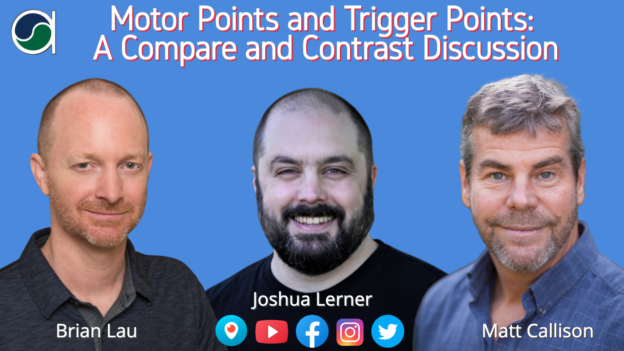
Hello, everyone. Welcome to the American Acupuncture Council podcast. My name is Matt Callison. Hi, I’m Brian Lau. We’re from Accu sport education and the sports medicine acupuncture certification program. Uh, we want to chat with you today about the San Jiao channel. So can we get into that first slide please? Alright, so go ahead, Brian. Yeah.

So we are going to discuss a St Joe’s sinew channel today, a little bit of the typography, a little bit more of the anatomies to start off with, and then we’ll, um, have a chance to talk about a representative injury of the channel. So that’ll give you a little preview of what’s to come in the next 20 minutes or so,

Matt, were you going to say something? I was just going to introduce that you did a great job.

All right. So this’ll actually also give a flavor of what we teach in the sports medicine, acupuncture certification, each module, we haven’t anatomy, palpation cadaver lab. Uh, so there’ll be some elements of the anatomy that we’re going to be teaching and actually have a class you’re watching this live there. We’re going to be starting tomorrow, uh, for the upper extremity. So the San Jo channel will be one of the many channels that we’re looking at, obviously for the upper extremities. Um, and, uh, some opportunity to look at some, uh, dissection that we’ve done, that we’ll be presenting in our class. Uh, so we’ll remind about this, but if you are watching this around other people, we’ll give you a heads up before the dissection stuff comes on and give a couple thoughts on that, but you just want to make sure that there’s nobody, uh, around you that might be, um, you know, it might be disturbing for some people, if they’re not medical providers and they’re not used to seeing cadaver images. So we’ll give ample warning before those videos come on.

All right. So let’s go to the next slide and we’ll start looking at some of the entry, uh, anatomy for the channel sinew of the Sanjay channel. So this is from a translation of Vietnamese scholar Vanji, uh, from, from the link Shu chapter 13. And if you kind of glance through it, uh, you can see that it gives a description of the typography. It’s kind of vague, you know, the, uh, very open to interpretation and, and vague some of the anatomy descriptions and the link shoe from chapter 13 for the channel send news channel, send sinews have maybe been a little bit less, um, explored than the primary channels and some of the other secondary channels, like low connecting, et cetera. So the channel send you is probably in the history of Chinese medicine. Haven’t been explored as thoroughly, and we’ve been doing a lot of work within the sports medicine acupuncture program to, um, further define and be a little bit more specific on the anatomy of each channel, uh, including which structures are involved with, with channels, how they link with other channels in terms, um, parents, you know, like internal, external related channels, how they communicate and work with those, how they work mid David died, et cetera.

So just to be a little bit more, um, specific with the anatomy and a little bit more specific with some of the functional anatomy in particular, so you can kind of glance through and see some, some aspects of the original description at least translate in English and this translation. So anything dad, Matt? Yeah,

This is good. Let’s go into the next slide there.

Yeah. So yeah, here we have, uh, our interpretation of the, um, San Jo send you channels. Sometimes we referred to them as sinew channels, channel sinews, DJing, Jenn musculotendinous channel, a lot of different translations DJing. Jen would be the, um, the opinion version from the Chinese. So here’s our interpretation of that. The sand shout send new channels a little bit, um, harder to interpret as it gets higher up into the traps and starts, uh, including some of the, um, the cervical fascia. And we’ll go over that when we get to it. But if you just glance through the list, that’s pretty channel like we have the fingers, finger extensors on the back of the, uh, kind of posterior surface of the forearm. Uh, deep to that, uh, included is the super Nader. Uh, then the medial head of the triceps, the triceps are three muscles, but there’s two that are superficial belong had in the lateral head are more superficial.

And then deep to that is a shorter tricep muscle, which is in a different sort of compartment. I’m still a tricep, but it’s a deeper one and that’s the medial head. And that’s part of the San Josten new channel, the more superficial as part of the small intestines, any channel then as that travels up and connects with the lateral intermuscular septum that goes into the deltoids into the superficial deep cervical fascia, superficial layer, upper trapezius, SCM dye, gastric, and up into the scalp. We’ll go through that in a little bit more detail in the next several slides and that you were going to add something to this also.

Yeah, I think it’s important for us to remember that each one of these muscles in these tissues are all interconnected. So this is why when we can treat something, put an acupuncture in distal, how it can signal along that model of fascial chain and soften or change pain at a proximal area. For example, if somebody has pain in the SCM, how we can treat some of these different tissues, a distal from the SCM and start working towards softening that SCM. And is that, uh, the bottom line here is that each one of these tissues are fascially connected and they can be able to carry signals. So I think that’s, that’s good. So we’ll move on to the next slide.

Yeah, sure. Yeah. That’s a good point, Matt, because then that includes, um, both channel points that can regulate tension in the sinew channels, but also, uh, points that are off channel and maybe include, uh, she points or muscle motor points and et cetera. Yeah, let’s go onto the next.

Yeah. Good. Okay, good.

So if we kind of look at the forearm, we have a more superficial layer of the San Angeles and new channel. And like I kind of already alluded to that. Is it going to start at the, uh, the hand with the tendons of the extensor digitorum commuting as muscle? So that’ll travel then up the posterior part of the forearm, and it’s going to attach to the lateral epicondyle, uh, that fascial linkage. And that was referring to then from the lateral epicondyle goes right into the lateral intermuscular septum. A lot of people might not be familiar with the lateral intermuscular septum. It’s highlighted in green in this image that I, we put the highlights in, but the image itself is from an anatomy Atlas from a German author Tillman. So you can see that little thin green line, just, just between the biceps and the triceps.

So this lateral intermuscular septum is the kind of fascial September wall between the biceps and the triceps, and it can transmit force. And in this case for the San jab sinew channel, it’ll transmit force up into the deltoids, particularly into the middle head of the deltoids. So that’s a more of an overview of that superficial aspect. Um, but also, uh, the medial head of the triceps can put tension into the lateral intermuscular septum. So there’s a lot of communication between the medial head of the triceps lateral intermuscular septum, uh, extensor digitorum communis. So those are all facially linked.

Good. All right.

So I guess we can go on to the next one

Next slide.

All right. So we have two more images from the same Atlas. So the first one on the left, we have, you can kind of see the little tools that are there to move apart. Um, and we’re going to see this on that cadaver video that we did. So in any of these types of things, everything’s so facially connected that you’d have to have a scalpel to kind of tease the way that fascia so that you can then come and move away those compartments, and then see deep, uh, below in this case, the extensors, the wrist extensors, especially extensor digitorum communis. And what you’re seeing is the super Nader, which then on the image on the right is a much cleaner image, cause it has all of that other stuff taken off. So you can see kind of the relationship on the picture of the left and then the deeper structure of the super Nader, uh, on the picture, on the right, also part of the sand Jassen you channel, and it especially links, you know, everything has a fascial linkage. This one has a fascial linkage that has a name, uh, into the lateral intermuscular septum. And that’s a radial collateral ligament. So you can see the image on the right really nicely shows that radial collateral ligament that has splashes spreading over the super Nader and then up above it, into that lateral inner muscular septum.

Yeah. Excellent. So let’s go back. Let’s say somebody

Has that sternocleidomastoid pain just to be able to keep it consistent. We could create the supernate or we could treat the lateral intermuscular septum. We could also treat San Jo one. We could treat the extensor digitorum communis and all of those points would end up affecting that part of the SEM that is affected by the sand Jobson channel.

Yeah. Yeah. That’s the hems is interesting too because, uh, the San Justin channel particularly seems to affect the GLA vicular head and then there’s any trigger point people, uh, listening and you might know, Oh yeah, the curricular had kind of refers oftentimes pain into the ear. It can be a headachy, uh, pain into the forehead and different places, but it often refers into the ear and can cause, um, positional vertigo. So then, you know, for me, I started thinking, well, geez, what, what would that make sense for the sand Dow channel to have some kind of effect in the ear and any, and any acupuncturist here? Of course they, yeah, of course you have John three, Sandra five, there’s a lot of, uh, relationships, the points on the San job channel with the, uh, with the ear. So that’s one that has, has an interesting correlation, but it, you know, like Matt, the sand supinate or other ones could be really involved.

I was just thinking San Joe seven, also being the sheet cleft point of that channel is the motor point for the extensor and dices. So that would be another point there too. Yeah.

And that one’s in the channel. We have that one listed in the list above, but it should be

All right.

We’re ready to move on to the next slide.

Sure. All right. So from the

Deltoids and especially the sand Dow channel has a relationship to the middle deltoids that then, uh, deltoids then go to the spine of the scapula and the chromium. And they pick up the, uh, superficial layer of the deep cervical fascia. Because if you look at the trajectory of the Sanjenis in your channel, it kind of comes from the back and it goes up the neck and then binds to the jaw. There’s really no muscle that has that trajectory that way, I guess the [inaudible] more superficial might, but it’s, it doesn’t seem to make sense for the San Joslin new channel. But if you look at this fascial layer of this superficial layer of the deep cervical fascia, it does have that trajectory and binds and connects them to the mandible, to the sort of angle of the mandible and then, um, ramus or the body of the mandible.

Um, so it sort of follows that trajectory and it wraps around the trapezius and wraps around the sternocleidomastoid. So it’s very intimately involved with both the upper trapezius and the sternocleidomastoid the digastric is in this region also. Uh, so if you think about the channel as being more of that cervical fascia, um, it might cross and include muscles that aren’t going in the, in the trajectory, in the pathway of the channel, but still has tensional relationships with the SCM seems like particularly the clavicular head of the SCM and then the upper trapezius and upper trapezius is a big muscle. Uh, I would say that particularly relevant are those fibers of the, uh, upper trapezius that go from the, a chromium to C seven, which are what you would be needling if you needle the motor point, uh, in maths book book, the motor point index it’s referred to as the part two fibers that many people needle from sand gel, 15 kind of angling upwards into gallbladder, uh, 20, 21, excuse me

Now, which is nice, that new technique is safe. It’s you, you’re not going to create a pneumothorax with that and linking the shower Yom channels, which is nice. Something that we take the teach in the smack program is acupuncture as an assessment. And this is going back, let’s go back to the SCM clavicular pain, so to speak, maybe somebody who’s having a cervicogenic headache is going to the side of the head in the sand jaw channel. We’ve provided already a list of different points that we could use that would help to say change range of motion, or start to decrease that headache. So acupuncture is an assessment. If somebody has that type of headache and maybe they have limited range of motion, they have a forward head posture. If we put the acupuncture needle into the extensor digitorum communis motor entry point, and then had the purse move to see if that actually changed the cheat within that San Jo myofascia channel, or we could use of course, San Jo one San gel seven, the lateral intermuscular septum. So we’re providing a number of different tissues that you can use for either a proximal injury or a distal injury using acupuncture as assessments. Really nice because it’s just giving you some ideas of what points actually make the greatest effect on that orthopedic evaluation on that range of motion on that pain, then you would take that needle out. And then when you’re actually going to be needling, the patient you’ll include that needle back in as part of the point prescription. Okay. Hope that was clear.

You already saw immediately that it had an effect on the dysfunction. Yes. CSS.

Yep. All right. So do we now go into the next conversation about the cervical fascia?

So this is a image that’s put together from this, uh, professional softwares. I go body, uh, they don’t have that little lines that are drawn. I, I painstakingly put them through, uh, through a illustrator like program, but, um, but cause I wanted to show the fascia because these programs, these 3d programs are very clunky and not as a muscle like the deltoids and traps and they’re like putting Legos on, um, which is not how the body is when you see the cadaver dissection. Obviously you’ll see this very clearly. So I put those white lines on the sort of show the fascia coming up from the middle deltoids, sweeping through the, uh, upper trapezius going across the SCM I say across, but it actually both the, um, STM and the traps are embedded kind of surrounded in that superficial layer of the deep cervical fascia. So it goes on both sides of the SCM and then goes to the mandible and links up with some of the fascia and the jaw and up into the temporality, uh, fascia, which would include the temporalis muscle.

In that case, you can also see those little, uh, your muscles that move, uh, and stabilize that region of the, uh, of the ear. Um, but the temporary, temporary Alice fashion, uh, the temporary, temporary Alice muscles. Interesting because that’s another point. And I think Maddie, you have the send the motor index as, as having, you can treat the motor point for headaches and various reasons, but this one has a, um, empirical use of, of, uh, reducing tension in the upper trapezius ipsilateral is another. Yeah. And you can see through the fascia, how that would be, be very much linked and help communicate that, that the attentional relationships between the two. So, you know, the take home, there’s a lot of things that are surrounded by this fascia, but really clinically the upper trapezius, especially those fibers that are kind of horizontal connecting to C7 as part two fibers and the [inaudible] head of the SCM that you haven’t, you can access from the motor point kind of in the region of stomach nine and angling through the muscle, but you can also get really good access to it through sand gel 16 and angling from Sanjay 16 cross Valley into the posterior portion of the SCM and, and, uh, um, connecting into that clavicular head.

We have a video on, um, the YouTube channel sports medicine, acupuncture, YouTube channel that shows both of those, um, both, uh, both the needle directions for the motor point and through that Sanjay 16.

All right. So the next slide is going to be, sorry, Brian, go ahead.

I said, I think that’s the, a it for the intro. Yeah. And I think we’re getting ready for the cadaver. Why don’t you set this up that? Sure. Yeah. So let’s just make sure that again, some people, if they do see this, um, passing by your computer or sec are really not going to enjoy it very much. It can actually really affect them deeply. So let’s be really careful of where we’re observing the following video, which is going to be of a cadaver dissection. Um, let’s make sure that there’s no screenshots, no sharing of the recordings and no downloading, please with this, we don’t want to share this kind of information. This is just for us medical professionals to be able to learn from. So then can we now see the video please? And then I believe there’s,

So we’re look at the sand house in your channel, starting with the forearm. We have the extensor digitorum communis exposed extensor digitorum, communis in a different fascial compartment. Then the extensor indices, so different fascial compartment than the extensor indices. Here we go. And a different fascia compartment. Then the extensor digit I minimized. So indices digitized minimize. So we’ll put those back into place so we can see them in relationship extensor, digitorum communis comes up. The arm attaches to the lateral epicondyle it also communicates into the lateral intermuscular septum, but has a communication into the medial medial head of the triceps, which there’s a little part of it on the lateral aspect there, medial aspect of the triceps also puts tension into that lateral intermuscular septum. So San Jo has more to do with the medial head of the triceps all the way up communicating with the deltoids. We feel that that communicates more through the middle fibers of the deltoids and then into that portion of the upper trapezius that attaches to C7. So those part two fibers of the upper trapezius and another point we’ll be able to do a little bit more dissection and start to look underneath these structures to see the, a super Nadir, which we’re starting to see a little bit of the super Nader right there, part of the sand gel channel.

All right, great. So let’s get to the next slide. All right. So some of the common injuries associated with this particular manufacturer, Jean Jim will be distal the EDC tenure synovitis. So the, on the wrist itself, the tendon that is going to be in the middle of San John for an extra point zone Tron. This is a common area for risk tenure, synovitis of the extensor digitorum communis and also super Nader syndrome. So the super Nader being deep to large intestine nine, and we’re going to actually talk quite a bit about the SuperNet. We’re going to highlight it in this podcast because it’s a great mimic for lateral epicondylitis. Um, this particular podcast also, um, will parallel the blog that we have on the sports medicine, acupuncture website, sports medicine, acupuncture.com, where we discuss supinate or syndrome. And we’ve got a couple of videos also, including a mild fascia release technique.

That’s very effective for helping to release the Supernanny. And we’ll talk about that in a little bit more. So another injury that you can get in the Sandra Jean Jean will be lateral epicondylitis in particular, when the extensor digitorum communis is involved, which it commonly is. However, with lateral epicondylitis, we also have the extensor carpi radialis longus and brevis, and those will be more in the large sinew channel. So the lateral epicondylitis will be the EDC or the extensor digitorum communis involvement. Then we have our tricep strain, which can occur around San Jo 10 and actually go all the way, even the lateral, following that Sanjay channel toward the Antonius, the medial head of the triceps, which is involved or categorize within the San jar. Gene gin is one of the more frequent muscles out of the three triceps that become strained. That can cause, um, a tendinopathy there around San Jo 10. Then of course, as we discussed earlier, any kind of muscle tension headaches, they might be contributed from that cervical fascia and also the, um, um, looking at the clivia head, the SCM. So let’s, let’s focus a little bit more now on the super Nader syndrome. Like I said, which it can, it can mimic lateral epicondylitis because it does attach to the lateral epicondyle. So let’s go to the next slide, please.

So the supernate or being in the deep layer that you saw in Tillman’s images. So if we took the extensors off on this image, you’re going to see that supinate or that you also saw on the cadaver dissection. So the radial nerve, as it comes down from C5, C6, C6, C7 follows along the sand job channel around large intestine 11 region. It actually bifurcates. So the superficial radial nerve travels along the large intestine channel. And then the other bifurcation is the deep branch of the radial nerve. It’s also called the poster interosseous nerve. So deep radial nerve and post interosseous nerve is synonymous that posterior interosseous nerve dives down through the supinate or through this fibers canal card that called the arcade of fros. Now with overuse in the super Nader, either being in a lock long or a lock short position, it can entrap that poster interosseous nerve and cause a parasthesia along that sand jaw channel, but it can also mimic lateral epicondylitis. So lateral epicondyle can actually be a little bit tender in that region, but most of the pain is going to be around large intestine nine region. Let’s go to the next

Slide.

So this is from a previous dissection that we’ve had. You can see that the radial nerve is there on the left, the, the blue ribbon there, which is actually a surgical glove, just cut up tied around. So you can see that bifurcation. So the elbow is going to be where that blue glove, that blue little ribbon there that’s the bifurcation. So you can see that post interosseous nerve traveling through the super Nader muscle and then exits and follows along the sand jaw channel. If that muscle, like I said, from overuse and traps, that nerve, and that can cause a parasthesia within that region within the sand jog channel will cause pain, raw, large intestine, large intestine, nine large intestine, 10 deep, but it can also cause around lateral epicondyle. So it could mimic lateral epicondylitis. So a differential diagnosis is going to be needed. Lateral epicondylitis will not have a parasthesia if there is pain at the lateral epicondyle and there is a parasthesia, especially traveling in the super Nader region, San Angelo channel, then you think super Nader syndrome probably want to say anything about that, or should we jump right into assessment

Simple. And it’s not as relevant for super Nadir syndrome, but that a superficial branch of the radial nerve then travels down the ally channel. As Matt said, it goes deep to the brachioradialis. So you can kind of see on that left edge of the slide, you can kind of see the brachioradialis pulled off to the side. So then that, that, uh, branch of the nerve goes deep to the brachioradialis. Just that that’s all just to add that in.

Okay. Cool. All right, let’s go to the next slide. Let’s talk about some assessment. So when a patient comes in with lateral elbow pain with possible parasthesia into the lateral forearm, along the course of the San Angelo channel, you’re starting to think more supinate or syndrome than true lateral epicondylitis. Now palpation of the supernatural muscle will be very tender and possibly listed parasthesia. You want to compare symptoms to the supernatural muscle on the opposite side, that’s always going to be very important. The supinate or manual muscle tests repeated four to six times will often create pain in the large attest nine region Garcia, Tencent 10 region, maybe even lung five. And it might extend along to the lateral epicondyle as well. So we’re going to actually go over that manual muscle test, a mills test and cousins tests. Those tests are for lateral epicondylitis. So therefore if you use mills tests and cousins tests and they do elicit pain at the lateral epicondyle then possibly there is some extensor involvement as well. However, if there’s parasthesia please think about the [inaudible].

Now the patient may also report that the forearm and hand feel weak, heavy, or also uncoordinated because of this nerve entrapment. It can cause muscle weakness. So let’s go to the next slide if we would please. All right. So cousins tests and mills tests, most people already know what those are. If not, it’s very simple to be able to YouTube that Google it. Um, it’s, they’re, they’re common tests. Now, the supinate or manual muscle test is not so common by putting the patient into this particular position. And you’re going from a supinated position. You’re going to try to break them out of super nation and going into nation. Now, if you do this four to six times, if the person does have supinate or syndrome, many times, it it’ll become sore in the large intestine and larger test 10 region. And it may also start to elicit that parasthesia so you can use this manual muscle test as confirmation.

All right. So let’s talk about where the actual motor entry points are, the radial nerve into the supernatant. Next let’s go to the next slide. Okay. So there’s two, one’s going to be approximately one to one and a half soon distal, and one soon, our half a soon radio to lung five. So if you take your finger and put it on a lung five, please, in that cubital crease, you’re going to be on the radial side of the biceps tendon in the elbow crease lung five. Now move about one to one and a half soon distal toward the wrist. Now go half assume to the radial side, deep to this region here is going to be one of the motor entry points onto the SuperNet or which we’re going to have a video. That’s going to describe this a bit more in detail. Now, if you can go too deep to larger test and nine, so large intestine nine is going to be three soon down from large intestine 11.

All right. So we’re going to separate the breaker radiologists and the extensor digitorum, uh, uh, extensor digitorum readouts, longest separate those tissues to large intestine nine press against the radial bone, which is usually a great sensation. And that will cause quite a bit of sensate caught quite a bit of pain in that area. That’s going to be another motor entry point for the super Nader. So let’s take a look at the next video, which is going to describe location and then also the needle technique. And then after that, we can take any questions that you guys may have, or we can have some, uh, closing comments,

The supernate or muscle has two motor points. One’s going to end up being distal from lung five on the other. One’s going to actually be located a large intestine nine. So let’s take a look here. So from lung five, we know that’s going to be in the cubital crease here on the radial side of the bicipital tendon. If we drop inferior one to one and a half. So, and just depending on the size of the patient, and then we go to the radio side one soon. Now, palpating you’ll feel the break your radiologists, when that break your radiologists at this location, you’ll divide the brachioradialis and you’ll fall right into a space. Now from this space here, we just keep massaging that tissue, keep massaging that tissue. Okay. Separating the brachioradialis. Okay. Now I can have the patient who, which is in supine. He’s in super nation right now.

He’s going to go into pronation and now going into superannuation, and I can feel that tissue popping up. I’m going to adjust my finger. I feel a little bit more here from super nation now into pronation. There we go. Okay. So then the needle technique would be looking at the supernatant from this location, which is one, one and a half and a half soon lateral separating the space between, between the brachioradialis and opening that tissue up toward that bone. So you’re going to be kneeling perpendicular, and you saw how I found that super near by going to pronation and supination to the skin directly toward that radius. Now let’s be mindful that the brachial artery is going to be traveling along that pericardium channel. So I want to make sure that we’re not kneeling deep in the pericardium channel in this region. So the needle technique for this particular point, be right toward that radius.

Now we can also need the supernate are based on large intestine, nine large intestine nine. We find large intestine 11, which is going to be at the end of the transverse cubital crease to large intestine five. We know that this is going to be 12 soon. So large intestine nine is going to be three soon inferior because the space between 11 and 10 is too soon. So from large destined five to large intestine 11 let’s divide that in half. There’s our six Mark. All right. So then now if we divide 11 and the halfway point and half, that will be three soon, which will be large test and nine large destined nine, three soon down from large intestine 11. So again, let’s feel for that break here, radiologists, I can quickly do a little manual muscle test or resistance test for the breaker radiologists. I’m going to have the patient just press up against me here and that break your radiologists a little bit harder, buddy. And that break your radius pops right up here. All right. So then now I’m just going to separate between the brachioradialis and the extensor carpi radialis longest and press right into that radial bone, which is going to be pretty darn tender for him. And I can feel that re the supernatural muscles start to pop up. When he goes into super nation, pronation is lengthening super nation. There it is right there. I’m going to needle here, large intestine nine directly toward that radius.

So we’ve located large intestine 11, we’ve located large, large intestine nine, which is three down from 11 we’ve identified where the brachioradialis is. Now we’re going to just slide our finger right into that crevice between the brachioradialis and the extensor carpi, radialis longest separate that tissue there, separate the tissue, and I can feel that radius. All right. So then now moving into superannuation, I feel the muscle popup pronation. I feel it sliding. I feel the muscle pop-up into super nation. All right. So the needle technique is going large intestine nine directly towards

The radius. And then we propagate

This muscle is innervated by the poster interosseous nerve or the deep radial nerve, which is a branch. The superficial nerve goes to the large intestine channel and the deep branch comes down to the posterior interosseous nerve or deep radios synonymous, which then goes into the arcade or fros for the super Nader syndrome. And that’s a lecture that we have in this particular program and this particular module, this is going to be super Nader at large test nine. Let’s take a look at how we’re going to needle the super Nader from the, uh, lung channel.

[inaudible]

Lung five, we dropped down one and a half. We moved to the radio side a half, maybe three quarters of sun. Sometimes it’s one soon, depending on the size of the patient, feel for the radius, that’s going to be your key. Now we’re going to separate the brachioradialis here. All right. So on this side of the brachioradialis Okay. And I can have the patient pronate and supinate, and I can fill the muscle pop-up with super nation. We insert directly toward the radius

[inaudible] and propagate.

Okay. So the two motor points for the SuperNet, and that’s how we would treat that. But of course, that’s just treating the supernatural. We’d have to include more points to be able to soften that, that Sanchez senior channel, and also look at the person’s posture as well. Um, those were just two points to be able to be the super Nader. Again, we can go into extensively SCORM communis [inaudible] St. John for lateral intermuscular septum, the medial head going into the curricular head of the SCM to help, to connect to the entire San Jiao channel with that. Then of course, giving exercises that will help with the pronator, Terese and opera off in the supernatural. Many times the pronator chairs will be in a locked short position. I need to be stretched and the supernatural will be strengthened, but of course there’s never an always with all of this.

So it has to be assessed properly with that. And the pronoun Terry is part of the pericardium sinew channel. So it makes sense to treat that for both reasons. Yeah. Good. So internally and externally related of course. Awesome. Well, that’s it for our sand job channel quick question. Just cause I think other people might have it too. Um, and I think you said it you’re treating both of those points or is there a clinically a reason why you treat one or the other of them? Um, or is it really both for supinate or syndrome? I like to treat both of them because it is such a, a long muscle with a number of different attachments to it. So usually I’ll try to be able to get both because if I miss one, then I’ll probably get the other yeah. Got it. Yeah. Good question. Thanks for saying that.

All right. Well, Brian, was there anything else that you want to close this out with? No, no. As usual, of course, thanks to American Acupuncture Council, having the opportunity, do these webinars. Yeah. Thank you everybody for attending. We really, really appreciate this. And also, Oh, you just see that coming up. Lauren Brown is going to end up being here next week. If you have not heard Lauren speak before, he’s very energetic. He’s very knowledgeable. He’s a great person as well. So that’s going to be a good show for next week. Um, Brian, thank you very much. It’s always a fun time with you and thanks everybody. Really appreciate it. Have a great one. Bye-bye

[inaudible].


AACTTPYen02242021Thumb

Social Media Trends 2021 for Acupuncturists – Chen Yen


What do I need to do on social media to actually get new patients you been posting? And you’re wondering how come I’m not necessarily getting that many likes or interests and definitely not getting as many new patients from it as I would like.

Click here to download the transcript.

Disclaimer: The following is an actual transcript. We do our best to make sure the transcript is as accurate as possible, however, it may contain spelling or grammatical errors.  Due to the unique language of acupuncture, there will be errors, so we suggest you watch the video while reading the transcript.

Do you have a key?

Do you ever wonder, well, do you ever hear, Oh, I need to be on social media, but I ever wonder, what do I need to do on social media to actually get new patients you been posting? And you’re wondering how come I’m not necessarily getting that many likes or interests and definitely not getting as many new patients from it as I would like. So welcome to my show today on the social media trends this year for acupuncturists that you can learn from so that you can, can see where to spend your time and energy and where not to focus your time and energy. So that way you can focus on, on actually helping patients instead of worrying about where to find them. And I am Chen Yen six and seven figure practice make-over mentor@introvertedvisionary.com. So let me share with you a few of the top trends to pay attention to right now.

So you can decide whether to take advantage of them and whether it makes sense for you. So, one thing is that the attention span of people are, is starting to get shorter and shorter, shorter. I remember seeing a statistic. I was like, how, how the attention span is shorter than a goldfish. Can you imagine that? So things like, um, stories that can interest people are more likely to get attention, for example, um, are you doing Facebook stories or Instagram stories or Snapchats and things like that? So that’s one thing too, to consider the, um, second thing in terms of trend wise is that it’s harder to actually get, um, interest and new patients through organic traffic. And why is this? Because a lot of the popular social media platforms like Facebook and Instagram, and even YouTube is starting to get more this way, but in terms of how do they actually generate revenue it’s through people paying for ads.

So for example, Facebook, back in the day, did you know that back in the day when Facebook was newer, you could pretty much have a business page on there. And pretty much everybody who would like your business page would see your posts, but guess what percentage nowadays actually might see your posts organically? I seen studies as low as it’s like 3.5% of people who actually like your page might actually see your posts. So what does that mean for you? You might spend time posting and then you’re wondering how come, uh, very few people seem to be liking or sharing. Right. Have you noticed that before? And then, um, Instagram is, is a better platform typically right now for organic traffic compared to however guess who bought Instagram, Facebook. So just like how they’ve done with Facebook, it’s typically going to be, I mean, it’s, it’s likely to be where once they get enough interest, then it’s going to turn into even more and more of a pay to play platform.

So, um, there’s also in terms of what can you do to actually get interest on, on social media, if you aren’t planning on paying for ads or even if you are paying for ads, how can you make it more effective? So, um, one thing is to actually incorporate this one hack, which is for example, on Facebook, did you know, like this one hack I’m about to share with you can actually get you 10 times up to 10 times more views from your organic posts than if you just posted a text post, what is it it’s to do a Facebook live? And why is this? Because? So Mark Zuckerberg had come out years ago saying that he wanted to see Facebook take over YouTube for video and video is one of the most, the fastest growing social media platform right now, in terms of sorry, the fastest growing platform among all kinds of platforms and overall online.

Did you know that Cisco said that by, uh, they did a study on this, you know, 82, they were expecting 80. Let’s see it was 80, 82% of all internet traffic by 2021 was expected to be video and a Facebook, uh, high-level executive came out. This, this is a few years back saying, saying that video would be like number one, you know, the main way people would consume content. And, and, um, and then also in, in 2022, um, let, let me just look at this. So 82% of the global and, Oh, sorry, uh, a growing popularity of video internet, did you know that internet users spend six hours and 48 minutes per week watching videos online? This was in 2019, according to limelight. And so what does this mean? See, because how can, uh, especially with what’s happened this past year, more people are interested in being online, but what does that also mean? It means that there’s more noise and more, more people trying to get your attention online if you were just posting.

So how long does it actually take for people to actually get to, to know and trust you? Well, it usually takes more than just posting a few text posts, because how much can you actually know of someone just by, by seeing a few texts posts? Right. So, so then just speed up that trust. And, and there, I remember seeing some studies out about this too. I think it was put out as actually brought up by Forbes that more people are, are feeling like they need to have more trust before they are interested in working with anyone. Right. And so, um, nowadays than, than ever before. So this is something that is super important. And if you want to build that connection, um, it faster then being able to educate, because one of the reasons why people are coming to you is because you are, um, they are not educated about how you can help.

They don’t understand acupuncture, they don’t understand Chinese medicine, you might get excited about it, but people don’t really understand. So if they don’t understand, they’re not going to come in and how can you educate them to understand and be able to speed up that process much faster than just, you know, posting on texts on social media. And so, so video is a great way of doing that, whether it is on Facebook lives, uh, whether it is on, for example, you too, or you could put a video on your website to help explain your services so that people, um, understand it faster as well, and, and see being an acupuncturist and seeing your patients and them and your patients, potential patients deciding whether or not to work with you is it’s such a personal relationship with, with you as the, the acupuncturist. And so not only do people feel like they need to understand that it can work, they also need to understand.

I mean, they also need to feel that sense of connection and resonance with you and your energy. So, so then in terms of, of video, let me just give you a couple of quick tips related to this and, um, let me share with you because what if you actually get nervous and, uh, you don’t really like the idea of, of being in front of people, you know, with a camera kind of staring at you. So I’m gonna share with you a couple strategies that can help you overall. Um, and then I’m also gonna share with you strategies that you could do, even if you don’t want to be on video. And even if you feel like I don’t, I don’t think that’s for me. Uh, Jen, I’ll share with you a different strategy where you could just create one thing and use it over and over and over again, to bring in new patients.

So a couple of quick tips, when, when you do things on video, is this, what if you get nervous? So I, um, I used to feel this super performance anxiety when I, when I would be on, on camera or just speak at all when I was little, my dad, um, I grew up in a family, very strict research scientists. My dad was PhD. Um, first-generation immigrants from Taiwan, super strict, you know, when other kids would be, uh, like, um, Sunday morning, this is when I was around eight years old. When we would get the Sunday paper, I used to always feel a little jealous of other kids. Why? Because I imagined that they would, they would open up the paper or they get to, got to check out the comic strips. And what, what happened to me? I had my, my dad had me do current event talks every Sunday and I dreaded it.

I was terrible at it. And I cried all the time because he was very strict. Like he was, he doesn’t speak like my stylist. He’s very analytical and he critiques and stuff to the point where, where I just felt really inadequate. And because of that, I felt so much performance anxiety whenever, whenever I would speak. And I vowed to myself, I will never speak when I, when I grow up in terms of being in front of a girl or even being on camera. Right. And so, so then, but why did I end up deciding to, to actually speak is because I, um, I love teaching when I was little, I would get these kids. My idea of fun was getting the kids in the neighborhood around and then sitting around me and then I would go get my, get these worksheets from my third grade teacher.

And then I would get, I would have these kids, um, you know, do worksheets and everything. That was my idea of fide back then. It still is for me right now. So in any case, um, it was that desire to educate and teach people that led me to learn how to do this, but I will say that, uh, and the reason I bring this up is that if I can do that go from, from being extremely, having this performance anxiety to where, because I literally, uh, I would get so nervous when I first started speaking, uh, what I grew up that I didn’t, I would say something and then I didn’t know what I was talking about. I felt so, like I was sweating inside and my face turn really red and that I literally didn’t make any sense. It was that embarrassed.

I felt like such a fool. Right? So, um, the reason I bring this up is that if I can do it from the place of feeling like a complete fool and I winded a height under a rug, but then now getting to a place where I’m getting invited to speak nationally and more comfortable with it. I can say that if I can do it, then you could totally do it. And one thing, what’s one hot tip that you could use anywhere you go. If you’re, whether you’re at, you’re being asked to share about your practice and you feel really anxious about, um, whether it’s on video and you’re all of a sudden doing a video, or you’re doing some kind of, uh, talking kind of experience is this, you can just stick your tongue out.

So stick your tongue out,

Like the lion’s breath, right. In, in yoga. And, and that could just totally, totally put you in the present moment. So the heart racing starts coming down and your, your, the thoughts in your head about how you don’t know what you’re talking about comes down, and then you end up being more in a complete present moment. So that’s one hot tip. And I second hot tips. So let’s talk a little bit about, uh, a couple of the, um, Oh, the second hot tip is called the action. So, um, this is something that will help you, regardless of what social media platform you use, regardless of whether you do a text post, or if you do a, um, actually do more of a video, right. And, and by the way, a side tip for you, if you’re just doing a text posts, is that doing stories?

Oh, actually. Okay. I, I lost my train of thought for a moment, but we it’s just a reminder for you that remember doing, if you do a text posts doing like Instagram stories or Facebook stories is, will work better because it shows up, for example, Facebook will show up more on the top and people are more interested in hearing about stories as well. So, um, now, as it comes to call the action, one of the biggest mistakes, a lot of practitioners make is not actually give any kind of call to action that, um, that really leads people to, to book with you, or really leads people to take that next step, whatever that next step might be. And so that’s where you might be posting all these pretty close and, and inspirational messages and, uh, and things, and you, and then you’re, you’re still posting you’re, you’re like, hi, I’m here.

And how come nobody’s nobody’s reaching out? Or, or you might just say, Oh, call, call my clinic. And that’s about it. Right. So is there anything that you could vary that with because sometimes people, um, might not feel quite like they’re ready quite yet that way, or maybe they just want a different way of, of actually connecting with you. So, um, one thing that, that, that, that makes it easy and feels like it’s more comfortable. So for example, one hot seat for you is that you can actually, um, for example, if it’s on, on Facebook or if it’s on Instagram, you’ll, you’ll tweak this just a little bit, but it might be PME to get this assessment done so we can find out dot, dot dot, or you could say PME, if you’re dealing with similar health issues, we could discuss your situation, whether it makes sense for you to get it checked out.

Right? So notice that actually helps people think, Oh, maybe I need you to do something about this health issue or, or, or maybe I need to get, get it checked out. So it’s, it’s more of a, kind of, of a call to action that will actually interest people in, in booking with you. And then, um, if you want, if you don’t want people to PMU, you could ask them to click on a link to schedule an appointment, but how can you actually say that, right? In terms of, of whether it’s in a text post, or whether you’re saying it, um, video wise or verbally. So click on this link and book an appointment where we will do a such and such, and I’ve set aside a few spots for you to be able to get in with me week if you’re watching right now. So why is this really effective?

Because notice it gives a little more of a sense of an urgency, because if people feel like they could just do it anytime they might not do it right now, but if you’re actually letting them know that, you know, you’ve set aside spots this week for them, then if they’re watching right now and then to actually take action on that link, then it there’ll be more likely to, to actually do it. And I actually decided to make it easier for you, because these are just, just a couple of sample scripts from our template. That is the number one thing to supercharge, getting new patients from any social media platform, whether it’s a text post or whether it is a, um, a video kind of a post. So you can click on the link below that will be popping in, in the chat for you to actually access it.

And I’ll just give it to you also right now. So it’s introverted visionary.com forward slash C T a Scripps. So introverted, visionary.com forward slash C T a scripts. And then you can click on the link below in the chat and then, um, go there and download. You’re going to get the template in your inbox right away. Um, so go there right now, also, you know, by the way, for those of you who might feel like you’re, you’re in a place where you’re at your, if you’re feeling like you’re being, you’re frustrated with not getting as many new patients as you would like, or, and you just know you’re capable of so much more because you’ve had a dip in your income and also in your practice in terms of patient flow and feel free to also at that link, you’ll have an opportunity to book in for a free double my practice strategy session as well, to see what actually might be the most effective way to grow your practice faster this year, and actually have some help with it to grow, grow faster.

So in terms of, um, another hot tip that I wanted to give you about, about how can you be B uh, reaching where people would actually getting new patients on social media more effectively, for example, through, through video. And then I’m going to wrap up by sharing one hot seat that you can use if you decide, Oh, I don’t know about, you know, having to show up for social media all the time and creating all this content, right? Like I’m gonna share, share with you a hack where you could just create one thing and have it, use it, use it over and over again, to bring in new patients into the practice that our clients are using to do, which, um, when, when you tackle it, it’s like, it’s like it can end up even being on autopilot, which is pretty cool. So in terms of, um, the second, I mean, the, the tip other tip I was going to share with you about, about being more successful on video is that, um, let’s talk about a couple of the pros and cons of some of the platforms.

For example, a Facebook live is nice because you could literally just go live when you, when you feel like it. And, um, and then in terms of, or if you feel like it, right. And the, the thing about, about live, like I mentioned earlier, is that it, it gets sent out to, to up to 10 times more people than if you were to do a text post. Right. But the, um, the disadvantage of it is that if there’s not as much interest in that Facebook live early on in terms of, of for example, right, when you go live and in that timeframe, or at least earlier on within a day or two, then you might not get as much traction with your video, right? So that is a drawback with, with Facebook lives. Um, now in terms of, uh, length of a video, if you do do Facebook lives, it’s great to do over 10 minutes.

And some people say, well, why that long? Why? Because, because people are, um, sometimes they are, they’re coming onto Facebook at different times, but if you just do a video for like 30 seconds, then pretty much it didn’t give, give different people enough time to even hop on at all. And it’s already over. So for Facebook live to get more traction, ideally over 10 minutes is really good. Now another platform that you can use, and actually we’ve had, uh, we’ve had clients who just create one Facebook live, do it really well, and then run ads to it and bring new patients in the door. Right? So you just need to know what to say. That actually brings a new patients, and then you don’t only have to create what you don’t have to create a lot. Um, the other, um, ask the other possibility in terms of, of social media platform, um, for doing video to actually bring in new patients is YouTube.

So why is YouTube really great as a, to consider? So YouTube is people are actually going there to search for answers. They’re not just kind of surfing and then, Oh, they happen to see your Facebook live, right? They they’re actually looking for answers to their problems. So, and more people are actually starting to watch more and more YouTube videos. Um, just think about yourself. Do you ever watch YouTube videos too? Well, even if you don’t other people do as well. So, um, and the nice part about YouTube is that it’s like, it’s essentially a search engine. And, and then did you notice that if you, if you type things into Google, YouTube videos actually end up coming up, but not other kinds of videos come up as, as readily. I mean, Facebook lives do come up also. I’ve seen it, but it’s, but what do you, what do they tend to prefer as putting on top, like the first page?

Usually for people it’s usually YouTube videos. So what are some hot tips about YouTube videos? If you wonder, well, what am I going to actually say, say on YouTube questions and answers like frequently asked kinds of questions are good kinds of questions to, to put up on YouTube. And then, um, the big, and then another hot tip is you could do a video. That’s more about, you know, uh, how to, uh, how to find a good acupuncture, how to find a good acupuncturist, or you could, you could mention how to find a good, um, where to find a good acupuncturist and then put your city and state where you’re located in, because then, then that can also help with the search algorithms to actually help people find you locally. So those are a couple of, of hot tips in terms of length of a video for, for YouTube. Is that it also, it tends to build over time. Like if you, it tends to work better, if there’s a cumulative effect of your videos, if you do more videos versus just like a couple of them, right? Like if you, if you do videos at least once a week, um, over the course of a year, I promise you that you’re going to start getting more organic traffic. It’s definitely more of a long game than a short game. Right.

So Facebook live, it could be more of a short game if you do it well and do it early and do it, just do just one, like do one really well. And then do, you know, run, run ads to it. So now let’s wrap up with what, what is, what can you actually do if you’re feeling like, Oh my gosh, that’s just so not me where I feel like I have to create content all the time. It’s like, I don’t want to feel like I have to create, create new content all the time. I don’t have time for that. I just want to see patients. Um, so what can you do? This is what our clients actually doing. That’s, shortcutting all, this is actually creating just one webinar that converts and then doing it over and over and over again in front of different audiences.

So you could either do it in front of other audiences, or you could even get it automated and then have it bring patients in with just one webinar that, that works great, because then you don’t have to come up with new topic or content or anything like that. You literally just have to create one, that’s it, not 10, not 20, not spend time on social media all the time when you don’t have time, but literally just one webinar that converts. And what does that mean by one webinar that converts, it means that because there’s a difference between just educating people on, on what you have to offer, versus being able to also inspire new patients to come from it. It’s a very different skillset. How can you do both? How can you not only educate, but also inspire new patients come from it. So that’s something that I’m covering in an upcoming free training that I’m doing.

So, um, feel free to, if you have an interest in it, feel free to just type in the chat about it, and then that you’re interested and then I’ll, um, make sure to, to reply to you and send you the link to register for that. So, um, it’s really excited for you and about shortcutting things so that you aren’t feeling like you have to spend all the time on social media when you either don’t already have time for it. Or you’re like me more of introvert where, you know, it’s not like we always want to be displaying or our public lives. I mean, despite this way, everything about our private lives all the time, every single day, like 5 million posted a week or something, you know, in terms of like, Oh, I need to post like twice a day or three times a day, it just feels exhausting.

Right? So let’s simplify things have just few things like, or just even one, like I mentioned, right. Work well for you. So you can focus on seeing patients and doing what you enjoy the most. So with that, I look forward to, uh, Oh, and if you want the templates for the, um, free scripts that can help you with getting more new patients from social media, any social media platform. And the best part is that you can actually use these templates, like literally copy and paste. You can use this in all kinds of situations, even if you’re never on social media, whether it’s on your website, that you actually have an in a way to, to lead interested people into booking an appointment with you. Like what, what could you say that would get them more interested rather than, Oh yeah, just call it car office.

Right? Uh, or if you’re talking to people in, um, you can incorporate some of these things as well. So, so it’s, it’s going to be useful for you across the board and, and you don’t even have to be on social media, or if you want to be on social media, then it’s certainly going to help you instead of feeling like you’re just spending all this time posting. So, but nothing much else is happening for, from it. So go ahead and, and go, go to the link. And then I look forward to look forward to, to, um, you getting the downloads to help you right now, and then also getting you insight into, um, your practice and certainly happy to see if and how we can help you grow faster this year. So, um, yeah. Let’s have your practice take off this year.

Please subscribe to our YouTube Channel (http://www.youtube.com/c/Acupuncturecouncil )

Follow us on
Instagram (https://www.instagram.com/acupuncturecouncil/),

LinkedIn (https://www.linkedin.com/company/american-acupuncture-council-information-network/)

Periscope (https://www.pscp.tv/TopAcupuncture).

Twitter (https://twitter.com/TopAcupuncture)

If you have any questions about today’s show or want to know why the American Acupuncture Council is your best choice for malpractice insurance, call us at (800) 838-0383. or find out just how much you can save with AAC by visiting: https://acupuncturecouncil.com/acupuncture-malpractice-quick-quote/.


Acupuncturist Liability Insurance – 3 Important Questions (and Their Answers)


acupuncturist liability insurance

Here is the thing about running a business: It carries several risks. An acupuncture business is not an exception to this basic fact.

As an acupuncturist running your clinic, you are familiar with ways a patient’s health can get out of whack. But as a business owner, the idea that your clinic is vulnerable, too, might not have crossed your mind yet. In this post, we are answering some crucial questions regarding acupuncturist liability insurance.

Why do I need acupuncturist insurance?

Two main reasons:

  • Because all businesses carry risks – from natural disasters, fire, burglary, damage to equipment, which can happen without warning
  • Because your business involves treating lives – no matter how expert in this field you are, mistakes can still happen, and they can cause injuries to varying degrees, even death

Indeed, no matter how small your acupuncture business is, you should protect it, and an acupuncturist liability insurance gives just that. With this, you can sleep well at night, knowing that your professional reputation and business are both protected.

What does acupuncture insurance cover?

  • Reputable acupuncture insurance can provide various types of coverage, including:
    General liability – covers issues like an accident inside your facility that causes injuries
  • Business and property – for business risks like fire, typhoon, theft
  • Professional liability coverage – takes care of damages like those awarded in a lawsuit

How much does it cost to buy acupuncture insurance?

Acupuncture insurance premiums vary from one provider to another. But as a general idea, you can expect to pay a couple of thousands per year for a small practice, and it gets higher if you have several clinics catering to more acupuncturists and patients. Please note that, for you to get better deals, take the time to shop around and compare different insurance companies.

Online looking for a reputable company that offers acupuncturist liability insurance? Contact American Acupuncture Council today at (800) 838-0383.